
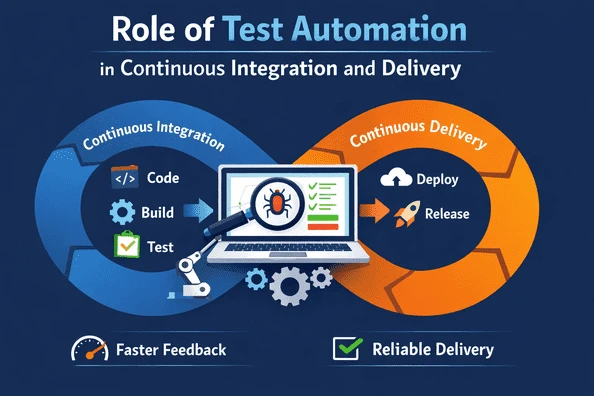
It’s well-known that DevOps emphasizes collaboration, communication, and automation between software developers and IT operations professionals. The aim is to bring high-quality software quickly and efficiently to the market, with a focus on continuous integration and delivery.
Testing is, obviously, essential in DevOps as it ensures that software is high quality, reliable, and meets the user's requirements. Automated testing carried out by a DevOps services company allows for fast and efficient testing and feedback loops, enabling quick iteration and deployment. This helps reduce errors, increase efficiency, and improve the overall software development process.
Types of Automated Testing
Unit Testing: The testing of individual units or components of a software application in isolation.Integration Testing: Testing the interaction between different modules, subsystems, or components of a software application.Performance Testing: Assessing the application speed, scalability, and stability under a specific workload.Security Testing: Identifying and addressing application vulnerabilities to ensure data protection and prevent cyber-attacks.Setting up an Automated Testing Environment
As a DevOps services company with decades of experience in DevOps strategy consulting, there are a few things that we've conceptualized that work well for setting up an automated testing environment.
Choosing the Right Testing Tools
Criteria for SelectionThe criteria for selecting testing tools may include factors such as compatibility with the software development environment, ease of use, cost, reliability, support, integration with other tools, and the specific testing needs of the project.
Popular Testing ToolsSelenium: A popular open-source automation testing tool for web applications.JUnit: A Java-based unit testing framework for writing and running repeatable tests.Appium: An open-source mobile automation testing tool for iOS and Android platforms.LoadRunner: A performance testing tool for measuring system behavior under various loads.
Designing Test Cases
Best Practices for Designing Test CasesDefine clear and concise test objectives and goals.Use a consistent and structured approach to designing test cases.Ensure that test cases cover all possible scenarios and edge cases.Use meaningful and descriptive test case names.Include all necessary preconditions and expected outcomes in each test case.Use relevant and realistic test data.Review and validate test cases with stakeholders.Test Case Management ToolsTestRail: A web-based test management tool for easy test case creation, organization, and execution.qTest: A cloud-based test management platform that offers test case creation, tracking, and reporting features.HP ALM/Quality Center: A widely used test management tool that provides end-to-end test management capabilities, including test case design, execution, and reporting.
Setting up Test Data
Test data is crucial in software testing as it simulates real-world scenarios and ensures the software works as expected. It helps identify bugs, defects, and vulnerabilities and ensures the software is reliable and meets user requirements.
Methods for setting up test data:
Manual data entry: Manually entering data into the system under test.Random data generation: Generating random data using tools or scripts to simulate different scenarios.Extracting production data: Using a subset of production data for testing.Using test data management tools: These tools allow for creating, organizing, and managing test data.Using synthetic data: Creating artificial data that mimics real-world scenarios.Best Practices for Automated Testing in DevOps
Testing in Parallel
Testing in parallel reduces the time required to run tests, improves the speed and frequency of releases, and identifies defects and issues more quickly. It also enables teams to test multiple configurations simultaneously, improving test coverage and reducing the risk of defects in production.
Reporting and Analysis
Reporting and analysis are critical in software testing to identify and track defects, measure test coverage, and assess the overall quality of the software. They also help teams to identify trends and patterns, optimize testing processes, and make data-driven decisions to improve the quality of software.
Test Environment Management
Test Environment Management (TEM) is critical in the DevOps lifecycle to ensure that the testing environment is properly set up and configured. This helps ensure that tests are accurate, repeatable, and representative of the production environment.
How Can a DevOps Services Company Help?
A DevOps services company like Forgeahead can help businesses streamline the software development lifecycle to enable continuous integration and delivery. We can assist in designing, implementing, and managing automated testing environments and tools to improve efficiency, reduce costs, and shorten time-to-market.
Our profound expertise in quality assurance and automation engineering has facilitated us in realizing success with the DevOps model for enterprises across the globe. Reach out to us today to learn more about our DevOps consulting services.





























Sign in to leave a comment.