
Want to know how to become a video editor with no experience? You can start a video editing career without previous employment experience or, in many cases, a specialised degree. The important things are learning the fundamentals, practising with real projects, building a strong portfolio and applying for beginner-friendly opportunities. Video editing combines technical skills with creativity, storytelling, pacing, audio, colour and visual design. Many current entry-level opportunities accept freshers when they can demonstrate practical skills through a portfolio or showreel. If you want a detailed step-by-step roadmap, including skills to learn, software, salary expectations, and free learning resources, check out this guide on how to become a video editor in India.
Can You Become a Video Editor With No Experience?
Yes. You do not necessarily need professional experience to start learning video editing.
Instead of waiting for your first job to gain experience, create your own projects. You can edit short videos, YouTube content, Instagram Reels, advertisements, podcast clips or educational videos and use your best work as portfolio samples.
Some employers place significant value on portfolio work, internships and practical experience when evaluating video editors.
How to Become a Video Editor With No Experience
1. Learn the Basics of Video Editing
Start with the fundamentals:
- Cutting and trimming clips
- Timeline editing
- Transitions
- Audio and music
- Captions and subtitles
- Basic colour correction
- Video formats and export settings
- Pacing and storytelling
Do not try to learn every advanced effect immediately. Your first goal should be producing clean, watchable videos.
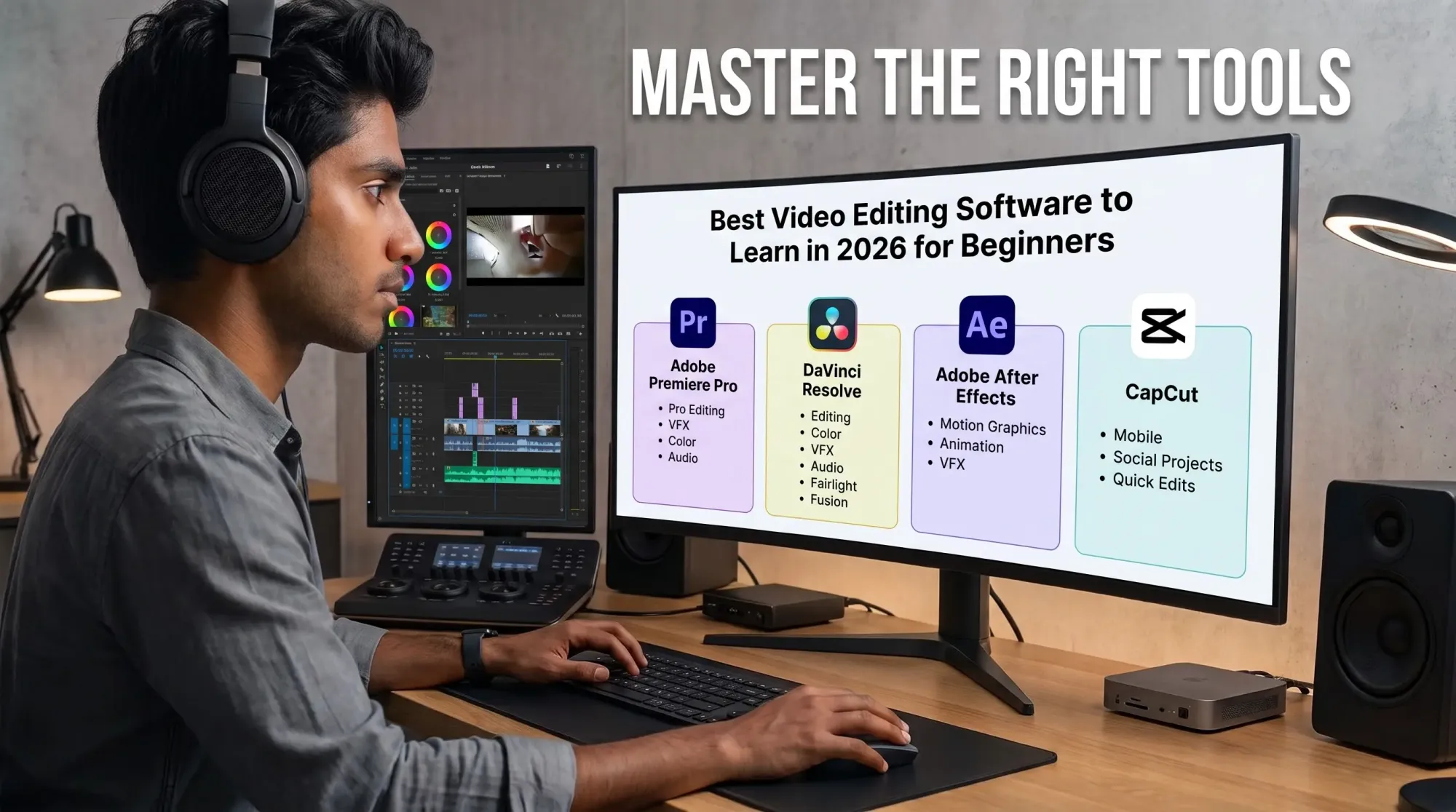
2. Choose One Video Editing Software
Pick one editing application and become comfortable using it.
Popular options include:
- Adobe Premiere Pro
- DaVinci Resolve
- Adobe After Effects
- CapCut
- Final Cut Pro
For beginners, learning one professional editing application properly is generally more useful than knowing several programs only at a basic level.
Current job listings commonly mention Premiere Pro, After Effects, DaVinci Resolve, motion graphics, storytelling and colour-related skills.
3. Practise With Real Projects
You don't need a client to start building experience.
Create projects such as:
- A YouTube video
- Three Instagram Reels
- A podcast clip
- A short advertisement
- A talking-head video
- A cinematic edit
- A before-and-after colour correction project
This gives you something concrete to show employers.
4. Build a Video Editing Portfolio
A video editing portfolio is one of the most important things you can create when you have no professional experience.
Your portfolio should show what you can actually do rather than simply listing software skills.
Include your strongest examples and explain what you edited, which tools you used and what your role was.
Current entry-level job listings specifically ask applicants for portfolios or sample work, including roles open to freshers.
5. Create a Short Showreel
Create a short video showing your best editing work.
Your showreel can demonstrate:
- Storytelling
- Pacing
- Transitions
- Audio editing
- Colour grading
- Motion graphics
- Short-form editing
Keep it focused. Employers should understand your editing ability within the first few seconds.
6. Get Experience Without a Job
If you have no experience, look for ways to work on real projects.
You can:
- Volunteer for a college or student project
- Edit videos for a local business
- Help a YouTube creator
- Create content for a small brand
- Take internships
- Start freelance projects
- Build personal projects
For example, AICTE-listed internships have included video editing opportunities where professional experience was not required, although applicants still needed basic editing skills.
7. Apply for Video Editor Jobs for Freshers
Once you have basic skills and a portfolio, start applying.
Look for roles such as:
- Video Editor
- Junior Video Editor
- Video Editing Intern
- Social Media Video Editor
- Content Editor
- Motion Graphics Intern
- Post-Production Assistant
- AI Video Editor
Don't automatically reject a job because it asks for experience. Some current listings accept freshers with strong portfolios.
What Skills Do Beginner Video Editors Need?
Focus on these skills first:
Technical skills: Premiere Pro or DaVinci Resolve, editing, audio, colour correction, captions and export settings.
Creative skills: Storytelling, pacing, visual composition and understanding audience attention.
Professional skills: Communication, organisation, meeting deadlines and responding to feedback.
AI-assisted editing is also becoming relevant to entry-level roles, with some current listings mentioning AI tools alongside traditional editing skills.
Can I Become a Video Editor Without a Degree?
Yes. A specialised degree is not always required.
A degree in film, media, communication, animation or a related field can be useful, but practical skills and portfolio quality can be more important for some creative roles.
If you don't have a degree, focus on building demonstrable skills through projects, internships, freelance work and a strong portfolio.
How Long Does It Take to Become a Video Editor With No Experience?
There is no fixed timeline.
With consistent practice, a beginner can first learn basic editing, then progress to professional software, storytelling, audio, colour and motion graphics.
The important milestone isn't simply completing a course. It is being able to produce several polished projects that you can confidently show to an employer or client.
How to Get Your First Video Editing Job
Follow this simple process:
Learn → Practise → Build projects → Create portfolio → Make showreel → Apply for internships/fresher jobs → Gain experience → Improve your portfolio.
When applying, don't send only a resume. Include a portfolio or showreel whenever possible. Current job listings demonstrate that employers may specifically request sample work from freshers.
How to Become a Freelance Video Editor With No Experience
Freelancing can also be an entry point.
Start by choosing one service, such as:
- YouTube video editing
- Instagram Reels editing
- Podcast editing
- Short-form content
- Advertisement editing
- Educational video editing
Create sample projects first, then approach potential clients with relevant examples of your work. You don't have to wait for a paying client before creating portfolio pieces.
Final Takeaway
You can become a video editor with no experience. Start with one editing program, learn the fundamentals, practise on real projects and build a portfolio that demonstrates your skills.
Your first goal shouldn't be to become an expert. It should be to create enough good work that an employer or client can see what you are capable of.
For more latest job openings in India, freshers can also explore CampusToDrive for relevant career opportunities.
FAQs
Can I become a video editor with no experience?
Yes. Learn the fundamentals, practise through personal projects and build a portfolio before applying for entry-level jobs.
Can I become a video editor without a degree?
Yes. A specialised degree isn't always required. Practical skills and portfolio quality can be important factors for creative roles.
What software should a beginner video editor learn?
Start with one application such as Adobe Premiere Pro or DaVinci Resolve. You can add After Effects and other tools as your skills improve.
How do I get video editing experience without a job?
Create personal projects, internships, freelance work, volunteer projects and sample edits for your portfolio.
Can freshers get video editor jobs?
Yes. Some current job listings specifically accept freshers and candidates with 0–1 years of experience, particularly when they can demonstrate relevant portfolio work.






















Sign in to leave a comment.