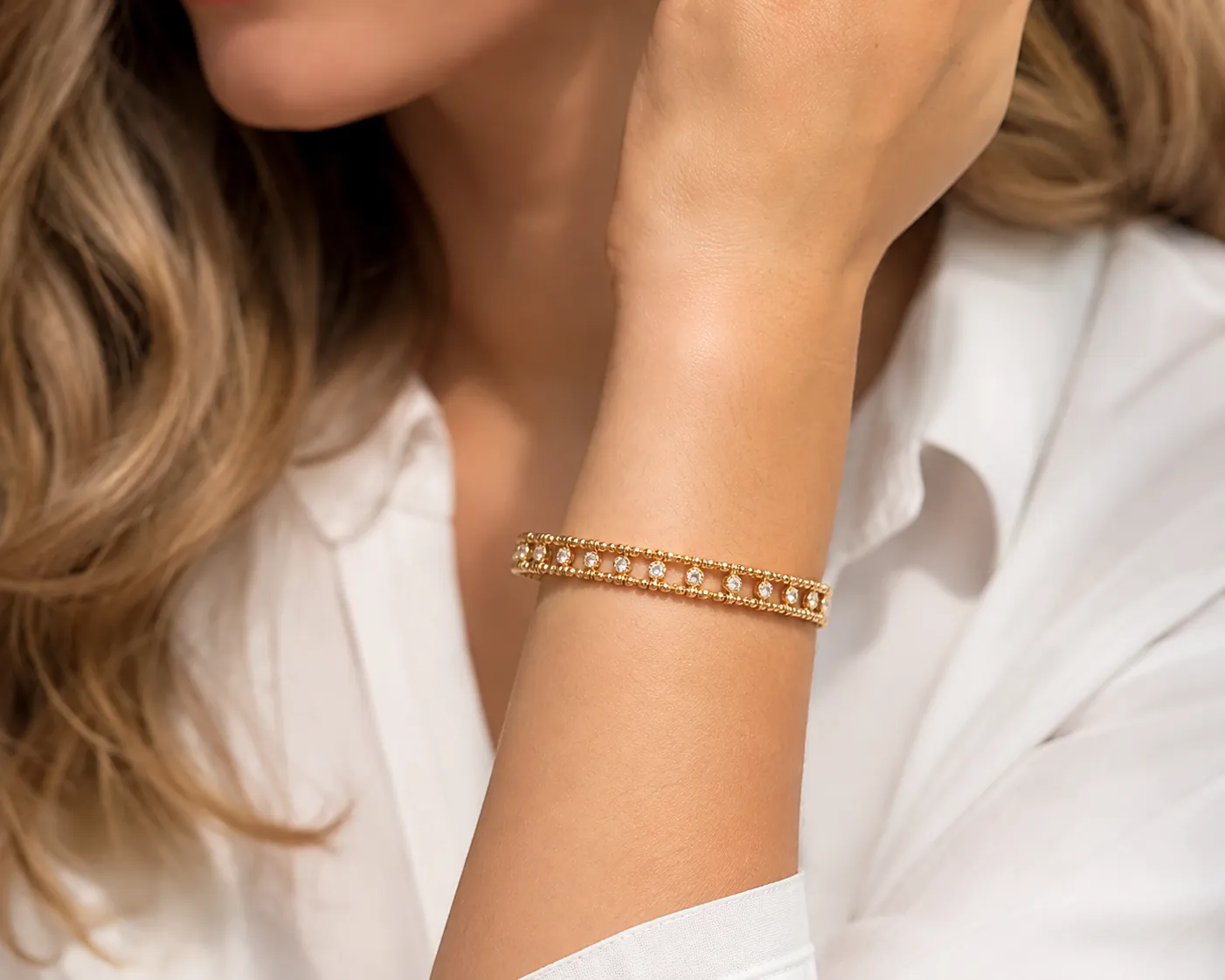

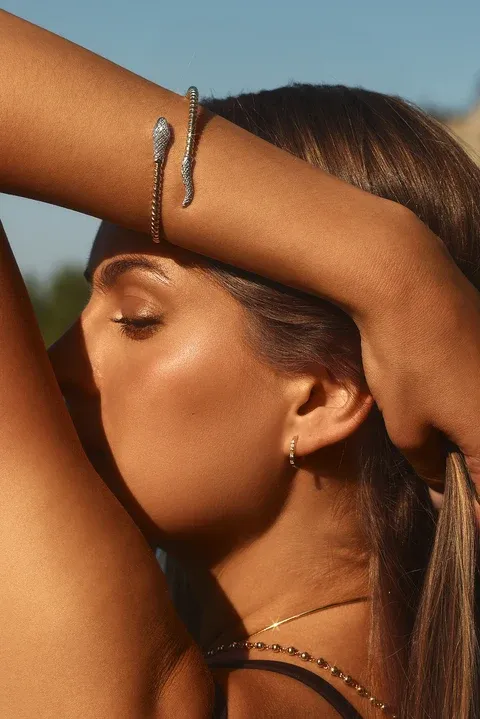
A bracelet you save for special occasions has an easy job. A bracelet you wear every day has a harder one. It needs to survive typing, sleeves, gym bags, and years of small bumps, all while still looking refined enough to wear to dinner without a second thought.
If you're shopping for bracelets for women built for daily life, look past the photos and think about the metal, the setting, and the fit. Here's how to choose one that earns a permanent spot on your wrist.
Metal Matters More Than You Think
Solid gold is the standard for daily wear, and for good reason. It doesn't flake, tarnish, or thin out the way plated pieces eventually do.
- 14K gold is harder and more scratch-resistant, which makes it a smart pick for a bracelet you won't take off often. Pieces like a 14K gold solid link bracelet or a 14K gold Miami Cuban chain bracelet are built with this in mind.
- 18K gold has a richer color and a slightly softer feel. It's a beautiful choice for pieces you want to feel more elevated, like an 18K white gold diamond pavé bracelet.
Both hold up well over time. The right one comes down to whether you want a warmer, more classic gold tone or the cooler, brighter look of white gold.
Chain and Bracelet Styles That Suit Daily Wear
Not every style wears the same way day to day.
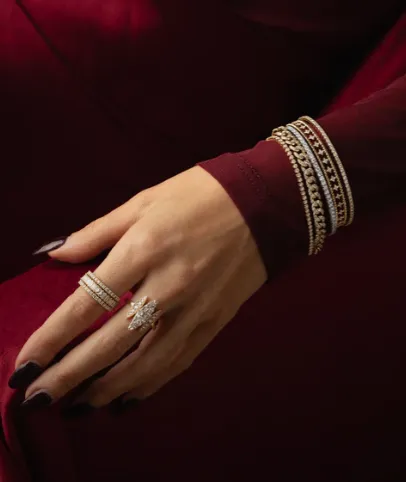
Cuban chain bracelets are sturdy, sit close to the wrist, and layer well with other pieces, which is why they're a go-to for everyday stacking. Bangle bracelets, like a diamond flex bangle, skip clasps altogether and slide on in seconds, ideal if you want something low-maintenance. ID bracelets add a personal touch and tend to sit flatter against the skin, so they don't catch on sleeves.
If You Want Something with Sparkle: Diamond Bracelets
Diamond bracelets can absolutely handle daily wear if the setting is right. Pavé settings, like those on a diamond pavé Cuban chain, spread small stones across the surface so no single diamond takes the brunt of daily knocks. Tennis bracelets, with diamonds set in a continuous line, offer a more polished, dressier feel and work best if you're gentler on your jewelry day to day.
Sizing It Right So You Actually Wear It
A bracelet that's the wrong size ends up in a drawer, no matter how beautiful it is. Measure your wrist with a soft tape, then add about half an inch so the piece drapes naturally instead of pulling tight or sliding around.
Flex bangles are more forgiving here, since they adjust slightly to fit. Chain bracelets with adjustable clasps give you the most control if your wrist size shifts throughout the day.
Matching Your Bracelet to Your Lifestyle
If you're active or work with your hands often, a low-profile Cuban chain or a simple gold bangle holds up better than delicate pavé work. If your days are less physical, you have more room to wear something like a tennis bracelet or a gemstone piece, such as an emerald or sapphire Cuban chain, without worrying about daily wear and tear.
Many women layer two or three pieces, mixing a plain gold chain with a diamond or gemstone bracelet for a look that feels personal rather than matched.
Care Tips That Keep Everyday Bracelets Looking New
Take bracelets off before swimming, showering, or applying lotion, since chemicals and moisture dull gold and gemstones faster than daily wear does. Wipe pieces with a soft cloth after wearing them, and store each one separately to avoid scratches from other jewelry.
Conclusion
A women's bracelets built for everyday wear should feel effortless, not fragile. If you want to compare gold tones, chain styles, and diamond settings side by side, L.A. Stein's bracelet collection is a good place to see the full range in 14K and 18K gold.

























Sign in to leave a comment.