
Quick Answer: What Makes a Boat Cover Waterproof
A waterproof boat cover lasts when three things line up: a marine-grade fabric with a genuine waterproof coating, a fit close enough that prevents water from pooling, and a support system that keeps the cover from sagging. Fabric alone does not make a cover durable. A waterproof sheet that traps condensation or pools rainwater will fail faster than a well-vented cover in a lighter fabric. The goal is a cover that keeps water out and lets moisture underneath escape.
Key Takeaways
- Waterproof and water resistant are different ratings, and the gap shows under sustained rain.
- Pooling water, not fabric failure, is the most common reason covers leak and tear.
- Ventilation matters as much as waterproofing, since trapped condensation causes mildew.
- Fit and support poles determine whether water sheds off the cover or collects on it.
- Trailering, mooring, and storage each place different demands on a cover.
Why a Waterproof Rating Alone Won’t Protect Your Boat
A cover is a system, not a sheet of fabric. Understanding how covers actually fail makes the buying criteria clear.
Pooling water
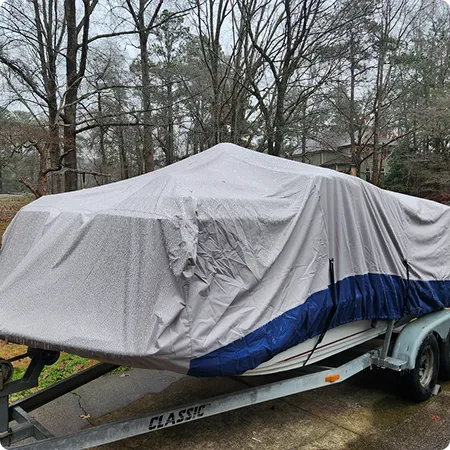
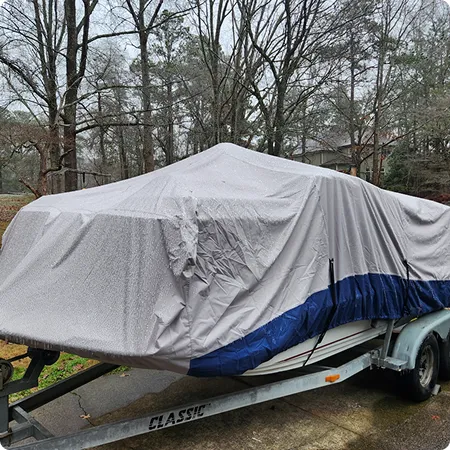
Rain that collects in a low spot adds weight fast. A few inches of standing water stretches seams, forces moisture through stitching, and can collapse an unsupported cover. Shedding water is a design problem, solved by fit and support, not by fabric rating alone.
Trapped condensation
A fully waterproof cover with no ventilation seals humid air against the hull and upholstery. Over weeks, that becomes mildew. This is why quality covers include vents and why breathability is part of the specification, not an afterthought.
UV breakdown
Sunlight breaks down the chemical bonds in marine fabrics over time, which is why coatings and UV inhibitors matter for longevity. A cover that stays waterproof through years of sun exposure is doing more work than one judged on day-one performance.
Why Boat Cover Fit Matters More Than Fabric
Boat ownership is widespread, which is worth keeping in mind when judging generic covers built for no boat in particular. Boats come in a wide variety of hull shapes and sizes, which is exactly why fit, not just fabric, separates a cover that lasts from one that does not.
Key Features of a Durable Waterproof Boat Cover
Not every specification carries equal weight. The table below separates the features that drive longevity from the ones that mainly sell covers.
| Feature | Why it matters | What to look for |
|---|---|---|
| Marine-grade fabric | Standard fabrics degrade under UV and salt exposure | Woven marine polyester or solution-dyed acrylic |
| Genuine waterproof coating | Sustained rain is a different load than light spray | PU or equivalent coating, not just water repellent |
| Ventilation | Trapped humidity causes mildew regardless of fabric | Built-in vents that release moisture |
| Snug, hull-specific fit | Loose fabric flaps, sags, and pools water | Sizing by boat type, length, and beam |
| Support system | Poles and straps shed water instead of collecting it | Support pole or tented center |
| Reinforced seams and stress points | Seams and tie-down points fail first | Double-stitched seams, reinforced grommets |
| Secure attachment | Wind and trailering lift a poorly secured cover | Elastic hem plus straps or a tightening system |
Waterproof vs. Water-Resistant Boat Covers
Water resistant fabric sheds a passing shower. A waterproof cover with a sealed coating handles hours of steady rain without wetting through. For a boat left outdoors, the difference is not cosmetic.
Marine-Grade Fabric Weight and Denier Explained
Heavier fabrics, often described by denier count, resist tearing under wind and trailering stress. Heavier is not automatically better for every use. A cover removed and reinstalled often benefits from a lighter fabric, while a long-term storage cover justifies the extra weight. Seal Skin’s boat cover range is organized around these use cases rather than a single fabric for everything.
Choosing a Boat Cover for Trailering, Mooring, or Storage
Trailerable Boat Covers
Prioritize a tight fit and a strong tightening system. Highway airflow puts more stress on a cover than a storm does, and loose fabric can tear or lift at speed.
Mooring and Dockside Covers
Prioritize waterproofing and drainage. A moored boat faces constant rain and spray, so shedding water and preventing pooling become the deciding factors.
Off-Season Boat Storage Covers
Prioritize UV stability and ventilation. Months under a cover invite mildew if humidity is sealed in, so venting and a fabric that survives sun exposure matter most.
How to Fit and Secure a Boat Cover
How to Measure Your Boat for a Cover
A cover sized to the wrong hull leaves slack that flaps and pools. Boat dimensions vary by length, beam, and style, so measuring the boat correctly is the step that decides whether a cover performs. Seal Skin’s guide on how to measure your boat walks through the measurements that determine fit.
Support Poles and Tenting to Prevent Pooling
A support pole raises the center so that rain runs off toward the edges. Without it, even a waterproof cover collects water in the middle. For any boat stored outdoors, a support system is not optional.
Straps, Tension, and Secure Attachment
An elastic hem pulls the cover snug under the gunwale. Add straps or an integrated tightening system for exposed or trailered boats. Re-check tension after heavy rain, since a loaded cover settles and loosens.
Boat Cover Mistakes That Cause Mold and Damage
Covering a Wet Boat
Sealing moisture under the cover invites mildew on upholstery and fabric alike. Let the boat dry before covering.
Skipping the Support Pole
A cover without center support pools water, and pooling is the fastest route to seam failure and tearing.
Ignoring Ventilation
Blocking or omitting vents traps humid air. Even a perfect waterproof fabric will foster mildew without airflow.
Storing the Cover Damp
Folding a wet cover for the off-season breeds mold. Dry it fully before storage.
Final Thoughts on Choosing a Boat Cover
A waterproof boat cover lasts when the whole system works, not just the fabric. Choose a marine-grade material with a genuine waterproof coating, size the cover properly for your boat, use a support system to prevent water from pooling, and make sure moisture underneath can escape. Match those choices to how the boat is used, whether trailered, moored, or stored, and the cover protects the boat for years instead of seasons. Measure carefully before buying, since fit is where most covers succeed or fail.
Waterproof Boat Cover FAQs
Is a waterproof boat cover better than a water-resistant one?
For outdoor storage or mooring, yes. Water resistant fabric sheds light rain but wets through under sustained exposure. Waterproof coatings hold up to prolonged rain.
Why does water pool on my boat cover?
Pooling means the cover lacks center support or does not fit snugly. A support pole raises the center so that water runs off the edges.
Do waterproof covers cause condensation?
They can if they lack ventilation. Sealed humid air becomes mildew, which is why vents are essential on a waterproof cover.
Can I use the same cover for trailering and storage?
A well-fitted, securely strapped cover can do both, though trailering places more stress on fit and attachment. Confirm the cover is rated for transport.
How do I know what size cover to buy?
Measure the boat’s length and beam and match against the cover’s sizing. Measuring by boat style rather than guessing prevents a loose, pooling fit.
How long should a quality boat cover last?
Lifespan depends on fabric, climate, and care. Marine-grade fabrics with UV protection last years longer than economy covers, especially with proper drying and storage.

























Sign in to leave a comment.