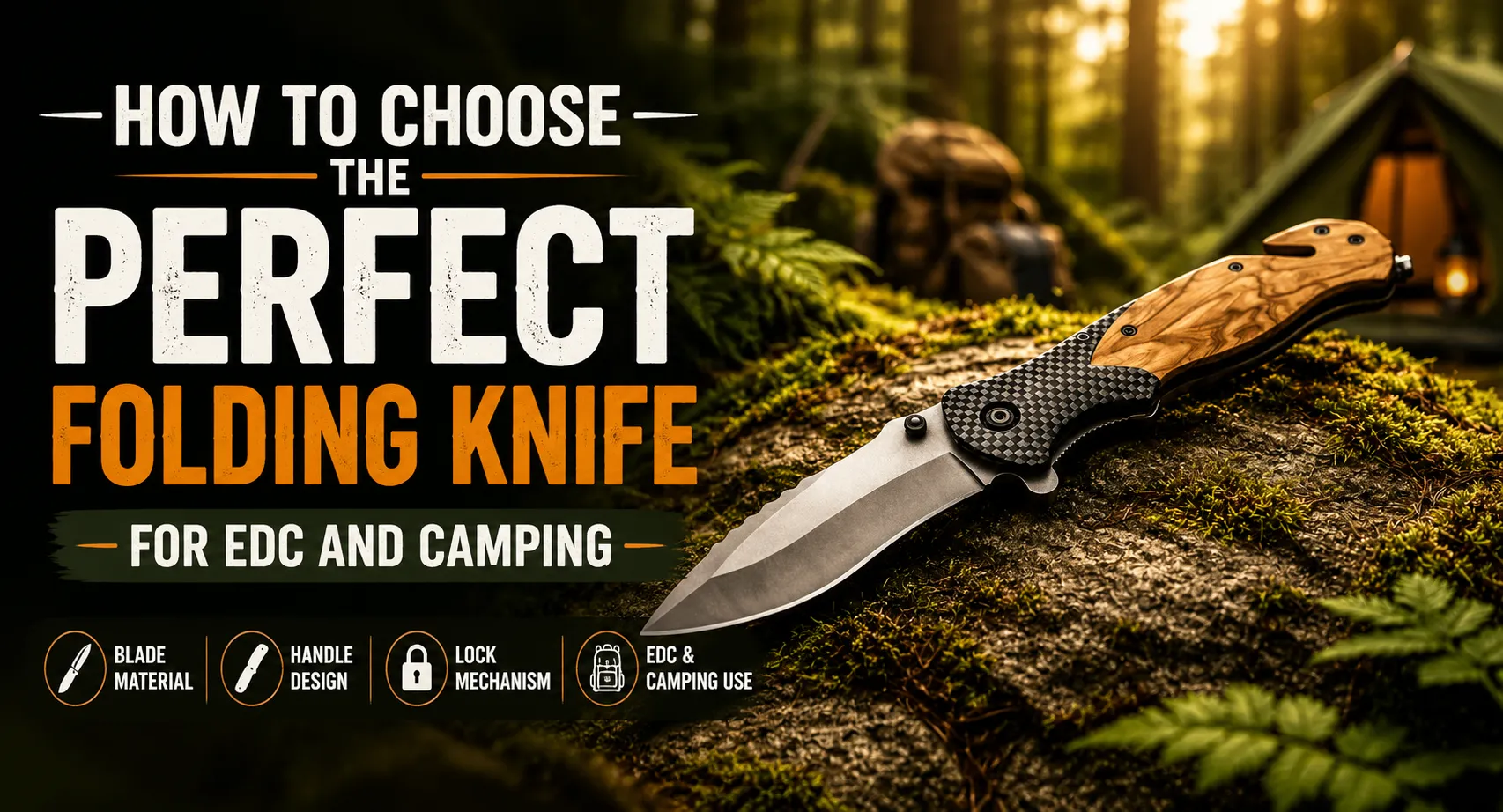
Why a Folding Knife Is the Ultimate EDC and Camp Tool
A great folding knife is one of the most versatile tools you can own. Unlike fixed-blade knives that demand a sheath and a dedicated carry position, a folding knife camp outdoor enthusiasts love fits neatly into your front pocket — ready for the trail, the kitchen tent, or the Monday morning office.
The challenge? The market is flooded with options. Cheap imports with brittle steel, heavy tactical folders that weigh down your pocket, ultra-premium customs that cost as much as a new tent — the range is overwhelming.
The truth is, a good everyday carry knife doesn't have to cost a fortune. But it does need to match your actual lifestyle. This guide gives you a clear, no-fluff framework for finding the folding knife that will serve you daily and hold up on every outdoor adventure.
1. Understand Your Primary Use Case
Before looking at blade shapes or steel types, ask yourself one honest question: What will I use this knife for most?
EDC and camping overlap heavily, but they aren't identical:
- EDC tasks — opening boxes, cutting tape, food prep, breaking down cardboard, slicing rope, light whittling
- Camp outdoor tasks — batoning kindling, food prep, carving, cutting cordage, processing game, emergency response
If your daily carry knife needs to double as your camp knife, you want a blade that handles both with confidence. A slim 2.5-inch blade may be perfect for office carry but feel underwhelming when you need to process firewood or handle a trailside emergency.
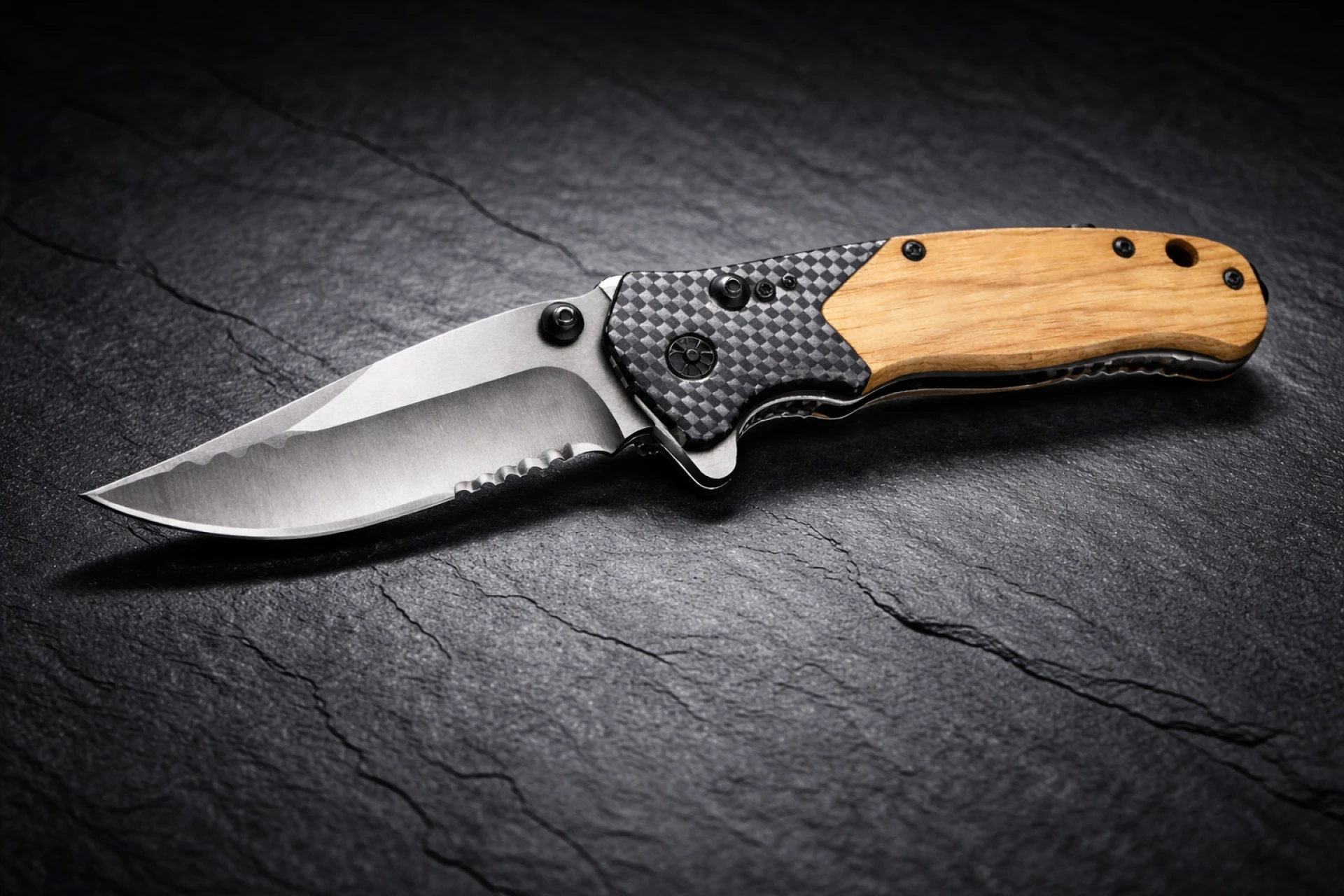
The sweet spot for a folding knife camp outdoor use? A 3 to 3.75-inch blade — long enough to be genuinely useful at camp, short enough to feel comfortable in everyday carry. The Ridgeblade by Wild Soul Brand lands right in this zone at 3.15–3.35 inches — a size dialed in for real-world use.
2. Blade Steel: The Most Important Decision You'll Make
Steel is everything. A cheap steel blade will dull after two uses. An overly hard steel will chip under lateral stress. Here's a breakdown of the most common steels you'll encounter:
Budget-Friendly Options (Under $60)
- 8Cr13MoV — Entry-level stainless steel. Holds an edge decently, easy to sharpen in the field, resists rust well. Fine for light-duty use but not ideal for demanding camp tasks.
- D2 — Semi-stainless tool steel. Harder than entry-level options, holds an edge longer, but requires more maintenance to prevent corrosion in wet camp conditions.
Mid-Range Sweet Spot ($50–$150)
- 440C Stainless Steel — A proven, trusted steel across the knife industry. Excellent corrosion resistance, solid edge retention at a hardness of around 58 HRC, and easy to sharpen in the field without specialized stones. This is the steel used in the Ridgeblade — chosen specifically because it performs in wet, muddy, and demanding outdoor conditions without demanding high-maintenance care.
- VG-10 — Japanese stainless steel with excellent edge retention and great rust resistance. Popular in premium mid-range folders.
- 14C28N (Sandvik) — Scandinavian steel with outstanding toughness and corrosion resistance. A common choice for outdoor-focused knives.
Premium Performers ($180+)
- S35VN / S30V — American powdered steel. Exceptional edge retention, excellent toughness, and resists chipping.
- M390 / 20CV — The top tier of stainless steel performance. Edge retention, corrosion resistance, and toughness in near-perfect balance. Typically found on knives $200 and up.
Bottom line: For a folding knife camp outdoor users can depend on, 440C at 58 HRC is a genuinely excellent choice. It's tough, rust-resistant, and holds a working edge through extended outdoor use — which is exactly why the Ridgeblade is built around it.
3. Blade Shape: Form Follows Function
The profile of your blade determines what tasks it excels at. Here are the most practical shapes for EDC and camping:
Drop Point
The most popular blade shape for good reason. A convex spine that drops to meet the cutting edge creates a strong tip with a large belly — ideal for skinning, slicing, food prep, and general camp tasks. If you only ever own one blade shape, make it a drop point. The Ridgeblade uses an angle-edge drop-style profile perfectly suited to this all-around role.
Clip Point
A concave cutout near the tip creates a more defined, piercing point. Great for detail work and tasks requiring precision. Slightly more tip vulnerability than a drop point under hard use.
Sheepsfoot / Wharncliffe
A flat cutting edge with a spine that curves to a blunt tip. Safer for close-quarter cutting tasks, rescue scenarios, and boat use. Less versatile for camp work but excellent for specific applications.
Tanto
A strong, angular tip designed for piercing. Less ideal for general camp tasks like food prep or carving — the angled tip creates an awkward belly transition for most outdoor cutting needs.
Best for EDC + camp outdoor use: Drop point, every time.
4. Lock Mechanism: Safety Under Pressure
A folding knife that closes while you're using it isn't a tool — it's a hazard. The lock mechanism keeps the blade open and secure during use. Here are the most common types:
Liner Lock
A stamped metal liner springs into place behind the blade tang when opened. Simple, reliable, and used across hundreds of popular folders at every price point. The Ridgeblade uses a secure liner lock mechanism — straightforward to engage, dependable under load, and easy to close one-handed.
Frame Lock
Similar to a liner lock but the locking mechanism is built directly into the handle frame. Generally stronger and preferred by many serious EDC users for its solid lockup.
Axis Lock
A spring-loaded bar slots into a notch in the blade. Extremely strong, ambidextrous, and arguably the smoothest to open and close one-handed. Found on premium folders.
Back Lock (Lockback)
A rocker-style lock at the spine of the handle. Extremely secure, difficult to disengage accidentally — great for hard-use camp tasks.
For most camp and EDC users: A solid liner lock like the Ridgeblade's is the right balance of simplicity, security, and field reliability. You don't need an exotic lock mechanism — you need one that works every time.
5. Handle Material: Grip That Holds Up
Your handle determines how the knife feels in hand, how it stands up to the elements, and how it ages over time.
Steel + Wood (Classic Outdoor Combination)
The Ridgeblade pairs a steel bolster with a wood handle — a combination that delivers real grip in wet conditions, natural warmth in cold weather, and a timeless feel that sets it apart from synthetic-only folders. Wood handles develop character with use, and on a camp knife, that matters. This is a handle built for people who actually take their knives outside.
G-10
Fiberglass laminate. Lightweight, tough, and aggressively textured. Great for pure utility but lacks the traditional appeal of natural materials.
Carbon Fiber
Visually striking and lightweight, but can feel slippery without aggressive texturing. Better suited to premium office EDC than hard-use camp knives.
FRN (Fiberglass Reinforced Nylon)
Lightweight, chemical resistant, and tough. Common on budget-to-mid folders. Practical but plain.
For camp + EDC: The Ridgeblade's steel and wood combination hits a sweet spot — tough enough for the trail, refined enough for daily carry.
6. Size and Weight: The Everyday Carry Equation
The best knife is the one you actually carry. A heavy, bulky folder will stay in your bag. A well-balanced blade will live in your pocket every single day.
Here's a practical size guide:
| Use Case | Blade Length | Overall Length | Weight |
| Office EDC only | 2.5" – 3" | Under 7" | Under 2 oz |
| EDC + light camp | 3" – 3.5" | 7"– 7.5" | 3–4 oz |
| EDC + serious camp | 3.5" – 4" | 7.5" – 8.5" | 4–6 oz |
The Ridgeblade hits the middle row perfectly: 3.15–3.35" blade, 7.9 inches overall, and 150g (about 5.3 oz) — substantial enough to feel purposeful in hand, light enough for all-day pocket carry. This is the profile of a good everyday carry knife that doesn't quit when you head into the backcountry.
7. Opening Mechanism: One-Hand Matters at Camp
At camp, your other hand is often holding something. One-handed opening is a real-world advantage, not a gimmick.
- Thumb Stud — The most common opener. Works well, easy to use with gloves on.
- Thumb Hole — Large circular hole in the blade for smooth, ambidextrous deployment.
- Flipper Tab — A protrusion at the base of the blade. Flicks open with your index finger. Fast and intuitive.
- Assisted Opening — A spring assists the blade once partially deployed. Extremely fast. Check local laws — some regions restrict assisted openers.
For a folding knife camp outdoor users can rely on, look for any opening method you can work reliably with one hand, even in gloves or in the dark.
8. Beyond Cutting: Emergency Features Worth Having
A camp knife that doubles as an emergency tool is worth serious consideration — especially if you drive backcountry roads, spend time on the water, or prepare go-bags.
The Ridgeblade includes two features that elevate it beyond a standard folder:
- Built-in Glass Breaker — A reinforced tip at the handle end for breaking vehicle windows in entrapment emergencies
- Seatbelt Cutter — A recessed cutting hook that slices through seatbelts cleanly without a sawing motion
These aren't gimmicks — they're features that search and rescue professionals and first responders consider essential on a carry knife. For hikers, hunters, and overlanders, having this capability on your everyday knife costs nothing in bulk or weight and could be the most important tool you own.
9. What to Look for at Every Price Point
Under $50 — Get the Basics Right
At this price, prioritize steel hardness, a secure lock, and ergonomics over flashy features. Avoid knives with no steel specification listed — mystery steel is almost always a red flag.
$50–$100 — The Best Value Zone
This is where a good everyday carry knife with genuine outdoor capability lives. You get real steel (440C, 14C28N), quality fit and finish, and purpose-built features without overpaying. The Ridgeblade at $63.75 lands squarely here — premium build quality, outdoor-tested performance, and a price that makes sense for daily carry.
$100–$200 — Performance Upgrades
S30V, S35VN, VG-10 steels. Premium handle materials. Better pivot systems. Worth it if you carry hard every day or use your knife professionally.
$200+ — Diminishing Returns for Most Users
At this level you're paying for premium steel, tight tolerances, and collector appeal. These are exceptional knives — but a $65 folder used daily beats a $400 knife kept in a drawer.
10. The Ridgeblade: A Good Everyday Carry Knife Built for Camp and Outdoors
If you've read this far, you know what to look for. Here's how the Ridgeblade by Wild Soul Brand checks every box:
| Feature | Ridgeblade Spec | Why It Matters |
| Blade Steel | 440C Stainless | Proven rust resistance, solid edge retention, easy field sharpening |
| Hardness | 58 HRC | Tough enough for camp tasks, won't chip under lateral load |
| Blade Length | 3.15–3.35 inch | Ideal EDC-to-camp size |
| Overall Length | 7.9 inch / 200mm | Full control without being bulky |
| Weight | 150g | Substantial but pocketable |
| Handle | Steel + Wood | Grip, warmth, durability, and classic outdoor appeal |
| Lock | Liner Lock | Secure, simple, reliable one-handed closure |
| Emergency Features | Glass Breaker + Seatbelt Cutter | Trail and road safety built in |
| Price | $63.75 (on sale from $75) | Premium build at mid-range price |
Built for camping, hiking, backpacking, hunting, fishing, and everyday carry — the Ridgeblade is designed for people who actually go outside and need a knife they can count on.
Final Checklist: Your Perfect Folding Knife
Before you buy, run through this quick checklist:
✅ Blade 3"–3.75" for EDC and camp versatility
✅ 440C, VG-10, or 14C28N steel — proven for outdoor use
✅ 58 HRC or above for a working edge that lasts
✅ Secure lock — liner, frame, or axis
✅ Under 6 oz for all-day comfort
✅ Emergency features (glass breaker / seatbelt cutter) if you spend time in vehicles or remote terrain
✅ Handle material that grips in wet conditions
A great folding knife doesn't just cut things — it becomes part of how you move through the world. Choose one that fits your life, carry it every day, and it will be there when it matters most.

























Sign in to leave a comment.