
If your bike has started to feel rough, noisy, or sluggish, the culprit is often hiding in plain sight: worn or poorly matched bike bearings. Bearings are the unsung heroes of every ride — they're what let your wheels spin freely, your headset steer smoothly, and your bottom bracket deliver power without friction. Choosing the right ones can transform how your bike feels, and choosing the wrong ones can cost you performance, comfort, and money down the line.
Here's everything you need to know before you buy.
Why Bearing Quality Matters More Than You Think
Every rotating part on your bike — wheels, headset, bottom bracket, pedals, and on full-suspension frames, the suspension pivots — relies on bearings to keep things spinning smoothly. Low-quality or worn-out bearings create drag, introduce play into your steering or cranks, and can lead to premature wear on the surrounding components. A cheap bearing might save you a few pounds today but cost you a replacement headset or frame bushing tomorrow.
That's why picking the right bearing type and material for your specific application is one of the most cost-effective upgrades you can make.
Understanding the Main Types of Bike Bearings
Standard Steel Bearings
Steel bearings are the industry standard for a reason: they're durable, affordable, and perform well under a wide range of conditions. For everyday riding — commuting, general trail use, road cycling — quality steel bearings offer excellent value and reliability.
Stainless Steel Bearings
If you ride in wet, muddy, or coastal conditions, stainless steel bearings are worth the upgrade. They resist corrosion far better than standard steel, which means less maintenance and a longer service life, especially in headset and hub applications exposed to the elements.
Hybrid Ceramic Bearings
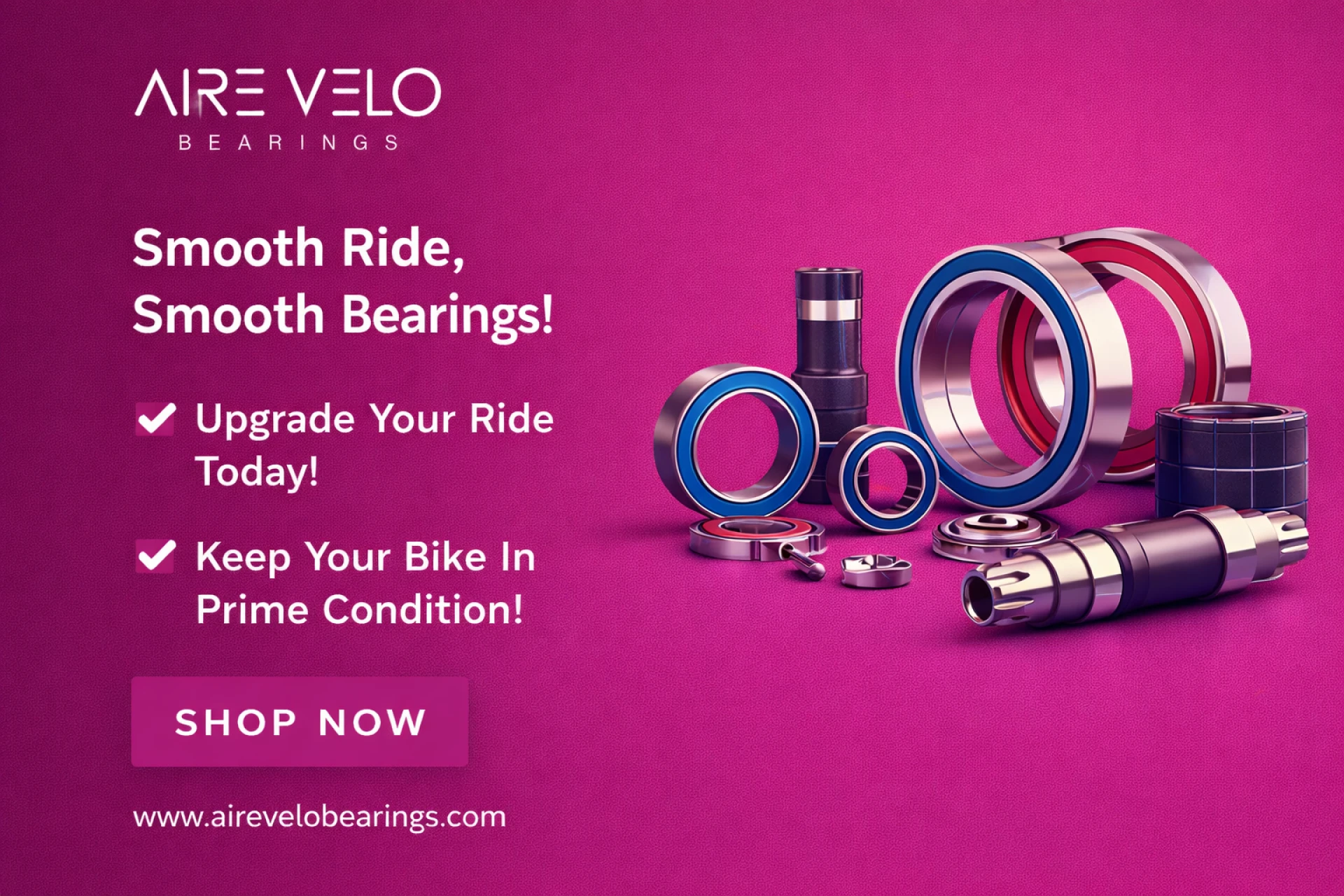
For riders chasing every last watt of efficiency, hybrid ceramic bearings combine steel races with ceramic balls. The result is reduced friction, lower rolling resistance, and impressive heat resistance — a popular choice for racers and performance-focused cyclists who want their bottom bracket and wheel bearings spinning as freely as possible.
Needle Roller and Roller Bearings
For components under higher radial loads, needle roller bearings pack more contact surface into a compact space, offering excellent load capacity where space is tight — a common requirement in certain pivot bearing and suspension applications.
Matching Bearings to Your Bike's Components
- Headset bearings: Support your fork and enable smooth, precise steering. Standard, stainless steel, and even super-slim options exist to suit different headset designs.
- Bottom bracket bearings: Handle the constant rotational load from pedalling, so wear here directly affects how efficiently you transfer power.
- Wheel hub bearings: Keep your wheels spinning true and freely; poor-quality hub bearings are a common source of unwanted drag.
- Pedal bearings: Smaller but no less important — worn pedal bearings introduce play that you'll feel with every pedal stroke.
- Suspension pivot and swing arm bearings: Critical on full-suspension bikes, where precise, low-friction movement affects both performance and suspension feel.
Signs You Need New Bearings
Not sure if it's time to replace yours? Watch out for:
- Grinding, clicking, or crunching noises when pedalling or turning the handlebars
- Noticeable play or looseness when you wiggle a wheel, crank arm, or headset
- Stiffness or resistance when a component should spin freely
- Visible rust, pitting, or discolouration on exposed bearing surfaces
If you notice any of these, it's worth inspecting — and likely replacing — the affected bearing before the problem spreads to more expensive components.
Why Choosing the Right Supplier Matters
Not all bearings are created equal, even when they look identical on paper. Precision tolerances, seal quality, and the grade of steel or ceramic used all affect how long a bearing lasts and how it performs. Working with a supplier who understands bike bearings specifically — rather than a generic industrial catalogue — means you're more likely to get the correct size, fit, and specification for your exact component the first time.
With decades of experience supplying both industrial bearings and bike-specific bearings, and a team of keen cyclists who test products in real riding conditions, choosing a specialist supplier takes the guesswork out of the process.
Final Thoughts
Your bike's performance depends on dozens of small components working together seamlessly, and bearings are among the most important — yet most overlooked — of them all. Whether you're upgrading to hybrid ceramic bearings for race-day speed, switching to stainless steel for wet-weather durability, or simply replacing worn-out stock bearings, getting the right match for your bike will pay off in smoother rides and fewer repairs.
Not sure which bearings your bike needs? Get in touch with our friendly team — we're happy to help you find the perfect fit.

























Sign in to leave a comment.