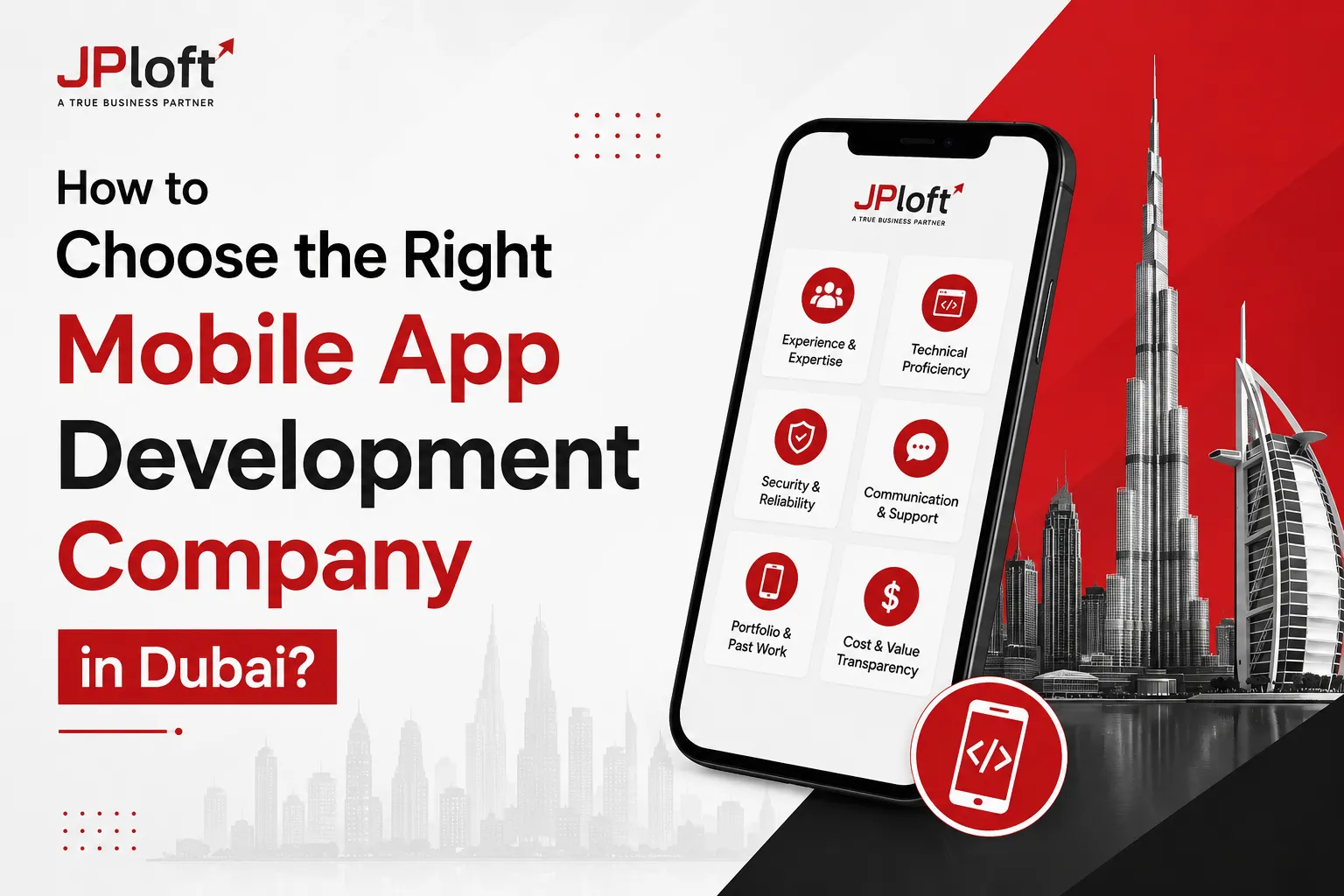

Dubai has become one of the leading destinations for digital innovation, making it an attractive market for businesses looking to launch mobile applications. As demand grows, so does the number of development companies offering similar services.
However, choosing the right partner involves much more than comparing prices or portfolios. The ideal company should understand your business goals, apply the right technologies, and support your product beyond launch.
A thoughtful evaluation can save time, reduce risks, and maximize your return on investment. In this blog, we'll discuss the key factors to consider when choosing the right mobile app development company in Dubai.
Phase 1: Start by Defining Your App Development Goals
Before evaluating development companies, it's important to understand your own project requirements. Having a clear vision helps you communicate expectations, compare service providers effectively, and ensure the final product aligns with your business objectives.
A] Identify the Problem Your App Will Solve
Every successful app begins with a clear purpose. Determine the business challenge your application addresses and the value it delivers to users. Defining measurable goals early provides direction throughout the development process and helps evaluate project success after launch.
B] Prioritize Features and Functionalities
List the features your application needs and separate essential functions from future enhancements. This approach helps developers recommend the right development strategy while preventing unnecessary complexity during the initial release.
C] Set a Realistic Budget and Timeline
Establishing a practical budget and project timeline allows both parties to plan effectively. Consider not only development costs but also expenses related to testing, deployment, maintenance, and future feature updates to avoid unexpected challenges later.
Phase 2: Evaluate Technical Expertise and Industry Experience
Not every development company offers the same level of expertise. Evaluating technical capabilities, industry knowledge, and development practices helps you identify a partner capable of delivering a secure, scalable, and high-performing mobile application.
1. Review Relevant Industry Experience
Experience within your industry often leads to faster development and better decision-making. Companies familiar with your business domain understand user expectations, regulatory requirements, and common challenges, reducing the learning curve during development.
2. Assess Technology Capabilities
Modern mobile applications often require more than native or cross-platform development. Evaluate whether the company has expertise in cloud technologies, API integrations, cybersecurity, and AI Development Services to support intelligent features such as automation, predictive analytics, and personalized user experiences.
3. Examine Portfolio and Client Success Stories
A strong portfolio demonstrates both technical expertise and problem-solving ability. Review completed projects to understand the quality of design, functionality, and overall user experience. Case studies that highlight measurable business outcomes provide additional confidence in the company's capabilities.
4. Understand Their Development Process
A transparent development process ensures better collaboration throughout the project. An experienced mobile app development company Dubai businesses trust should follow Agile methodologies, maintain regular communication, conduct continuous quality assurance, and involve clients during every development stage.
Phase 3: Compare Companies Beyond Pricing
While pricing is an important consideration, it should not be the deciding factor when selecting a development partner. A lower quote may seem attractive initially, but factors such as communication, post-launch support, and development quality often determine the long-term success of your mobile application.
► Understand the Pricing Structure
Different companies follow different pricing models based on project scope and engagement requirements. Some offer fixed-price contracts for well-defined projects, while others use dedicated teams or time-and-material models for greater flexibility. Understanding these options helps you choose a model that aligns with your business objectives and project complexity.
► Evaluate Transparency and Communication
Open communication is essential throughout the development journey. Look for a company that provides regular progress updates, uses collaborative project management tools, and responds promptly to questions or concerns. Transparent communication minimizes misunderstandings and keeps the project on schedule.
► Look for Long-Term Support
Launching an application is only the beginning. Your development partner should offer ongoing maintenance, security updates, bug fixes, and feature enhancements to keep the app running smoothly. Continuous support ensures your application remains compatible with new operating systems, devices, and changing user expectations.
► Check Reviews and Client Feedback
Client testimonials and independent review platforms offer valuable insights into a company's reliability and professionalism. Look beyond star ratings by reading detailed reviews that discuss communication, technical expertise, project delivery, and post-launch support. Consistently positive feedback from long-term clients often reflects a company's commitment to quality and customer satisfaction.
Questions to Ask Before Making the Final Decision
Choosing a development company is a long-term business decision. Before signing a contract, ask questions that clarify responsibilities, ownership, security practices, and future support. Clear answers help establish trust and reduce the likelihood of unexpected challenges during or after development.
1. Who Owns the Source Code?
Confirm that the agreement clearly defines ownership of the application's source code, intellectual property, and design assets. Having complete ownership gives your business the flexibility to scale, maintain, or transfer the project in the future without legal complications.
2. What Post-Launch Services Are Included?
Ask what happens once the application goes live. A reliable development partner should provide maintenance, performance monitoring, security updates, and technical support to ensure the application continues operating efficiently after launch.
3. How Is Data Security Managed?
Mobile applications often process sensitive customer and business information. Understand how the company approaches data encryption, secure authentication, compliance with industry standards, and vulnerability testing to ensure your application is protected against evolving cyber threats.
4. Can the Team Scale as My Business Grows?
Your application requirements are likely to change as your business expands. Choose a partner that can scale development resources, integrate new technologies, and support additional features without disrupting the application's performance or user experience.
5. What Metrics Define Project Success?
Successful projects are measured by more than timely delivery. Discuss how the company evaluates success through performance, user engagement, application stability, and business outcomes. Establishing measurable goals from the beginning creates accountability and helps ensure the final product delivers lasting value.
Conclusion
Choosing the right development partner requires careful evaluation of expertise, processes, communication, and long-term support.
Rather than focusing solely on pricing, businesses should look for a company that understands their objectives, applies modern technologies, and maintains transparency throughout the project lifecycle.
Taking the time to assess technical capabilities, client experience, and post-launch services can significantly reduce project risks while improving the quality of the final product.
A trusted development partner not only builds your application but also helps your business adapt, grow, and remain competitive in Dubai's rapidly evolving digital landscape.


























Sign in to leave a comment.