

Starting a modeling career can feel exciting, but it can also be confusing. There are many different types of modeling, and not every path requires the same look, skills, or experience. Some models work in fashion and editorial, while others find opportunities in advertising, lifestyle, fitness, e-commerce, or commercial campaigns.
The good news is that you do not have to decide everything at once. Understanding the different options can help you figure out where your strengths fit and what kind of work you actually want to pursue.
Start With Your Own Goals
Before looking for an agency or submitting to clients, think about what interests you.
Do you enjoy fashion photography and creative styling? Editorial modeling might be worth exploring. Do you feel comfortable presenting everyday products and connecting naturally with the camera? Commercial or lifestyle modeling could be a better fit.
Your goal does not have to be based entirely on appearance. Personality, communication, movement, confidence, and the ability to take direction can all matter.
Understand the Main Types of Modeling
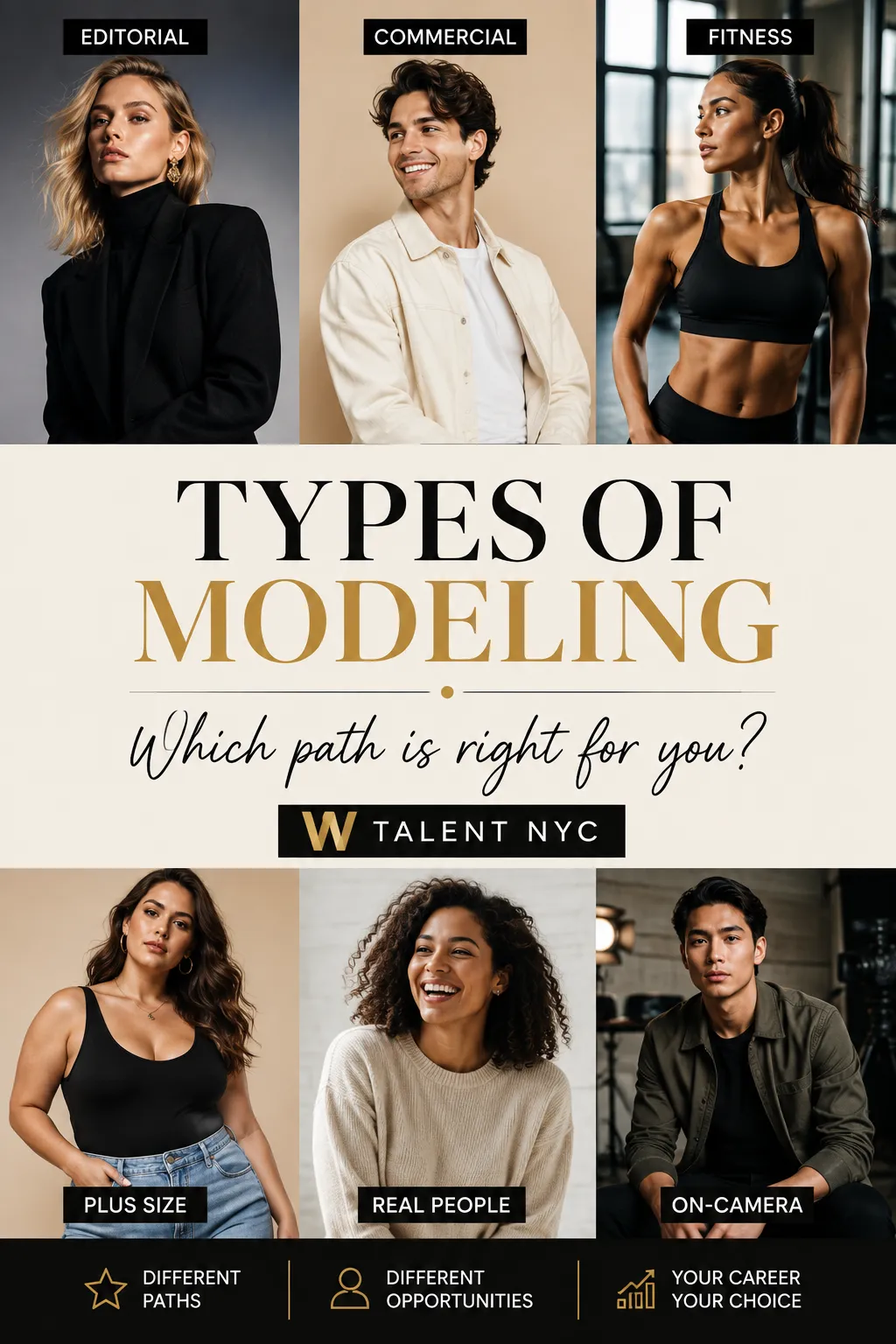
There is no single definition of a successful model. Different categories serve different purposes.
Editorial Modeling
Editorial modeling is often associated with fashion magazines, creative photography, and artistic concepts. These projects may involve distinctive styling, dramatic poses, and a strong visual concept.
Models interested in this area should be comfortable experimenting with expressions, poses, and different creative directions.
Commercial Modeling
Commercial modeling is generally connected with products and services aimed at everyday consumers. Advertising, catalogs, websites, and promotional campaigns can all involve commercial models.
A natural and approachable appearance can be useful because the goal is often to make a product or message relatable.
Lifestyle Modeling
Lifestyle modeling focuses on realistic situations and everyday experiences. A campaign might show people at home, traveling, exercising, shopping, working, or spending time with friends.
For this type of work, being able to create natural expressions and interactions can be just as important as posing.
Fitness Modeling
Fitness modeling focuses on sports, wellness, exercise, activewear, and related products. Models working in this category generally need to be comfortable demonstrating movement and maintaining a physically active lifestyle.
However, fitness modeling is not simply about having a particular body type. Different brands look for different people depending on the audience and campaign.
Plus-Size Modeling
The modeling industry includes opportunities for models across a range of body sizes. Plus-size modeling can include commercial advertising, fashion, lifestyle, e-commerce, and other areas.
As with other categories, finding the right opportunities is more important than trying to fit yourself into a category that does not match your natural appearance or goals.
Real People and Character-Based Modeling
Some campaigns specifically look for people who feel authentic rather than traditionally fashion-oriented. Real-person modeling can include families, professionals, older adults, young people, and individuals with distinctive personalities or appearances.
This area can be particularly interesting for people who want to work in advertising and lifestyle campaigns without pursuing conventional fashion modeling.
Think About Your Strengths
Once you understand the categories, consider what comes naturally to you.
Ask yourself:
- Do I feel comfortable in front of a camera?
- Am I good at taking direction?
- Do I enjoy fashion and creative styling?
- Can I create natural expressions?
- Am I comfortable with movement?
- Do I enjoy working with different types of people?
- What kind of projects would I genuinely enjoy?
There are no perfect answers. The purpose is to understand where your interests and abilities overlap.
Build the Right Portfolio
Your portfolio should support the type of modeling you want to pursue.
Someone interested in editorial work may benefit from creative fashion images, while a commercial model may need photographs that show a more natural and approachable range.
Avoid filling your portfolio with photographs that all look identical. Showing different expressions, poses, and settings can give agencies and clients a better idea of your range.
Most importantly, keep your images current and representative of how you look now.
Research Representation Carefully
Once you have a clearer idea of your direction, you can begin researching agencies.
If you are searching for a talent agency in New York, do not choose one simply because it appears first in a search result. Look at the categories of models it represents, submission requirements, communication practices, and the type of work associated with its roster.
For example, W Talent NYC represents different categories of talent, including models and real people. Its online resources can also be useful for people researching modeling and representation.
You can also follow W Talent NYC on Pinterest to find visual modeling resources, career ideas, and related content.
Do Not Chase Every Opportunity
New models sometimes feel that they need to accept every opportunity that comes their way. That is not always the best approach.
An opportunity should make sense for your goals, experience, availability, and professional boundaries. Take time to understand what a project involves before agreeing to participate.
Be particularly careful with anyone promising guaranteed fame, guaranteed bookings, or unrealistic income.
Keep Developing
Choosing a modeling path does not mean you have to stay in one category forever.
A model who begins with lifestyle work may later explore commercial campaigns or editorial projects. Your experience, portfolio, interests, and skills can change over time.
Keep practicing posing, movement, facial expressions, and camera awareness. Learn how professional shoots work and become comfortable taking direction.
Use Pinterest as a Source of Inspiration
Visual platforms can be helpful when you are trying to understand different modeling styles.
The W Talent NYC Pinterest content can be used as one source for exploring modeling categories, portfolio ideas, career advice, and visual references. Instead of copying another model's style, use references to understand what different types of modeling actually look like.
You can also save examples that inspire you and create your own visual reference board before a test shoot or portfolio session.
Final Thoughts
Choosing the right modeling path is less about finding a category that sounds impressive and more about finding work that matches your personality, strengths, and goals.
Take time to explore different categories, build appropriate materials, research representation, and learn how the industry works. You may discover that the path you initially considered is not the one that suits you best.
There is room for different kinds of models in today's entertainment and advertising industries. The most useful first step is understanding your options and then choosing a direction that feels realistic and enjoyable for you.
Frequently Asked Questions
What is the best modeling path for beginners?
There is no single answer. Commercial, lifestyle, and real-person modeling can be worth exploring, but the right choice depends on your interests, appearance, skills, and goals.
Can I pursue more than one type of modeling?
Yes. Many models work across multiple categories when their skills and portfolio suit different types of projects.
Do I need professional photos before contacting an agency?
Requirements vary. Some agencies request professional photographs, while others may accept simple current images or digitals during the initial submission.
How do I find a modeling agency?
Research agencies that represent your category, review their official submission requirements, and understand their representation terms before applying.
Can Pinterest help with a modeling career?
Pinterest can be useful for discovering visual references, portfolio ideas, posing inspiration, and educational content. It should complement—not replace—professional training and research.




















Sign in to leave a comment.