


Choosing the right STEM education partner for your school in Dubai means selecting a provider that delivers curriculum alignment, hands-on learning, teacher training, and measurable outcomes through a structured, scalable implementation model. Schools that prioritise long-term integration over one-time solutions consistently achieve higher student engagement, stronger academic performance, and better admissions outcomes.
Why STEM Education in Dubai Matters for Schools
STEM education in Dubai is now a strategic requirement as schools align with the UAE’s innovation-driven vision, including artificial intelligence, robotics, and future workforce readiness. With guidance from the Knowledge and Human Development Authority (KHDA) and national initiatives focused on digital transformation, schools are expected to adopt experiential, skills-based learning models.
In this competitive environment, schools offering integrated STEM education stand out in admissions and parent perception. Parents in Dubai actively evaluate schools based on how effectively they prepare students for real-world careers through coding, robotics, and applied problem-solving. For a deeper understanding of how integrated learning is shaping schools, explore STEM education in Dubai.
What High-Performing Dubai Schools Are Doing Differently
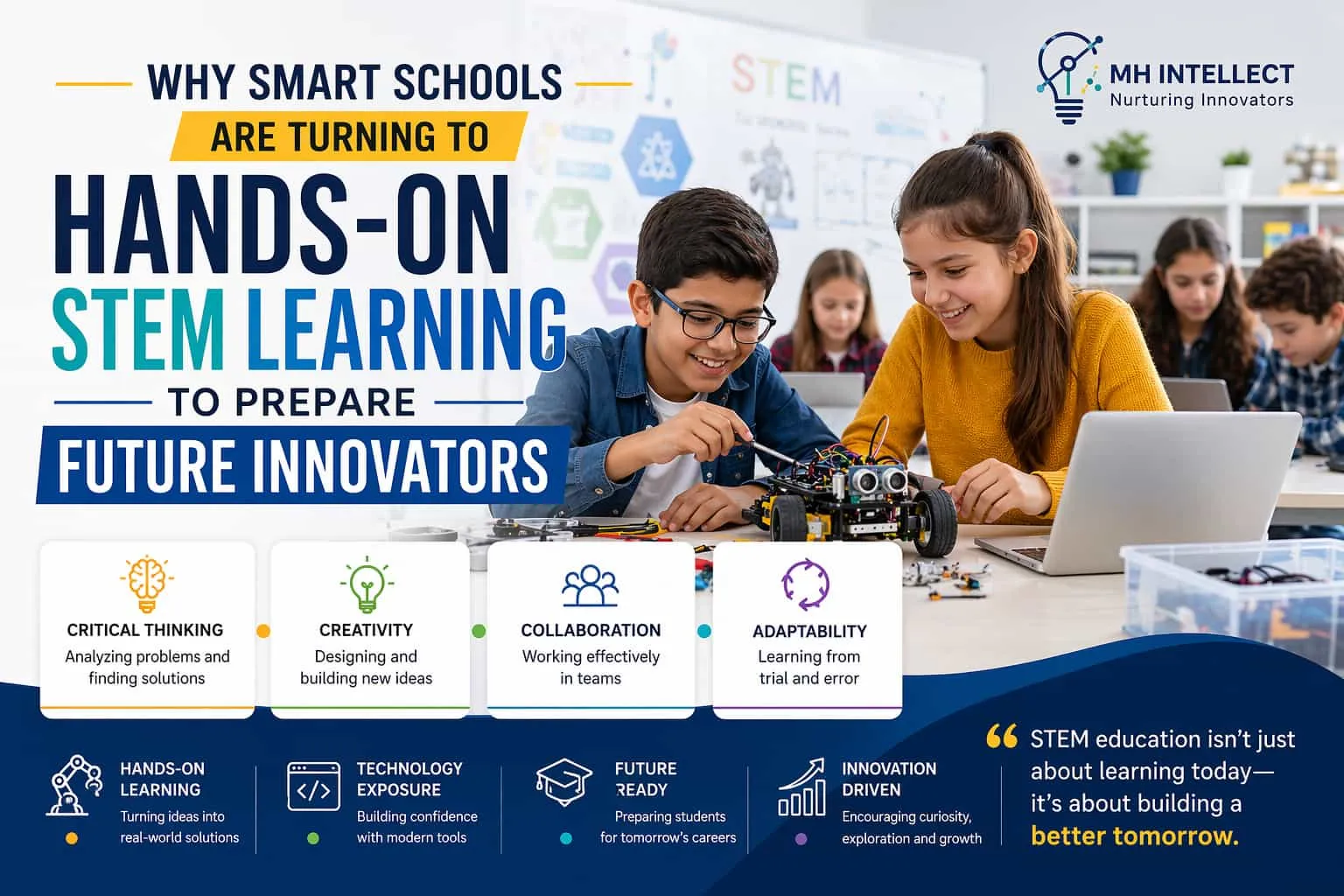
Leading schools in Dubai are not just adopting STEM—they are embedding it into their academic strategy. Instead of isolated labs, they implement curriculum-integrated learning models supported by teacher training and structured assessment.
These schools focus on:
- Integrating STEM into core subjects rather than treating it as an add-on
- Building student skills progressively across grade levels
- Using robotics and coding as tools for problem-solving
- Tracking measurable outcomes through structured assessments
This approach is what separates high-performing institutions from those using basic STEM setups.
How to Choose the Right STEM Education Partner
Selecting the right STEM partner is a strategic decision that directly impacts learning outcomes and institutional growth. Schools should focus on long-term implementation capability rather than short-term tools or standalone kits.
A strong STEM solution must integrate seamlessly into the curriculum and support consistent skill development across grade levels.
Key selection criteria include:
- Alignment with CBSE, IB, British, and UAE curriculum frameworks
- Hands-on learning through robotics, coding, and AI applications
- Teacher training and continuous professional development
- Scalable implementation across multiple grades
- Measurable outcomes with structured assessment reporting
Schools that evaluate partners based on these factors are far more likely to implement STEM education in the UAE.
Common Mistakes Schools Should Avoid
The most common mistakes schools make when adopting STEM come from prioritising short-term solutions over long-term academic impact. These decisions often lead to underutilised resources and limited outcomes.
Many schools invest in robotics kits without curriculum integration, while others overlook teacher training, resulting in ineffective delivery of STEM concepts.
Common mistakes include:
- Treating STEM as an add-on rather than a core learning
- Choosing one-time kits instead of integrated systems
- Ignoring teacher training and ongoing support
- Lack of curriculum alignment
- No structured performance measurement
Avoiding these mistakes ensures that STEM becomes a scalable and meaningful part of the school’s academic strategy.
STEM Partner Comparison for Schools
STEM partners differ significantly in their ability to deliver long-term value. A structured comparison helps schools make informed, outcome-driven decisions.
| Factor | Basic STEM Vendor | Advanced STEM Partner |
| Curriculum Alignment | Limited | Fully aligned with the curriculum |
| Learning Approach | Kit-based | Hands-on, project-based learning |
| Teacher Training | Minimal | Continuous training and support |
| Implementation | One-time setup | Structured long-term rollout |
| Assessment | Not defined | Measurable outcomes and reporting |
| Support | Limited | Ongoing academic and technical support |
This comparison makes it clear that schools benefit significantly more from partners who provide integrated, curriculum-driven STEM solutions rather than standalone products.
STEM Education in the UAE: What Schools Should Expect
STEM education in the UAE is rapidly evolving into a fully integrated learning ecosystem where technology, innovation, and real-world application are embedded into daily teaching. Schools are moving beyond isolated labs toward curriculum-based STEM models aligned with national and global standards. With strong emphasis on AI, coding, and future skills, schools are expected to adopt scalable systems that deliver consistent, measurable outcomes across all grade levels. To explore how STEM is expanding across the region, visit STEM education in the UAE.
How MH Intellect Supports Schools
Schools often face challenges in aligning STEM with curriculum goals, effectively training teachers, and measuring real learning outcomes. Without a structured approach, even advanced setups may not deliver consistent results.
MH Intellect supports schools through integrated implementation that focuses on curriculum alignment, teacher enablement, and measurable academic progress. Their grade-wise approach ensures students build skills progressively, while ongoing assessment reporting helps schools track performance and improve outcomes over time.
How Schools Measure STEM Impact
Successful STEM implementation is defined by measurable impact, not just setup. Schools that see strong results focus on tracking both academic and engagement outcomes.
Key performance indicators include:
- Student engagement and participation levels
- Improvement in critical thinking and problem-solving skills
- Completion of project-based learning outcomes
- Teacher adoption and classroom integration
- Assessment reports showing skill progression
This outcome-driven approach ensures STEM investments deliver long-term value and continuous improvement.
Conclusion
Choosing the right STEM education partner in Dubai is a critical decision that shapes both student success and institutional growth. Schools that invest in structured, curriculum-aligned STEM solutions see stronger engagement, improved academic performance, and a clear admissions advantage.
By focusing on implementation quality, teacher training, and measurable outcomes, schools can successfully integrate STEM into their ecosystem and prepare students for future careers. The right partner ensures this transformation is effective and sustainable.
Ready to Bring STEM Education to Your School in Dubai?
If your school is planning to introduce STEM education, the next step is to move beyond planning and start with a structured implementation approach. We help schools design and deploy curriculum-aligned STEM programs, set up robotics and AI labs, and train teachers to deliver hands-on learning effectively. Our focus is on long-term outcomes, ensuring students gain practical engineering and programming skills. Book a consultation or request a STEM implementation audit for your school:


























Sign in to leave a comment.