
Stainless steel is known for its strength, corrosion resistance, and long-term durability. While these qualities make it ideal for industrial and manufacturing applications, they also make the material more challenging to finish effectively. Selecting the right vibratory tumbler media for stainless steel is essential for achieving consistent deburring, edge refinement, and surface finishing results.
Whether the goal is removing heavy burrs, preparing parts for coating, or creating a smooth cosmetic finish, the media used in the vibratory tumbler directly impacts processing speed, finish quality, and overall production efficiency. Choosing the wrong media can lead to inconsistent finishes, excessive cycle times, and unnecessary rework. At Kramer Industries, we help manufacturers identify the right finishing solutions to improve process consistency and surface quality.
Start with the Desired Finishing Outcome
Before selecting vibratory tumbler media for stainless steel, it is important to define the intended result. Different finishing goals require different levels of cutting action and surface refinement.
For example:
- Heavy deburring requires aggressive cutting media
- Surface smoothing requires balanced cutting and refinement
- Pre-polishing or cosmetic finishing requires finer media
- Burnishing requires media designed for surface brightening
Starting with the finishing objective helps eliminate guesswork and ensures the process delivers repeatable and measurable results.
Understanding Media Composition
The composition of the media determines how aggressively it interacts with stainless steel surfaces. The most commonly used media types include ceramic, plastic, and steel media.
Ceramic Media
Ceramic media is widely used for stainless steel finishing applications because of its strong cutting ability and durability. It effectively removes burrs, smooths rough edges, and maintains its shape over extended production cycles.
This type of vibratory tumbler media for stainless steel works especially well for:
- Deburring machined components
- Surface preparation
- Edge radiusing
- General-purpose finishing
However, ceramic media may be too aggressive for delicate or thin-walled parts.
Plastic Media
Plastic media provides a lighter and gentler cutting action. It is commonly used for softer finishing operations or when minimizing part damage is important.
Plastic media is suitable for:
- Complex geometries
- Thin stainless steel parts
- Lighter surface refinement
- Applications requiring reduced impact
Although effective in some finishing stages, plastic media may not provide enough cutting power for heavy burr removal.
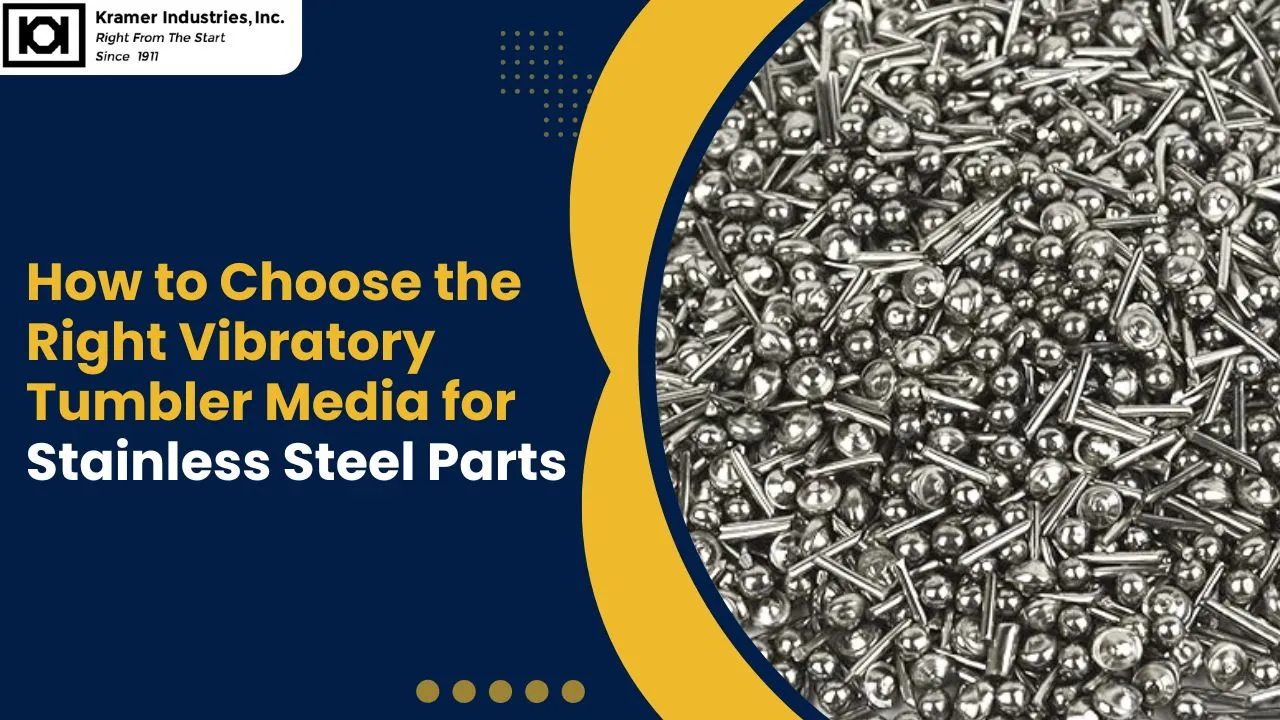
Steel Media
Steel media is typically used during burnishing operations rather than material removal. Instead of cutting the surface, it compresses and smooths the metal to create a bright, polished appearance.
Many finishing operations use steel media as a secondary process after deburring is completed.
Media Shape and Size Matter
The shape and size of the media play a major role in determining how effectively it reaches different areas of a part.
Smaller media shapes such as triangles, cones, or pins are ideal for intricate geometries, recessed areas, and tight corners. Larger shapes like cylinders or wedges perform better on flat surfaces and for aggressive material removal.
Properly sizing vibratory tumbler media for stainless steel also helps prevent lodging inside holes or recessed areas. This reduces manual intervention, minimizes downtime, and improves production efficiency.
Balancing Cut Rate and Surface Finish
Every vibratory finishing process requires balancing material removal speed with the desired surface quality.
Aggressive media shortens cycle times but may leave a rougher finish. Finer media improves surface appearance but increases processing time. Many manufacturers achieve the best results using a multi-step finishing process.
A common approach includes:
- Aggressive media for deburring
- Medium-cut media for smoothing
- Fine media or steel media for polishing
This staged finishing method improves consistency while maintaining productivity and surface quality standards.
The Importance of Finishing Compounds
Media alone does not determine finishing performance. Compounds are equally important in maintaining process consistency and protecting stainless steel surfaces.
Compounds help:
- Lubricate the finishing process
- Carry away debris and contaminants
- Improve cutting efficiency
- Prevent surface contamination
- Extend media life
When properly matched with vibratory tumbler media for stainless steel, compounds help create cleaner and more predictable finishing results.
Consistency Improves Production Efficiency
In high-volume manufacturing environments, consistency is one of the most valuable outcomes of proper media selection. Standardizing media and compound combinations for specific part families helps maintain repeatable cycle times and uniform finishes.
Consistent finishing processes reduce:
- Surface defects
- Rework
- Operator variability
- Production delays
This allows manufacturers to scale operations more efficiently while maintaining quality standards across production runs.
At Kramer Industries, we understand how important process consistency and surface quality are for industrial finishing operations. Selecting the right vibratory tumbler media for stainless steel can significantly improve productivity while helping maintain reliable finishing performance.
Conclusion
Choosing the right vibratory tumbler media for stainless steel involves more than selecting a general-purpose finishing product. Media composition, shape, size, and cutting performance must all align with the geometry of the part and the desired finishing outcome.
When the right finishing strategy is implemented, manufacturers benefit from improved surface quality, faster processing times, reduced scrap, and more predictable production performance. Stainless steel may be difficult to finish, but the right vibratory tumbler media for stainless steel can turn a challenging process into a reliable and repeatable operation.
To learn more about industrial finishing solutions, tumbling media, and surface preparation products, visit Kramer Industries.





















Sign in to leave a comment.