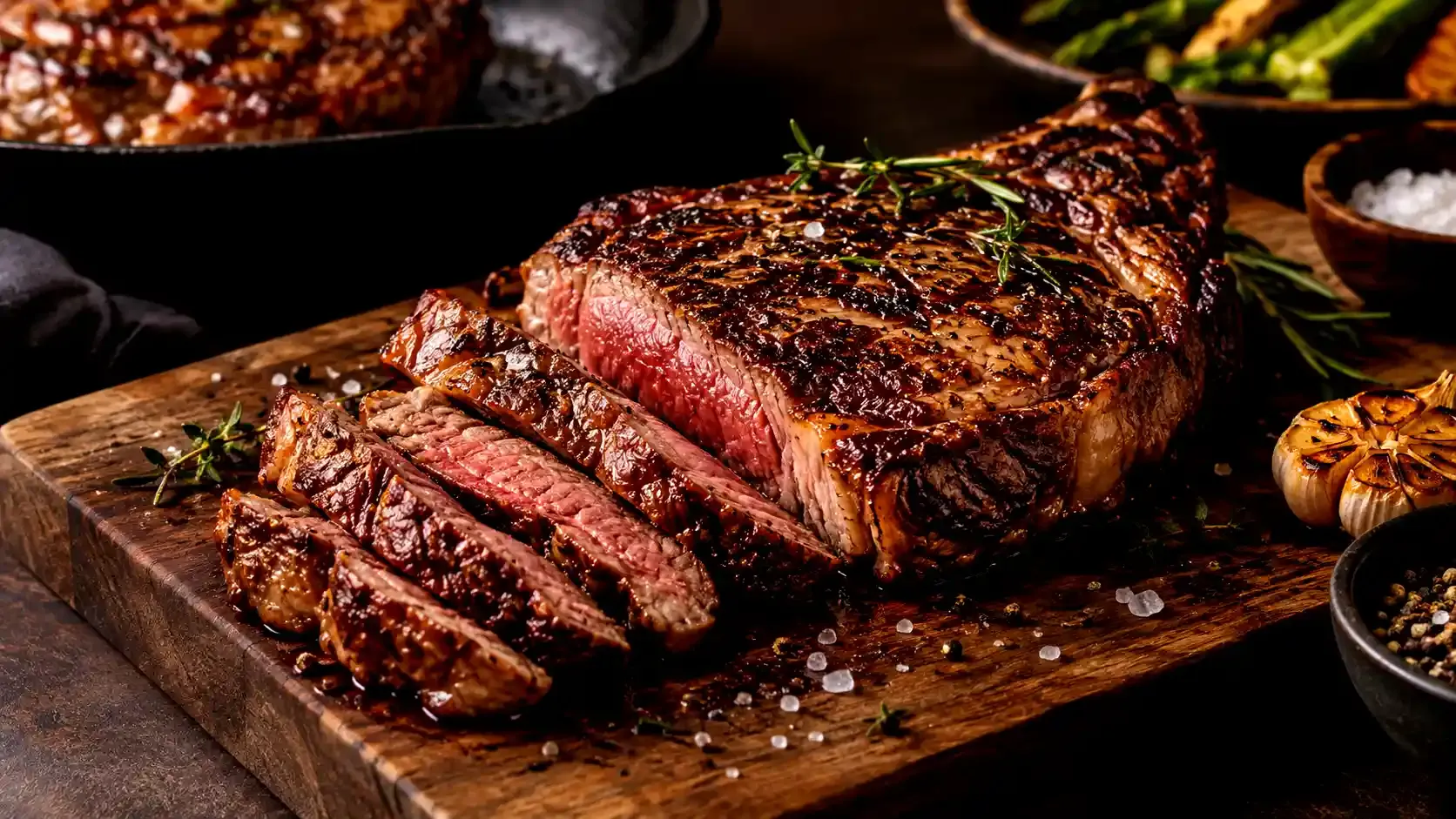

Few cuts of beef inspire the same devotion as ribeye. Cut from the rib section of the cow, it carries generous marbling and a rich, buttery flavour that many steak lovers consider unmatched. Get it right, and you have something genuinely special on your plate. Get it wrong, and an expensive piece of meat turns into a chewy disappointment.
This guide walks through everything you need to know about cooking ribeye steak properly, whether you prefer the stove, the grill, or the oven.
What Makes Ribeye Steak Special
Ribeye comes from the rib primal, the same area that produces prime rib roast. What sets it apart from leaner cuts like sirloin or fillet is the intramuscular fat, known as marbling, that runs through the meat. As this fat renders during cooking, it bastes the steak from within, keeping it juicy and adding depth of flavour that leaner cuts simply cannot replicate.
You'll typically find ribeye sold two ways: bone-in and boneless. Bone-in ribeye, sometimes called a cowboy steak, holds heat differently because of the bone, and many cooks find it adds a subtle richness to the flavour, though the science on this is debated. Boneless ribeye is easier to handle and cooks a touch more evenly, which makes it a solid choice for beginners. Neither is objectively better; it comes down to preference and how much fuss you want at the pan.
What You Need Before You Start
Choosing a good piece of meat matters more than any technique you'll use later. Look for a deep red colour with visible white flecks of fat spread evenly through the muscle. In the UK, grading terms differ from the American Prime, Choice, and Select system, so pay attention to marbling with your own eyes rather than relying on a label alone. A steak with plenty of thin, even streaks of fat will almost always outperform one with a thick fat cap and little internal marbling.
Thickness matters too. Aim for at least 2.5cm, ideally closer to 3.5 to 4cm, if you're planning to sear and finish in the oven. Thinner steaks cook so quickly that getting a good crust without overcooking the interior becomes tricky.
You don't need much equipment, but a few tools genuinely help:
- A heavy cast iron or stainless steel pan that holds heat well
- A reliable meat thermometer, ideally digital with an instant read
- Sturdy tongs for turning without piercing the meat
Take the steak out of the fridge around 30 to 45 minutes before cooking. A cold steak dropped straight into a hot pan cooks unevenly, with a well-done exterior and a cool centre, so letting it come closer to room temperature gives you more even results throughout.
How to Season Ribeye Steak
Ribeye doesn't need much. Because the marbling already provides so much flavour, a simple approach of coarse sea salt and freshly cracked black pepper, applied generously on both sides, is genuinely all most people need. Salt the steak just before cooking, or at least 40 minutes ahead if you have the time.
If you want to go further, try dry brining. Salt the steak the night before and leave it uncovered in the fridge. The salt draws out moisture initially, then reabsorbs into the meat, seasoning it right through and helping the surface dry out for a better crust. It's a small extra step that makes a noticeable difference.
Ribeye Steak Doneness Temperature Chart
Knowing your target internal temperature takes the guesswork out of cooking steak, particularly when you're deciding between different steak cooking levels. These figures reflect the temperature you want just before resting, since the steak will continue cooking slightly afterwards, a process known as carryover cooking.
| Doneness | Internal Temperature (before resting) | After Resting |
| Rare | 46-49°C | 50-52°C |
| Medium-rare | 52-54°C | 55-57°C |
| Medium | 57-60°C | 60-63°C |
| Well-done | 68°C+ | 70°C+ |
Most steak specialists, myself included, recommend medium-rare for ribeye. The fat renders properly at this stage, and the meat stays tender without drying out. Cooking a well-marbled cut like ribeye past medium starts to work against the very qualities that make the cut worth buying.
How to Cook Ribeye Steak on the Stove (Pan-Seared)
Pan-searing is the method most home cooks reach for, and for good reason. It's quick, gives excellent control, and produces a deep, flavourful crust.
- Pat the steak completely dry with kitchen paper. Moisture on the surface prevents proper browning.
- Heat a heavy pan over high heat until it's smoking slightly. Add a high smoke point oil such as vegetable or rapeseed oil.
- Lay the steak away from you to avoid splashing, and leave it undisturbed for 2 to 3 minutes to form a crust.
- Flip once, then cook the second side for a similar time.
- In the final minute, add a knob of butter along with a crushed garlic clove and a sprig of thyme or rosemary. Tilt the pan and spoon the melted butter over the steak repeatedly. This is the butter basting technique, and it adds richness while helping the crust develop further.
- Check internal temperature with your thermometer, remove from the pan once you're a few degrees below your target, and rest.
Avoid seed oils with low smoke points for this method, as they'll burn and turn bitter before the pan gets hot enough.
How to Cook Ribeye Steak on the Grill
Grilling suits ribeye particularly well because the fat drips and flares slightly, adding a smoky char that's hard to replicate indoors.
For steaks under 3cm thick, direct heat works fine: place the steak straight over the hottest part of the grill and turn every couple of minutes until you reach your target temperature. For thicker cuts, indirect heat gives better control. Sear over direct heat for a minute or two per side to build colour, then move the steak to a cooler part of the grill to finish cooking through without burning the outside.
As a rough guide, a 2.5cm steak takes around 4 to 6 minutes total for medium-rare, while a thicker cut closer to 4cm may need 10 to 12 minutes including the resting phase. These are starting points rather than fixed rules; grill temperatures vary too much for exact timing, so lean on your thermometer.
How to Cook Ribeye Steak in the Oven (Reverse Sear)
The reverse sear flips the traditional order of operations, cooking the steak gently first and finishing with a hard sear at the end. It's particularly well suited to thick-cut ribeye, roughly 3.5cm or more.
- Preheat the oven to around 110°C.
- Season the steak and place it on a wire rack over a baking tray.
- Cook slowly until the internal temperature sits about 5 to 8°C below your final target, which usually takes 30 to 45 minutes depending on thickness.
- Heat a pan until very hot and sear the steak for 60 to 90 seconds per side to build a deep crust.
This method gives you exceptionally even cooking from edge to centre, with far less of the grey overcooked band you often see near the surface of a pan-seared steak. It takes longer overall, but the results are worth it for a special occasion.
How to Tell When Ribeye Steak Is Done Without a Thermometer
If you don't have a thermometer to hand, the touch test offers a rough guide. Press the fleshy pad below your thumb while your hand is relaxed; that softness resembles rare steak. Touch your thumb to your index finger and press the same spot again for medium-rare, then to your middle finger for medium, and so on. It's an imprecise method that improves with practice, but a thermometer remains far more reliable, especially while you're still learning how a properly cooked steak should feel.
Resting the Steak
Resting isn't an optional step to skip when you're hungry. As steak cooks, the juices are driven toward the centre. Cutting into it immediately sends all that moisture running out onto the board rather than staying in the meat. Resting for 5 to 10 minutes, loosely tented with foil, allows the juices to redistribute through the whole steak.
Skip this step and you'll notice it immediately: a pool of liquid on the plate and a drier bite than the steak deserved.
Common Mistakes to Avoid
A cold steak straight from the fridge into a hot pan is one of the most frequent errors, leading to uneven cooking from edge to centre. Flipping constantly is another; steak needs sustained contact with heat to develop a proper crust, so one or two flips is plenty. Underseasoning is surprisingly common too, particularly with a cut this thick, where a light sprinkle of salt barely penetrates the surface.
What to Serve with Ribeye Steak
Ribeye's richness pairs well with something to cut through the fat. Consider a simple green salad with a sharp vinaigrette, roasted or chargrilled vegetables, buttery mashed potatoes, or a peppery watercress side. A glass of full-bodied red wine, such as a Malbec or Cabernet Sauvignon, complements the beef nicely.
Final Thoughts
Cooking a great ribeye steak comes down to a handful of fundamentals done properly: choosing well-marbled meat, seasoning generously, watching your temperature closely, and letting it rest before you cut in. Master those, and you'll have a reliable method you can return to again and again, whichever cooking style you prefer.



























Sign in to leave a comment.