
Moving to a new home should be exciting, but for many people, it becomes stressful because of dishonest moving companies.
Unfortunately, moving company fraud happens more often than you think. Knowing how to handle it legally can save time, money, and stress.
Understanding Moving Company Fraud
Moving company fraud occurs when movers exploit customers financially or take advantage of them in unethical ways. This can happen during local or long-distance moves.
Low-Ball Estimates and Hidden Fees
- Movers provide a very low initial quote.
- Once your belongings are loaded, they demand higher fees.
- Customers feel pressured to pay to get their goods delivered.
Holding Belongings Hostage
Some movers may refuse to release your items until additional payment is made. This is one of the most alarming forms of fraud and can put families in difficult situations.
Loss or Damage of Items
Even licensed moving companies may sometimes mishandle items, but fraudulent movers may never deliver your belongings.
According to Federal Motor Carrier Safety Administration (FMCSA), thousands of complaints are reported every year related to lost or damaged items during moves.
When sharing experiences with others, platforms like Moving Scam Stories can help consumers recognize patterns and protect themselves before hiring a company.
Collecting Evidence Is Key
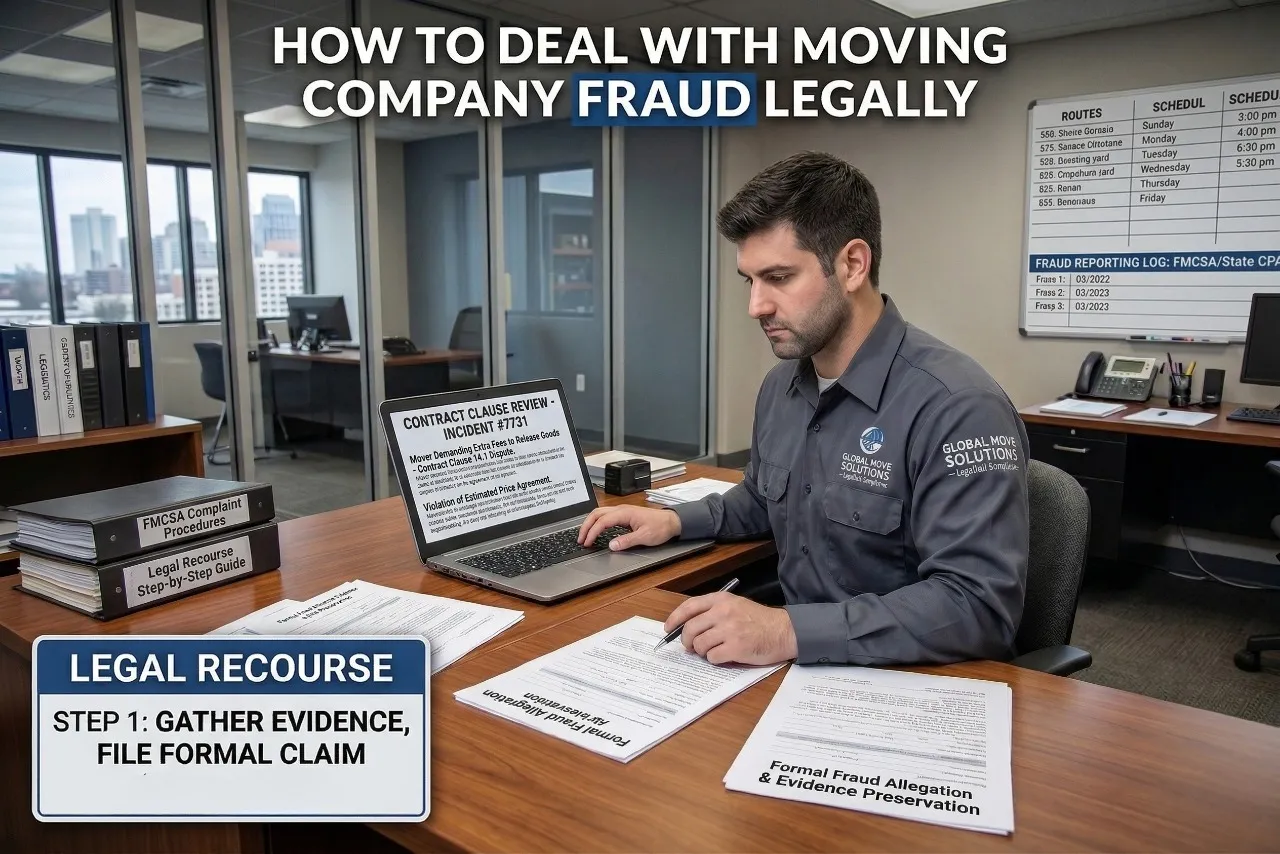
The first step in dealing with moving fraud legally is gathering all available evidence. Without documentation, legal action can be much harder.
What Evidence to Collect
- Signed contracts and agreements
- Email or text correspondence with the company
- Photos or videos of damaged items
- Payment records such as receipts or bank statements
Organizing Your Evidence
- Keep everything in chronological order
- Label files with dates and descriptions
- Maintain a backup, either digital or printed
Having well-organized evidence increases the chances of success when filing complaints or pursuing legal action.
Reporting Fraud to Authorities
Once evidence is ready, the next step is to report the fraudulent activity. This not only helps your case but also protects future consumers.
Federal Authorities
- Federal Motor Carrier Safety Administration (FMCSA) – Handles interstate moving complaints.
- Federal Trade Commission (FTC) – Deals with fraud and deceptive business practices.
Consumer Protection Agencies
- Better Business Bureau (BBB) – Allows filing of complaints and reviews of moving companies.
- State consumer protection offices – Check for additional state-level complaint processes.
- Filing complaints early often pressures moving companies to resolve disputes before escalating into legal cases.
Legal Rights of Consumers
Consumers have certain rights under federal and state laws. Understanding these rights is crucial when dealing with moving company fraud.
Rights to Written Estimates
- Moving companies must provide written estimates for services.
- This protects against unexpected fees.
Delivery Time Obligations
- Movers are required to deliver items within a reasonable timeframe.
- Delays may violate contractual obligations.
Arbitration and Dispute Resolution
Many moving contracts include arbitration clauses, requiring disputes to be settled outside court. While this can be faster, it’s important to know the terms and limitations.
Taking Legal Action
When complaints and arbitration do not resolve the issue, legal action is necessary.
Small Claims Court
- Handles disputes up to a state-defined monetary limit.
- Usually quicker and less expensive.
- No need for a lawyer in most cases.
Hiring a Lawyer
- Necessary for larger losses or complex cases.
- Lawyers can guide through federal and state regulations.
- Can help maximize compensation for lost, damaged, or stolen items.
- Following a moving company scam help guide can make the process more manageable and reduce stress while pursuing legal remedies.
Preventing Moving Scams
Prevention is always better than dealing with fraud after it happens. Consumers should be proactive when hiring movers.
Check Licenses and Registrations
- Verify the company with FMCSA for interstate moves.
- Local movers may be required to register with state authorities.
Read Reviews Carefully
- Look for patterns in negative reviews.
- Avoid companies with multiple complaints of fraud or hidden fees.
Avoid Large Upfront Deposits
- Paying large sums before the move increases risk.
- Use incremental payments tied to milestones, like delivery or completed services.
Why Sharing Your Experience Matters
Sharing experiences is a powerful tool against fraud.
Educate Others
- Real stories help prevent future scams.
- Consumers rely heavily on online reviews; over 85% trust them as much as personal recommendations.
Reporting Online
- Contribute to forums and review platforms.
- Platforms like Moving Scam Stories allow people to document and warn others about dishonest movers.
Community Awareness
- Awareness strengthens consumer protection.
- The more people share their experiences, the safer the moving industry becomes.
Final Advice for Consumers
Moving fraud can be stressful, but staying calm, organized, and informed makes it manageable.
Steps to Take Immediately
- Gather evidence
- File complaints with authorities
- Understand legal rights
- Consider arbitration or court action
- Share experiences to help others
Using Resources Wisely
By staying proactive, documenting everything, and leveraging both legal channels and community resources, consumers can protect themselves and reduce the risk of falling victim to moving fraud. Remember, each reported case not only helps the individual but also safeguards countless others from similar experiences.





























Sign in to leave a comment.