
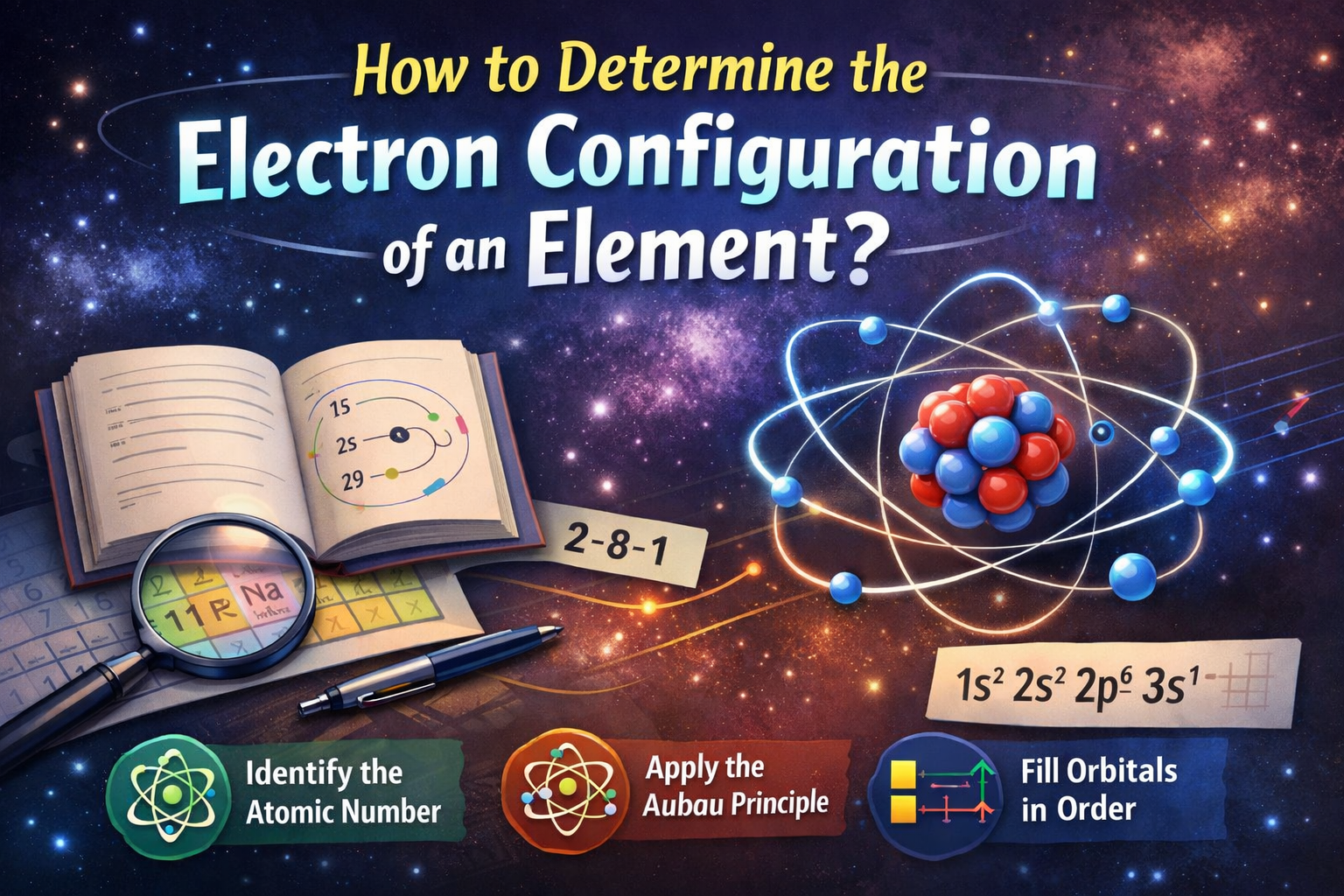
Electron configuration is a basic concept in chemistry that defines the arrangement of electrons in an atom. Understanding how to determine electron configuration is crucial in many areas of chemistry, including atomic structure, bonding, and chemical reactions. If you are a chemistry student who wants to learn about the complex concepts, then you can seek chemistry assignment help. This service will provide you with expert guidance on specific topics that are hard to understand. In this article, you will know the 10 key methods to determine the electron configuration of an element with the help of simple explanations that are easy to understand.
10 Ways to Determine the Electron Configuration of an Element
Understanding the electron structure of an element is crucial in chemistry because it reveals how electrons are distributed in the atom's various orbitals. By determining the electron configuration, we can better understand why certain elements behave similarly or differently in reactions. If you want to learn about this concept in-depth, you can seek help from Instant Assignment Help. Below are 10 key approaches that will help you grasp this concept and apply it effectively:-
Use the Periodic Table
To determine an atom’s electronic configuration, you should use the periodic table, which lists the elements by increasing atomic number. This atomic number tells you how many protons (and correspondingly, how many electrons) are present in a neutral atom. The periodic table organises the elements into horizontal rows, or "periods," that correspond to different energy levels or shells of electrons.
Apply the Aufbau Principle
The Aufbau Principle summarises the order in which electrons are filled in the atomic orbital. In other words, this principle states that when an atom forms, the electron will first occupy the lowest available energy orbital. Atomic orbitals are regions surrounding the nucleus where we can expect to find electrons. As we move from the nucleus outward, the electrons have greater amounts of energy within these atomic shells.
Follow Pauli Exclusion Principle
According to the Pauli Exclusion Principle, all electrons in an atom cannot be assigned the same set of quantum numbers. Simply put, it means there can be no more than two (2) electrons contained in one orbital at a maximum, with those two electrons required to have opposite spins. Spin states the direction in which an electron is spinning. Therefore, the electrons located in the same orbital must spin in different directions.
Consider Hund's Rule
Hund’s Rule allows you to find out how to distribute electrons among the degenerate orbitals of equal energy level. The rule states that electrons will occupy all of the available unfilled orbitals before they will join with another electron in the same orbital. For instance, when determining how many electrons are in the 2p subshell, which has three degenerate orbitals (2px, 2py, and 2pz).
Identify Energy Levels
An electron shell is defined as a specific distance from the atom's nucleus within which we find the electrons surrounding the nucleus. Electron shells have a defined order of distances from the nucleus, with electron shells numbered sequentially - 1 being the closest shell, two at a greater distance and so forth. To determine how many electrons an atom has, you must take into consideration how many electrons exist for a particular element.
Count Valence Electrons
Valence electrons are those electrons situated in the outermost electron shell(s) of the individual atoms. The number of valence electrons that an atom possesses is generally based on where the atom is located within the periodic table (column number) of elements. Group 1 (1A) and Group 2 (2B) contain one valence electron each, while Group 3 (3B) has two valence electrons and so forth.
Observe Sublevel Order
In addition to its principal energy levels, each energy level contains sublevels, which have an s,p,d, or f labelling. The number of available orbitals defines the number of electrons in an orbital at any particular time. The number of orbitals at the s sublevel allows a maximum of 2 electrons to fill an s orbital, while the number of orbitals at the p sublevel allows for 6 electrons to fill a p orbital.
Recognise Orbital Shapes
The various orbital types (s, p, d, and f) each have a distinct shape that provides the basis for visual representation of a distribution of electrons. An electron occupies a single spherical orbit, while the three dumbbell-shaped p orbitals are labelled as px, py and pz. The orbital geometries for d and f are more complex. If you are writing a project on this, you can ask experts, “can you help me to do my assignment?”
Note Atomic Number
Atomic numbers identify how many protons (which correspond to the number of neutral electrons) are in an atom and determine how many of each kind of electron an atom may have. An element's atomic number is used to create its "basic" electron configuration. Therefore, since Helium's electron configuration is 2 electrons (or 1, considering how you write it), it has a single 1s2 orbital electron.
Utilise Electron Diagrams
These diagrams visually represent where the electrons for an atom are placed. Besides helping an individual to understand where the electrons for an atom go, these diagrams also allow an individual to create multiple representations of the same atom. Specifically, by creating electron diagrams using one of two methods (lines or boxes) to represent the different types of atomic orbitals, and then indicating which direction the electrons within those orbitals spin.
Final Thoughts
After analysing all the above concepts, you understood that determining the electron configuration of an element may seem complex at first, but with practice, it becomes more leisurely to apply the principles of the periodic table, energy levels, sublevels, and electron rules like Aufbau, Pauli Exclusion, and Hund’s Rule. The rules guide the placement of electrons in an atom, which helps you to understand the chemical properties of elements and how they interact with others. If you are studying for chemistry exams and need any expert guidance, then you can reach out for chemistry assignment help. These experts will help you to master electron configuration through the behaviour of atoms and molecules.
Read More - How Can One Examine What Occurs When Light Is Absorbed By an Object?
































Sign in to leave a comment.