

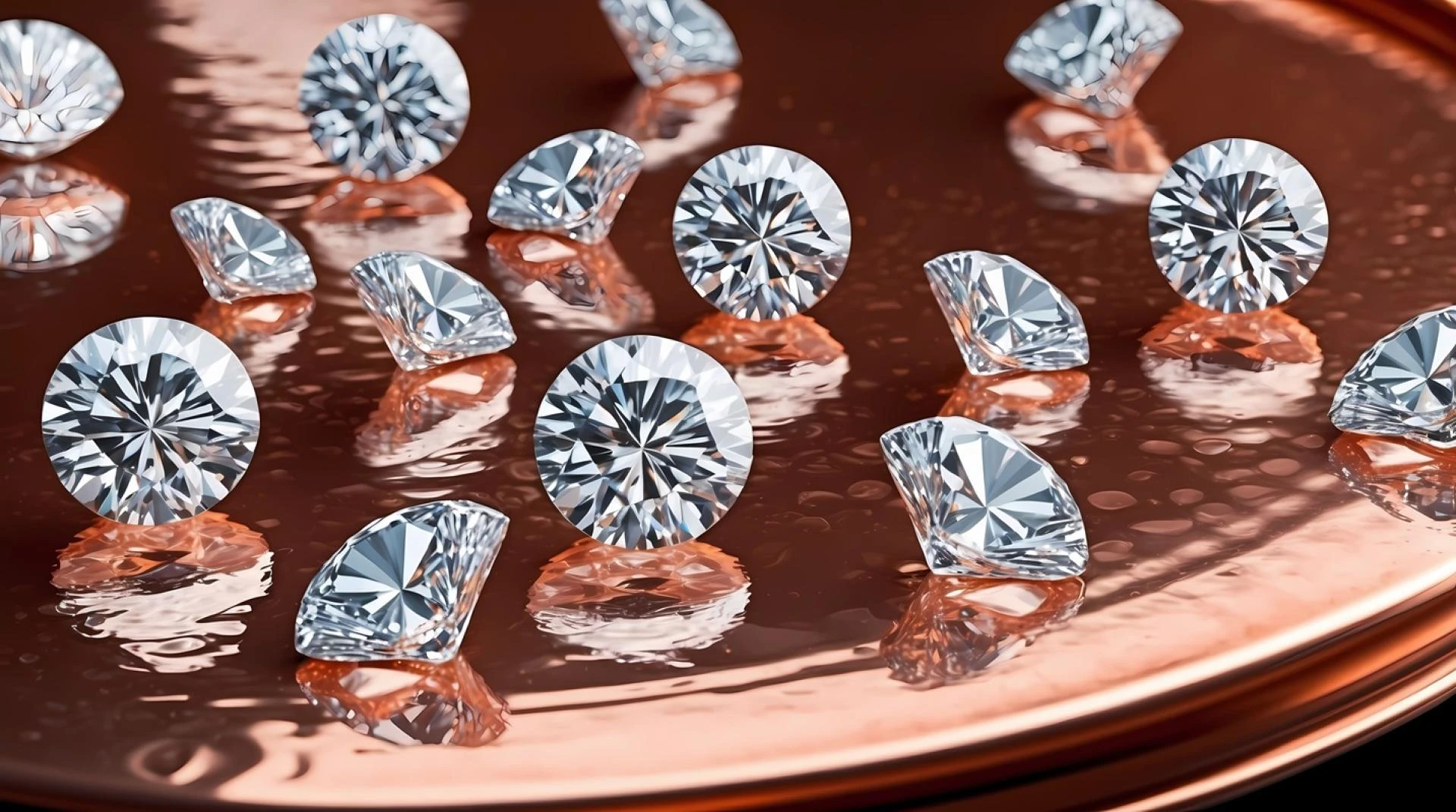
Lab-grown diamond is produced in a controlled laboratory setting. Nowadays, scientists can produce diamonds that optically resemble earth-mined diamonds, have the same chemical and physical characteristics, and can even be certified by the Gemological Institute of America (GIA) by using the widely used techniques of Chemical Vapor Deposition (CVD) or High Pressure High Temperature (HPHT).
Do lab-crafted diamonds exist?
Yes, exactly. Diamonds grown in laboratories are as genuine as those extracted from the soil. Like natural diamonds, they have grades of shape, size, color, and clarity. The physical and chemical characteristics of lab-grown and natural diamonds are identical, and both are certified diamonds.
What do experts say about lab vs. natural diamonds?
Natural diamonds and lab-grown diamonds are identical in appearance, hardness, and durability. The Federal Trade Commission acknowledged lab diamonds as authentic in 2018. However, are lab-created diamonds considered real? Indeed. Actually, laboratory-grown diamonds have been graded by the Gemological Institute of America (GIA) since 2007. The term “synthetic” will no longer be used in GIA Laboratory-Grown Diamond Reports or identification reports as of July 1, 2019. For reference, the standard GIA color, lab diamond color, clarity, and cut grading scales are included in the GIA Laboratory-Grown Diamond Report.
What are the differences between “real” diamonds and lab-grown diamonds?
The naked eye is unable to distinguish between lab-grown diamonds and natural diamonds. Lab-grown diamonds are nitrogen-free, whereas natural diamonds contain very little nitrogen. In fact, gemologists utilize this as one of the indicators to determine whether a diamond is natural or lab-grown.
Over millions of years, the earth’s crust exerts pressure to form natural diamonds, which are subsequently extracted, cut, and polished. The same conditions are applied to a lab-grown diamond, but in a lab environment. In actuality, the growth period is greatly reduced from millions of years to a few months by the method employed to produce a lab-grown diamond. The lab diamond is then cut and polished as well.
How are diamonds grown in labs?
Other names for lab-grown diamonds include artificial, synthetic, cultivated, and artisan. A customer may become perplexed by the interchangeable terminology. The certified diamond that was “grown” in a lab is what each phrase refers to, though. Lab-grown diamonds are sometimes called CVD or HPHT, which just refers to the method of production.
Two common techniques for lab-made diamonds
Lab-grown diamonds are produced using two methods:
Get Diamonds’s stories in your inbox
Diamonds via Chemical Vapour Deposition
Chemical Vapor Deposition (CVD) is the name of the initial procedure. A tiny diamond seed known as a “seed crystal” is set inside a tiny chamber. After that, hot gases are pumped into the chamber. Carbon layers start to develop on the seed crystal when the gases get to the proper temperature. As a result, the seed develops into a diamond crystal with a square shape.
Diamonds at high temperatures and high pressures
The term "High Pressure High Temperature" (HPHT) refers to the second procedure. This is intended to mimic how natural diamonds are formed on Earth. This method involves crushing natural graphite under high pressure and temperature in a sizable machine. The graphite transforms into a diamond in these circumstances.
What makes CVD and HPHT diamonds different?
The difference between an HPHT and CVD diamond is invisible to the unaided eye. A true diamond that is chemically and physically comparable to natural diamonds is produced using both techniques. The same four criteria—color, cut, clarity, and carat—are used to grade lab-grown diamonds.
The question of whether the procedure is “better” is as complicated as the debate over lab-grown vs. natural diamonds. You can navigate these seas with the assistance of a skilled jeweler.
Conclusion
Lab-grown and natural diamonds are referred to and graded by recognized gemological labs based on the different amounts of internal “inclusions” that resemble fingerprints. The “naked eye” may not be able to detect inclusions in lab-grown or natural diamonds. Determining if a diamond is excellent, very good, good, or bad also heavily depends on its cut and color.


























Sign in to leave a comment.