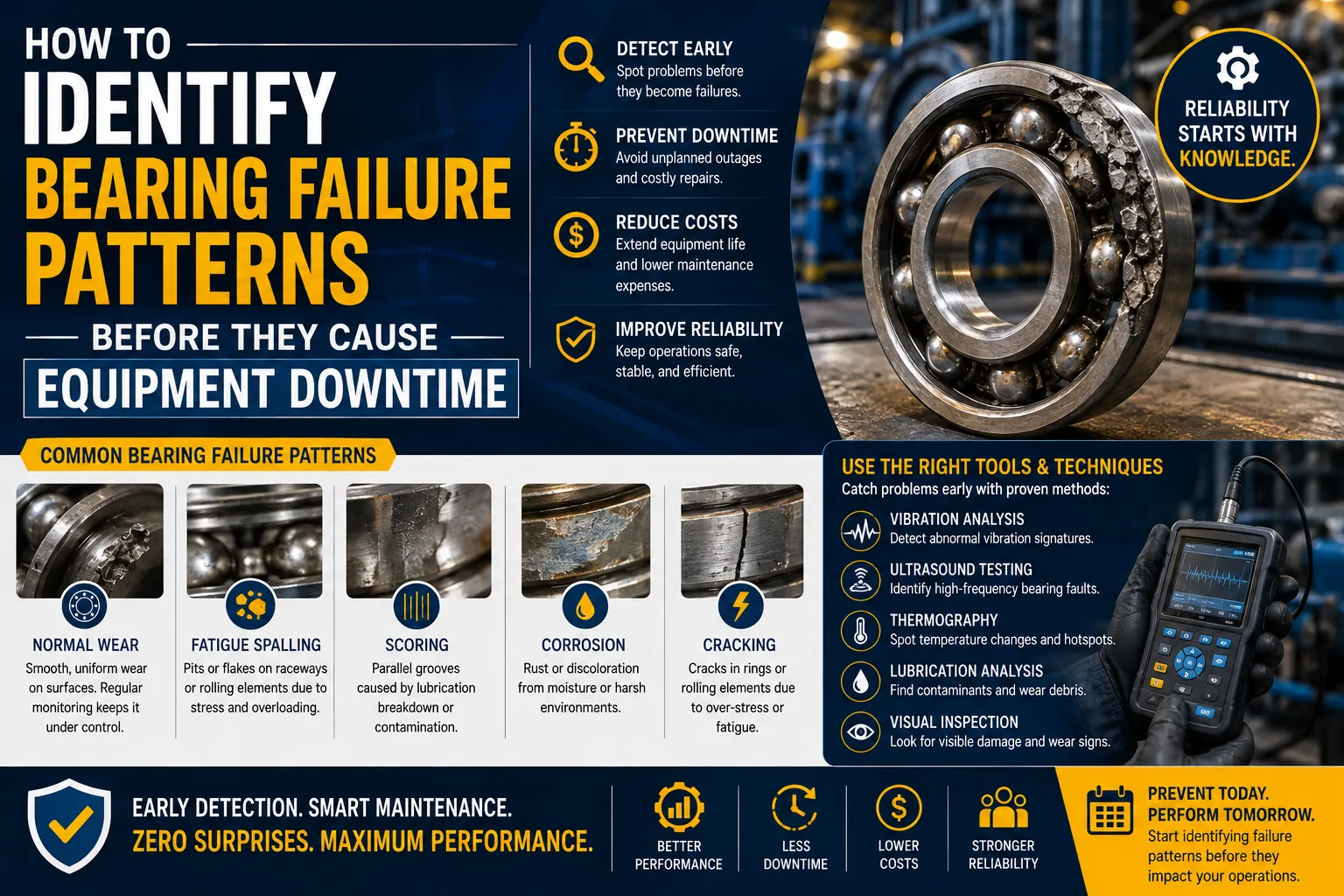

Industrial machinery depends on hundreds of moving parts working together in perfect harmony. Among these components, bearings play one of the most critical roles by reducing friction, supporting rotating shafts, and ensuring smooth machine operation. However, even the highest-quality bearings can fail when exposed to poor lubrication, contamination, improper installation, excessive loads, or misalignment.
Unexpected bearing failures are responsible for a significant percentage of unplanned equipment shutdowns across manufacturing plants, power stations, mining operations, oil and gas facilities, and processing industries. Every hour of downtime can result in lost production, expensive repairs, delayed deliveries, and reduced profitability.
The good news is that bearing failures rarely happen without warning. Most bearings develop recognizable damage patterns long before complete failure occurs. Understanding these warning signs through bearing failure analysis, regular bearing inspection, and proper bearing damage analysis allows maintenance professionals to intervene before costly breakdowns occur.
This guide explains how to identify common bearing failure patterns, understand their root causes, and implement preventive maintenance strategies that improve equipment reliability and operational efficiency.
Why Bearing Failure Analysis Matters
Every failed bearing tells a story. Instead of simply replacing a damaged bearing, maintenance professionals should determine why it failed. This process, known as bearing failure analysis, identifies the underlying causes behind the damage and prevents the same issue from recurring. A proper failure analysis helps organizations:
- Reduce unexpected downtime
- Improve equipment reliability
- Increase bearing service life
- Lower maintenance costs
- Improve plant productivity
- Enhance workplace safety
- Optimize maintenance planning
Without proper analysis, organizations often replace bearings repeatedly while the original problem remains unresolved.
Understanding the Life Cycle of a Bearing
Bearings typically follow a predictable lifecycle.
Installation
A bearing begins its service life after correct installation, lubrication, and alignment.
Normal Operation
During healthy operation, vibration levels remain low, temperatures stay stable, and lubrication protects internal components.
Early Damage
Small defects begin developing due to contamination, lubrication issues, excessive loading, or installation errors.
Progressive Wear
Damage gradually spreads throughout the rolling elements, raceways, and cage.
Catastrophic Failure
If ignored, the bearing eventually seizes, fractures, or completely fails, causing equipment shutdown. The goal of bearing inspection is to detect problems during the early stages before major damage occurs.
Most Common Bearing Failure Patterns
Recognizing bearing damage patterns is one of the most valuable skills maintenance professionals can develop.
1. Surface Fatigue
Surface fatigue is among the most common forms of bearing damage. It occurs after repeated stress cycles create microscopic cracks beneath the bearing surface. Early signs include:
- Small pits
- Surface spalling
- Flaking
- Rough running
- Increased vibration
If left untreated, fatigue spreads rapidly and eventually destroys the bearing.
2. Lubrication Failure
Insufficient lubrication accounts for a large percentage of premature bearing failures. Common causes include:
- Wrong lubricant
- Too little grease
- Excess grease
- Grease contamination
- Incorrect lubrication intervals
Symptoms include:
- High operating temperatures
- Blue discoloration
- Increased friction
- Metal scoring
- Rapid wear
Routine lubrication management dramatically extends bearing life.
3. Contamination Damage
Dust, dirt, moisture, chemicals, and metal particles are major enemies of rolling bearings. Foreign particles create tiny dents that gradually develop into larger fatigue failures. Signs include:
- Scratches
- Surface indentations
- Abrasive wear
- Rust formation
- Noisy operation
Improved sealing and cleaner maintenance practices significantly reduce contamination-related failures.
4. Electrical Damage
Electric motors frequently experience electrical bearing damage caused by stray current passing through the bearing. Common indicators include:
- Washboard patterns
- Frosted raceways
- Fluting marks
- Excessive vibration
Electrical insulation and shaft grounding help prevent this type of damage.
5. Misalignment
Improper shaft alignment creates uneven loading across bearing surfaces. Typical symptoms include:
- Edge loading
- Excessive heat
- Increased vibration
- Uneven wear patterns
Laser alignment tools greatly improve installation accuracy.
6. Corrosion
Corrosion develops when moisture or chemicals attack bearing surfaces. Signs include:
- Rust
- Surface discoloration
- Pitting
- Rough operation
Humidity control and proper storage practices reduce corrosion risks.
7. Overloading
Bearings operating beyond their designed load capacity experience accelerated fatigue. Indicators include:
- Cracks
- Plastic deformation
- Excessive heat
- Surface spalling
Load calculations should always be verified during equipment design and maintenance planning.
How Bearing Inspection Detects Problems Early
Routine bearing inspection helps identify early warning signs before major failures develop. Inspection methods include:
Visual Inspection
Technicians examine:
- Surface damage
- Rust
- Discoloration
- Cracks
- Lubrication condition
Even small abnormalities may indicate larger underlying problems.
Temperature Monitoring
Bearings typically show increasing temperatures before failure. Sudden temperature increases often indicate:
- Lubrication issues
- Misalignment
- Excessive load
- Internal damage
Infrared thermography provides fast, non-contact temperature measurements.
Vibration Analysis
Vibration monitoring remains one of the most powerful predictive maintenance tools. Specific vibration frequencies reveal:
- Inner race defects
- Outer race defects
- Rolling element damage
- Cage failures
- Misalignment
Trend analysis allows maintenance teams to schedule repairs before breakdowns occur.
Acoustic Monitoring
Ultrasonic inspection detects high-frequency sounds generated by early bearing defects. This technique identifies:
- Lubrication problems
- Surface fatigue
- Early wear
- Friction increases
Many defects become detectable months before failure.
Oil Analysis
Lubricant testing provides valuable information about bearing health. Oil analysis identifies:
- Metal wear particles
- Water contamination
- Oxidation
- Dirt ingress
- Lubricant degradation
These findings support effective bearing damage analysis.
Understanding Bearing Damage Analysis
Unlike routine inspection, bearing damage analysis focuses on determining why damage occurred. Rather than replacing failed components, analysts investigate:
- Operating conditions
- Maintenance history
- Lubrication practices
- Environmental conditions
- Load history
- Installation procedures
By understanding the root cause, organizations eliminate recurring failures instead of repeatedly replacing bearings.
Root Causes Behind Bearing Failure
Several factors contribute to premature bearing failures.
Poor Installation
Incorrect installation methods may introduce hidden damage before the machine even begins operating. Examples include:
- Hammer installation
- Improper fits
- Incorrect mounting force
- Damaged seals
Proper installation tools greatly reduce these risks.
Incorrect Lubrication
Using the wrong lubricant often causes rapid bearing deterioration. Always consider:
- Grease compatibility
- Operating temperature
- Speed
- Load
- Environmental conditions
Shaft Misalignment
Even slight shaft misalignment increases bearing stress dramatically. Routine laser alignment minimizes wear while improving machine efficiency.
Contaminated Operating Environment
Industrial environments often expose bearings to:
- Dust
- Water
- Chemicals
- Metal particles
Improved sealing systems significantly increase bearing life.
Improper Storage
Bearings stored incorrectly may develop corrosion before installation. Recommended storage practices include:
- Dry environments
- Original packaging
- Controlled temperature
- Clean shelves
- Moisture protection
Predictive Maintenance and Bearing Failure Prevention
Modern maintenance strategies emphasize predicting failures rather than reacting to breakdowns. Predictive maintenance combines multiple technologies:
- Vibration monitoring
- Thermal imaging
- Ultrasonic testing
- Oil analysis
- Condition monitoring sensors
- AI-driven analytics
Together, these methods identify developing defects long before production is affected.
Warning Signs That Should Never Be Ignored
Maintenance teams should investigate immediately if they observe:
- Unusual vibration
- Increased operating temperature
- Abnormal noise
- Grease leakage
- Metal particles in lubricant
- Shaft wobble
- Excessive power consumption
- Surface discoloration
Ignoring these indicators often leads to catastrophic equipment failure.
Best Practices for Effective Bearing Inspection
Organizations can significantly improve reliability by following structured inspection routines.
Create Inspection Schedules
Regular inspections detect developing issues early.
Keep Detailed Records
Historical maintenance data helps identify recurring problems.
Train Maintenance Teams
Well-trained technicians recognize subtle warning signs that others may overlook.
Standardize Lubrication
Follow manufacturer recommendations regarding lubricant type and application intervals.
Monitor Equipment Continuously
Condition monitoring systems provide real-time machine health information.
Investigate Every Failure
Never replace a bearing without identifying the root cause.
How Bearing Failure Analysis Training Improves Maintenance Performance
Modern industries increasingly recognize the importance of professional bearing failure analysis training. Practical training equips maintenance engineers, reliability professionals, and plant technicians with the skills needed to diagnose bearing defects accurately, interpret damage patterns, and implement corrective actions before failures escalate. A structured training program typically covers:
- Bearing design and operating principles
- Common bearing failure modes
- Advanced bearing inspection techniques
- Root cause investigation methods
- Lubrication best practices
- Vibration analysis fundamentals
- Failure documentation and reporting
- Preventive and predictive maintenance strategies
By investing in bearing failure analysis training, organizations reduce recurring failures, improve maintenance decision-making, extend equipment life, and minimize costly production interruptions. Skilled personnel are better equipped to identify the earliest signs of wear, enabling proactive maintenance that supports long-term operational reliability.
Enhance Your Skills with GI Intelligence
If you're looking to strengthen your expertise in bearing failure analysis, bearing damage analysis, and professional bearing inspection, GI Intelligence offers a comprehensive Bearing Failure Analysis Training course designed for maintenance engineers, reliability professionals, plant managers, and technical personnel across various industries.
The course provides practical knowledge on identifying bearing failure patterns, diagnosing root causes, implementing effective corrective actions, and applying industry best practices to improve equipment reliability. Participants gain hands-on insights into lubrication management, inspection techniques, vibration analysis, and preventive maintenance strategies that help reduce equipment downtime and maintenance costs.
Whether you're responsible for rotating equipment in manufacturing, power generation, mining, oil and gas, or processing plants, GI Intelligence's specialized training helps build the confidence and technical expertise needed to improve asset performance and operational efficiency.
Future Trends in Bearing Health Monitoring
Industrial maintenance continues to evolve with new digital technologies. Emerging innovations include:
- AI-powered fault detection
- Smart bearings with embedded sensors
- Wireless vibration monitoring
- Cloud-based predictive analytics
- Machine learning algorithms
- Digital twins
- Automated maintenance scheduling
These technologies enable maintenance teams to detect failures earlier than ever before while optimizing maintenance resources and improving equipment availability.
Conclusion
Bearings may be small components, but their impact on industrial operations is enormous. A single failed bearing can halt production, damage expensive machinery, increase maintenance costs, and disrupt entire manufacturing processes. Fortunately, bearing failures rarely occur without warning. By understanding common failure patterns, performing routine bearing inspection, conducting thorough bearing damage analysis, and applying proven bearing failure analysis techniques, organizations can identify developing problems before they lead to catastrophic equipment downtime.
Investing in preventive maintenance, modern condition monitoring technologies, and professional bearing failure analysis training empowers maintenance teams to detect early warning signs, uncover root causes, and implement long-lasting corrective actions. Instead of reacting to unexpected breakdowns, businesses can build a proactive maintenance culture that enhances equipment reliability, improves operational efficiency, extends asset lifespan, and delivers significant cost savings. In today's competitive industrial landscape, mastering bearing failure identification is not just a maintenance advantage it's a strategic investment in productivity, safety, and long-term operational excellence.


























Sign in to leave a comment.