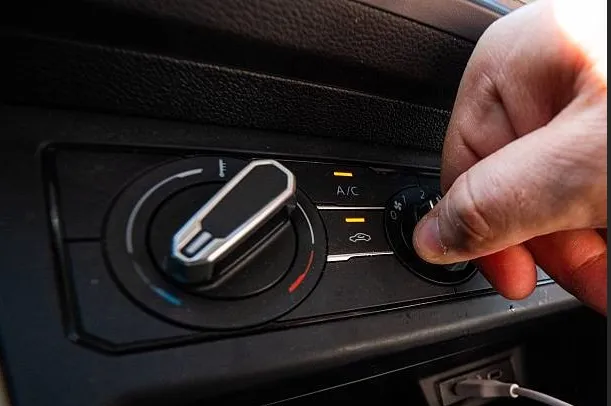

Your truck’s air conditioner feels cold while you are moving, but the air turns warm as soon as you stop at a light or sit in traffic. That pattern can be confusing because the system appears to work normally at highway speed. In many cases, the problem involves airflow, cooling-fan performance, refrigerant pressure, or a compressor that struggles at low engine speed. The change between driving and idling provides an important clue rather than a random symptom. Understanding what happens when road speed disappears can help you identify the likely cause, avoid unnecessary part replacement, and restore reliable cabin cooling.
Key Takeaways
- Poor airflow across the condenser is one of the most common reasons AC performance drops at idle.
- Weak cooling fans, damaged fan relays, or a worn fan clutch can prevent proper heat removal.
- Low refrigerant may cause inconsistent cooling, frequent compressor cycling, or warmer vent air.
- A worn compressor may struggle to create sufficient pressure at lower engine speeds.
- Dirt, insects, mud, and bent condenser fins can restrict airflow and reduce heat transfer.
- Engine overheating may trigger protective controls that reduce or turn off compressor operation.
- Refrigerant should not be added until the system has been inspected for leaks.
- Professional pressure testing can prevent unnecessary component replacement.
Common Reasons Your Truck AC Gets Warm at Idle
Faulty or Weak Cooling Fans
Your truck AC condenser is located at the front of the vehicle, where it releases heat from the refrigerant. While driving, outside air moves through the grille and helps cool the condenser. At idle, however, the system depends on electric cooling fans or a mechanical fan clutch to maintain airflow.
If the fan motor weakens, a relay fails, or the clutch wears out, the condenser temperature can rise quickly. This often causes warm air at stoplights or in heavy traffic. A reliable truck repair shop can inspect the fan, wiring, relays, fuses, and clutch operation. The issue should be checked promptly, especially if the engine temperature starts to rise as well.
Dirty or Blocked Condenser
After checking the cooling fans, the next step is to inspect the condenser itself. Because it is mounted near the front grille, it is exposed to dust, insects, leaves, mud, and road debris. When this material collects between the fins, heat cannot escape efficiently.
The AC may still cool while the truck is moving, but performance can decline during long periods of idling. A visual inspection may reveal clogged fins, bent sections, or debris trapped between the condenser and radiator.
Cleaning should be done carefully with low-pressure air or water. High-pressure spraying can flatten the delicate fins and create a more serious airflow restriction. Scheduling brake service during the same visit may also reduce downtime.
Low Refrigerant Level
If airflow through the condenser is normal, the refrigerant level should be checked next. Refrigerant absorbs heat from the cabin and carries it through the air conditioning system. A leak in a hose, seal, fitting, evaporator, or condenser can gradually reduce the system charge.
Low refrigerant levels can make the truck AC feel cold while driving because the compressor spins faster at higher engine speeds. At idle, the system may blow warmer air, cycle frequently, or cool inconsistently.
Adding refrigerant without repairing the leak is only a temporary solution. A technician should locate the leak, complete the repair, and properly recharge the system. During a lubrication service, worn belts or pulleys may also be identified.
Weak AC Compressor
If the refrigerant charge is correct, the compressor may be the next component to evaluate. The compressor circulates refrigerant and creates the pressure required for effective cabin cooling. As internal parts wear, the engine may lose pumping strength at lower engine speeds.
A weak compressor can allow the AC to perform normally on the highway, but struggle when the engine returns to idle. Warning signs may include unusual noises, oil residue, irregular cycling, or colder air when the engine is gently revved.
Because these symptoms can resemble low refrigerant or airflow problems, pressure testing is essential before replacing the unit. In some cases, transmission diagnostics and engine performance checks can help rule out RPM or load-related concerns.
Engine Cooling System Problems
If the AC components appear to be working correctly, the engine cooling system should also be inspected. The truck AC and engine cooling system are closely connected. When engine temperature rises too high at idle, the vehicle may reduce or temporarily turn off compressor operation to protect the engine.
This can make the air from the vents feel warmer even when the AC remains switched on. Common causes include low coolant, a weak water pump, a faulty thermostat, a clogged radiator, or trapped air in the system. These problems can trigger protective controls that limit cooling performance. Overheating should never be ignored because continued driving can damage the cylinder head, head gasket, or other major engine components.
Conclusion
A truck AC that turns warm at idle should not be ignored, especially when the problem appears alongside rising engine temperature, unusual noises, or frequent compressor cycling. Early diagnosis can separate a simple airflow restriction from a refrigerant leak, a worn compressor, or an engine cooling fault. Checking the easiest components first helps prevent unnecessary repairs and reduces vehicle downtime.
Professional testing is particularly important before adding refrigerant or replacing expensive parts because several faults can produce similar symptoms. By addressing the issue promptly and maintaining the cooling system regularly, truck owners can restore dependable cabin comfort, protect major components, and avoid more costly problems during demanding trips or in hot weather.
Visit Transmission & Diesel to schedule professional truck repair and AC service.
FAQs
Why does my truck AC get cold when driving but warm at idle?
Driving forces more outside air through the grille and across the condenser. At idle, the system depends on cooling fans to maintain airflow. A weak fan, a blocked condenser, a low refrigerant level, or a worn compressor can reduce cooling performance while the truck is stopped.
Can low refrigerant cause warm air at idle?
Yes. A low refrigerant charge can reduce the system’s ability to absorb and transfer heat. Higher engine speeds may temporarily improve refrigerant circulation, while lower compressor speed at idle makes the cooling problem more noticeable.
Should the cooling fan run when the AC is turned on?
In many trucks, an electric cooling fan should operate when the AC is activated. The exact operation depends on the vehicle’s design, engine temperature, refrigerant pressure, and control system. A technician can confirm whether the fan is working correctly.
Can a dirty condenser affect AC cooling?
Yes. Dirt, bugs, leaves, and road debris can block the condenser fins and restrict airflow. Without sufficient airflow, the condenser cannot release heat effectively, causing vent temperatures to rise, particularly during idling or slow traffic.
Does warm AC at idle mean the compressor is failing?
Not always. Compressor wear is one possible cause, but similar symptoms can also result from low refrigerant levels, weak cooling fans, a blocked condenser, or engine cooling problems. Pressure testing and airflow inspection are needed for an accurate diagnosis.
Is it safe to drive when the AC becomes warm at idle?
It may be safe if the engine temperature remains normal and there are no unusual noises or burning smells. However, stop driving and arrange an inspection if the engine overheats, the belt becomes damaged, or the compressor produces loud mechanical noises.

























Sign in to leave a comment.