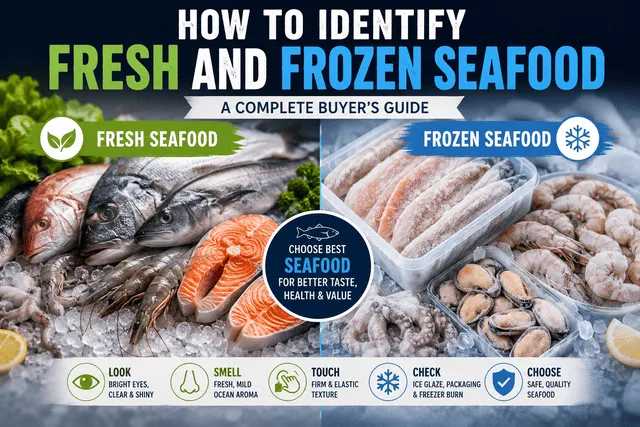

Seafood is one of the healthiest sources of protein, but choosing the right product can be confusing. Whether you're shopping at a local fish market or a supermarket, knowing how to identify Fresh and Frozen Seafood can help you avoid poor-quality products and enjoy better flavor, texture, and nutrition. Understanding the key differences between Fresh Seafood and frozen options allows you to make smarter buying decisions for every meal.
Many people assume that fresh seafood is always superior, while others believe frozen seafood offers better value. In reality, both can be excellent choices when selected correctly. The key is learning how to recognize quality through appearance, smell, texture, packaging, and storage conditions.
What Is Fresh Seafood?
Fresh seafood refers to fish, shrimp, crab, lobster, oysters, and other seafood that has not been frozen after harvesting. It is typically stored on ice and sold within a few days to preserve its freshness.
When buying fresh seafood, pay close attention to its appearance. Fresh fish should have bright, clear eyes instead of cloudy or sunken ones. The skin should look shiny with a natural metallic glow, while the scales should remain firmly attached. If the fish looks dull or dry, it may not be fresh.
The flesh should feel firm and spring back immediately when pressed. Soft or mushy flesh is often a sign that the seafood has started to deteriorate. Fresh seafood should also have a mild ocean-like aroma. A strong fishy or sour smell usually indicates poor quality.
How to Identify High-Quality Frozen Seafood
Frozen seafood is often processed and frozen shortly after being caught, helping preserve its freshness, flavor, and nutritional value. High-quality frozen seafood can sometimes be fresher than seafood sold as fresh because it spends less time in transportation and storage.
When purchasing Frozen Seafood, inspect the packaging carefully. The package should be completely sealed without any tears, holes, or signs of leakage. Excessive ice crystals inside the package may indicate that the seafood has thawed and been refrozen, which can negatively affect quality.
The seafood should maintain its natural color without dark spots, discoloration, or freezer burn. Freezer burn usually appears as dry white or gray patches and may affect both taste and texture.
Appearance Matters
Visual inspection is one of the easiest ways to judge seafood quality.
Fresh fish should display vibrant colors and glossy skin. Shellfish such as mussels and clams should have tightly closed shells or close immediately when tapped. Shrimp should have firm bodies with translucent shells rather than black spots or excessive discoloration.
Frozen seafood should look evenly frozen with minimal ice buildup. Individual pieces should remain separate rather than being stuck together in one large block, which may suggest improper storage.
Check the Smell
Smell is one of the strongest indicators of seafood freshness.
Fresh seafood should never produce an overpowering fishy odor. Instead, it should smell clean, fresh, and similar to the ocean. Shellfish should also have a fresh sea aroma without any sour or ammonia-like scent.
Frozen seafood generally has little to no odor while frozen. After thawing, it should still have a mild, clean smell. If a strong unpleasant odor develops after thawing, it is best not to consume it.
Examine the Texture
Texture provides another reliable way to identify quality.
Fresh fish should feel moist but never slimy. Pressing the flesh with your finger should leave no lasting indentation. Shrimp should feel firm, and scallops should appear slightly moist without being overly wet.
Frozen seafood should retain its firm texture after proper thawing. If it becomes mushy, watery, or falls apart easily, it may have been stored incorrectly or thawed multiple times.
Read Labels Carefully
Product labels offer valuable information about seafood quality.
Look for details such as the harvest location, packaging date, best-before date, and storage instructions. Reputable brands often include whether the seafood is wild-caught or farm-raised, along with sustainability certifications.
For frozen products, verify that the storage temperature has remained consistently frozen and check that there are no signs of damaged packaging.
Understand Fresh vs. Frozen Seafood
Many shoppers believe fresh seafood is always the healthier option, but that's not necessarily true.
Fresh seafood is ideal when it has been recently harvested and handled properly. However, seafood that spends several days in transport may actually lose freshness before reaching the market.
Frozen seafood is usually flash-frozen shortly after harvest, locking in moisture and nutrients. Modern freezing technology helps preserve taste, texture, and nutritional value, making frozen seafood an excellent option throughout the year.
The best choice depends more on handling and storage than on whether the seafood is fresh or frozen.
Common Mistakes Buyers Make
Many consumers judge seafood only by price, assuming expensive products are always fresher. Others ignore packaging damage, unusual odors, or excessive ice buildup, increasing the risk of purchasing lower-quality seafood.
Another common mistake is repeatedly thawing and refreezing frozen seafood. This significantly affects texture, flavor, and food safety. Always thaw seafood in the refrigerator and cook it promptly after thawing.
Conclusion
Learning how to identify Fresh and Frozen Seafood helps you purchase safer, tastier, and higher-quality seafood every time you shop. Fresh seafood should have bright eyes, firm flesh, shiny skin, and a clean ocean smell, while frozen seafood should be well-sealed, free from freezer burn, and contain minimal ice crystals. By checking appearance, texture, smell, packaging, and storage conditions, you can confidently choose seafood that delivers excellent flavor and nutritional value, whether you prefer fresh or frozen options.





























Sign in to leave a comment.