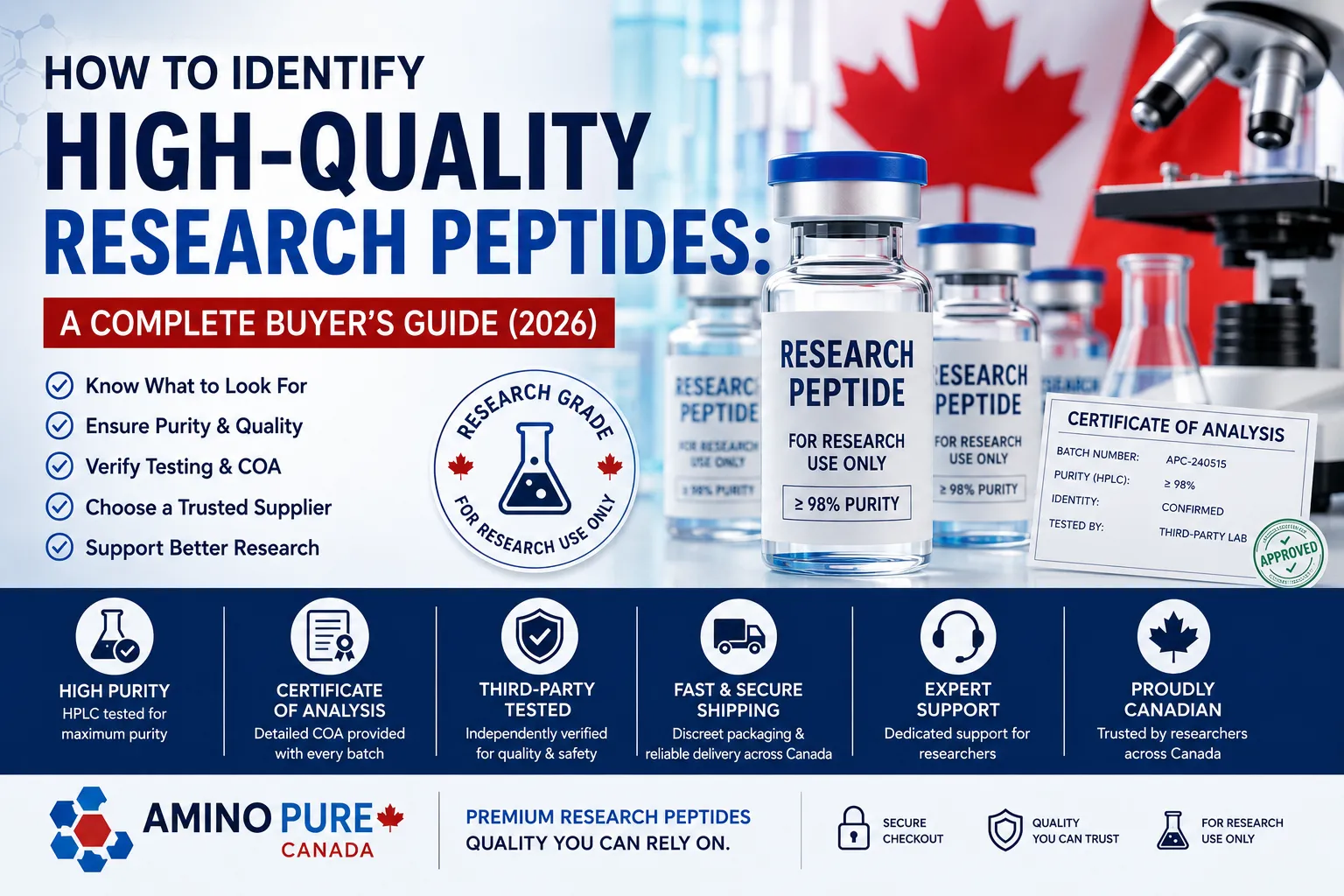

The demand for high-quality research peptides has grown significantly as scientific research continues to evolve. Researchers across Canada depend on reliable laboratory materials to produce accurate, reproducible, and trustworthy results. However, not all research peptides available in the market meet the same quality standards.
Whether you work in a university laboratory, biotechnology company, or independent research facility, understanding how to evaluate research peptides before purchasing is essential. Selecting premium-quality materials helps protect the integrity of your research while minimizing the risk of inconsistent experimental outcomes.
This guide explains the most important factors every researcher should consider when purchasing research peptides.
What Are Research Peptides?
Research peptides are short chains of amino acids specifically manufactured for scientific and laboratory research. They are widely used in molecular biology, protein interaction studies, biochemical analysis, pharmaceutical development, and various laboratory applications.
These products are intended strictly for laboratory research purposes and are not intended for human or veterinary use.
Why Quality Matters
Research results are only as reliable as the materials used during experimentation. Low-quality peptides may contain impurities, incorrect sequences, degradation, or inconsistent concentrations that can negatively impact laboratory studies.
High-quality research peptides provide:
- Greater experimental consistency
- Improved reproducibility
- Higher purity standards
- Better stability
- Reliable analytical data
Investing in premium research materials ultimately saves both time and research costs.
1. Check the Purity Level
One of the first indicators of quality is peptide purity.
Most reputable suppliers provide purity percentages determined through High-Performance Liquid Chromatography (HPLC). Higher purity generally means fewer contaminants that could interfere with research results.
Researchers should always verify purity information before purchasing any peptide.
2. Ask for a Certificate of Analysis (COA)
A Certificate of Analysis (COA) is one of the most valuable quality documents available.
A COA typically includes:
- Batch number
- Purity results
- Analytical testing
- Product identification
- Manufacturing details
Purchasing peptides supported by a COA increases confidence in product quality and laboratory reliability.
3. Third-Party Laboratory Testing
Independent laboratory testing adds another layer of quality assurance.
Third-party verification helps confirm:
- Product identity
- Purity levels
- Batch consistency
- Analytical accuracy
Suppliers that openly provide third-party testing demonstrate transparency and commitment to quality.
4. Evaluate the Supplier's Reputation
Choosing a reputable supplier is just as important as choosing the peptide itself.
Reliable suppliers generally offer:
- Detailed product information
- Responsive customer support
- Secure ordering
- Clear quality documentation
- Transparent testing procedures
Reading customer feedback and researching the supplier's history can help identify trusted sources.
5. Review Storage and Shipping Practices
Research peptides require appropriate handling throughout transportation and storage.
Professional suppliers use proper packaging methods that help preserve product stability during shipping.
After receiving peptides, laboratories should store products according to manufacturer recommendations.
6. Verify Product Information
Every research peptide should include complete product details.
Look for:
- Product name
- Batch number
- Purity percentage
- Storage recommendations
- Testing information
Incomplete product information may indicate poor manufacturing standards.
7. Compare Pricing Carefully
The lowest price does not always represent the best value.
Extremely inexpensive products may compromise on quality testing, documentation, or manufacturing standards.
Researchers should prioritize quality, consistency, and supplier reliability over price alone.
Common Mistakes Researchers Should Avoid
Many first-time buyers unknowingly make purchasing decisions that affect research quality.
Avoid these common mistakes:
- Buying without checking purity
- Ignoring Certificates of Analysis
- Purchasing from unknown suppliers
- Choosing products based only on price
- Failing to verify third-party testing
- Improper storage after delivery
Why Choose Amino Pure Canada?
When searching for high-quality research peptides, researchers need a supplier committed to quality, transparency, and reliability.
Amino Pure Canada is dedicated to providing research-grade products that support laboratory excellence.
Premium Research-Grade Products
Products are selected to meet high laboratory quality expectations.
Third-Party Tested
Independent testing helps verify product quality and consistency.
Certificate of Analysis Available
Many products include supporting analytical documentation for added confidence.
Secure Online Ordering
A safe and convenient ordering experience designed for researchers.
Fast Shipping Across Canada
Reliable delivery helps laboratories receive products quickly and efficiently.
Wide Selection of Research Peptides
Researchers can access a broad range of laboratory compounds from a trusted Canadian supplier.
Dedicated Customer Support
Professional assistance is available to help answer product-related questions.
Tips for Buying Research Peptides Online
Before placing an order, always:
- Verify purity reports.
- Request a Certificate of Analysis.
- Confirm third-party testing.
- Review supplier credibility.
- Read product specifications carefully.
- Follow recommended storage guidelines.
These simple steps can significantly improve research reliability.
The Future of Quality Standards
As biotechnology and pharmaceutical research continue to expand, quality standards for research peptides will become increasingly important. Laboratories are expected to place greater emphasis on transparency, documentation, and supplier accountability.
Organizations that consistently deliver premium-quality research materials will continue earning the trust of researchers across Canada.
Conclusion
Selecting high-quality research peptides is one of the most important decisions researchers make before beginning any laboratory study. Factors such as purity, third-party testing, Certificates of Analysis, storage, and supplier reputation all contribute to reliable experimental outcomes.
By working with trusted suppliers like Amino Pure Canada, researchers can obtain dependable research-grade materials backed by quality documentation and professional support.



























Sign in to leave a comment.