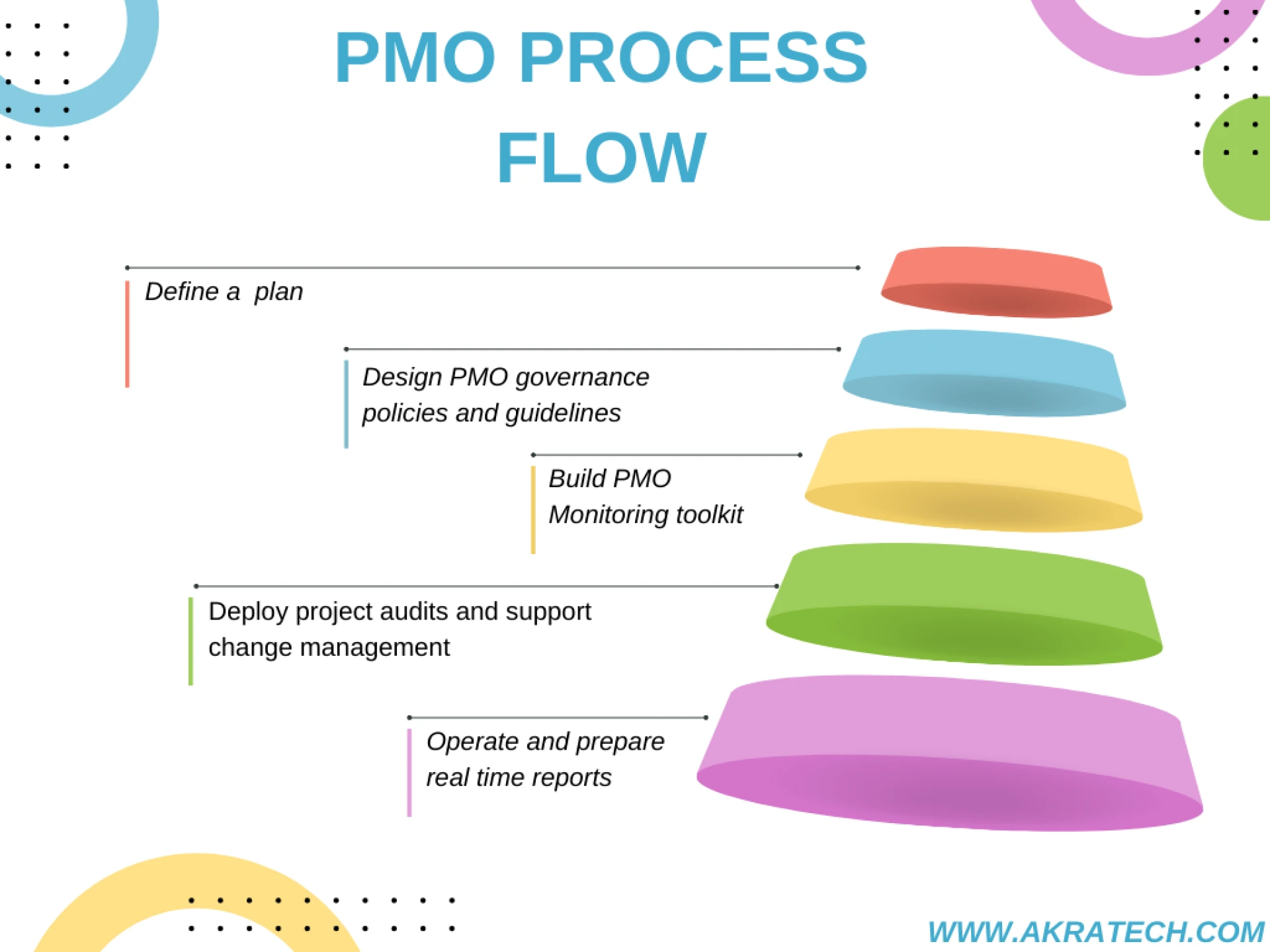

A project management office (PMO) process flow is a visual representation of the steps and procedures involved in managing projects within an organization. By creating a well-designed PMO process flow, you can help your team work more efficiently and effectively, ensuring that projects are completed on time and within budget. In this blog, we'll walk you through the steps to create a PMO process flow that works best for your team.
Define the Purpose and Scope of Your PMO.
Before you can create a successful PMO process flow, you need to define the purpose and scope of your PMO. This involves identifying the goals and objectives of your PMO, as well as the specific projects and processes that it will be responsible for managing.
You should also consider the size and complexity of your organization, as well as any regulatory or compliance requirements that may impact your PMO. Once you have a clear understanding of the purpose and scope of your PMO, you can begin to design a process flow that meets the unique needs of your team.
Establish Governance and Standardization.
One of the key components of a successful PMO process flow is establishing governance and standardization. This involves creating a set of guidelines and procedures that ensure consistency and quality across all projects and processes managed by the PMO.
This can include standard templates for
Project plans, Risk assessments, Status reports, Guidelines for project initiation, execution, and closure.
By establishing clear governance and standardization, you can help your team work more efficiently and effectively, while also ensuring that all projects are completed on time and within budget.
Develop a Project Management Methodology.
Developing a project management methodology is a crucial step in implementing a successful PMO process flow. This involves creating a standardized approach to managing projects, including defining
Project phases, Deliverables, Timelines.
Your methodology should also include guidelines for project planning, risk management, and communication. By establishing a clear methodology, you can ensure that all projects are managed consistently and efficiently, regardless of their size or complexity. This can help your team work more effectively and deliver better results for your organization.
Project planning methodologies:
When it comes to project planning, there are a variety of methodologies to choose from. The best methodology for a particular project depends on factors such as the project's size and complexity, the organization's culture, and the type of project. Some of the most commonly used methodologies include:
Example 1: Waterfall: This methodology involves completing the project in a linear sequence of steps, with each step building on the previous one.
Example 2: Agile: This methodology is designed to handle projects that are complex, uncertain, and rapidly changing. The project is broken down into smaller, iterative cycles or sprints.
Example 3: Six Sigma methodology: This methodology is focused on improving the quality of a product or service by identifying and eliminating defects or errors.











Sign in to leave a comment.