
Paid search can be one of the fastest ways to create demand, but it’s also one of the easiest ways to waste budget.
The difference between “running ads” and “managing a program” is a set of habits: clear targets, clean measurement, and disciplined weekly decision-making.
This framework is designed for businesses operating across Greater Sydney (and beyond) that need leads they can actually follow up on, not just clicks.
Start with the outcome, not the platform
Before touching keywords or bids, define what a “good lead” looks like in plain language.
For many service businesses, the real goal is not a form fill; it’s a qualified enquiry that matches location, urgency, budget, and scope.
If the team can’t agree on lead quality, the ad account can’t optimise toward it.
A practical starting point is to choose one primary conversion that represents genuine intent (for example: booked call, quote request, or checkout purchase) and treat everything else as supporting signals.
Foundations that prevent wasted spend
Profitable PPC is often less about clever tactics and more about preventing common leakage.
Start with three foundations: structure, targeting, and measurement.
Account structure that matches how people search
A simple structure that most teams can maintain beats a complex structure nobody reviews.
Group campaigns by intent first (brand, generic high-intent, competitor if appropriate, remarketing), then by service line, then by location only where it materially changes the search behaviour or offering.
If everything is bundled into one campaign, it becomes harder to control budgets and harder to learn what’s working.
Location targeting that reflects service reality
Across Greater Sydney, two suburbs can behave like different markets.
Avoid “set-and-forget” geo settings that accidentally include people outside the service area, especially if ads are set to “presence or interest” rather than “presence”.
When a business has a defined service radius, test radius targeting and exclude known low-fit pockets, but keep an eye on volume so you don’t starve the campaign.
Measurement that answers one question
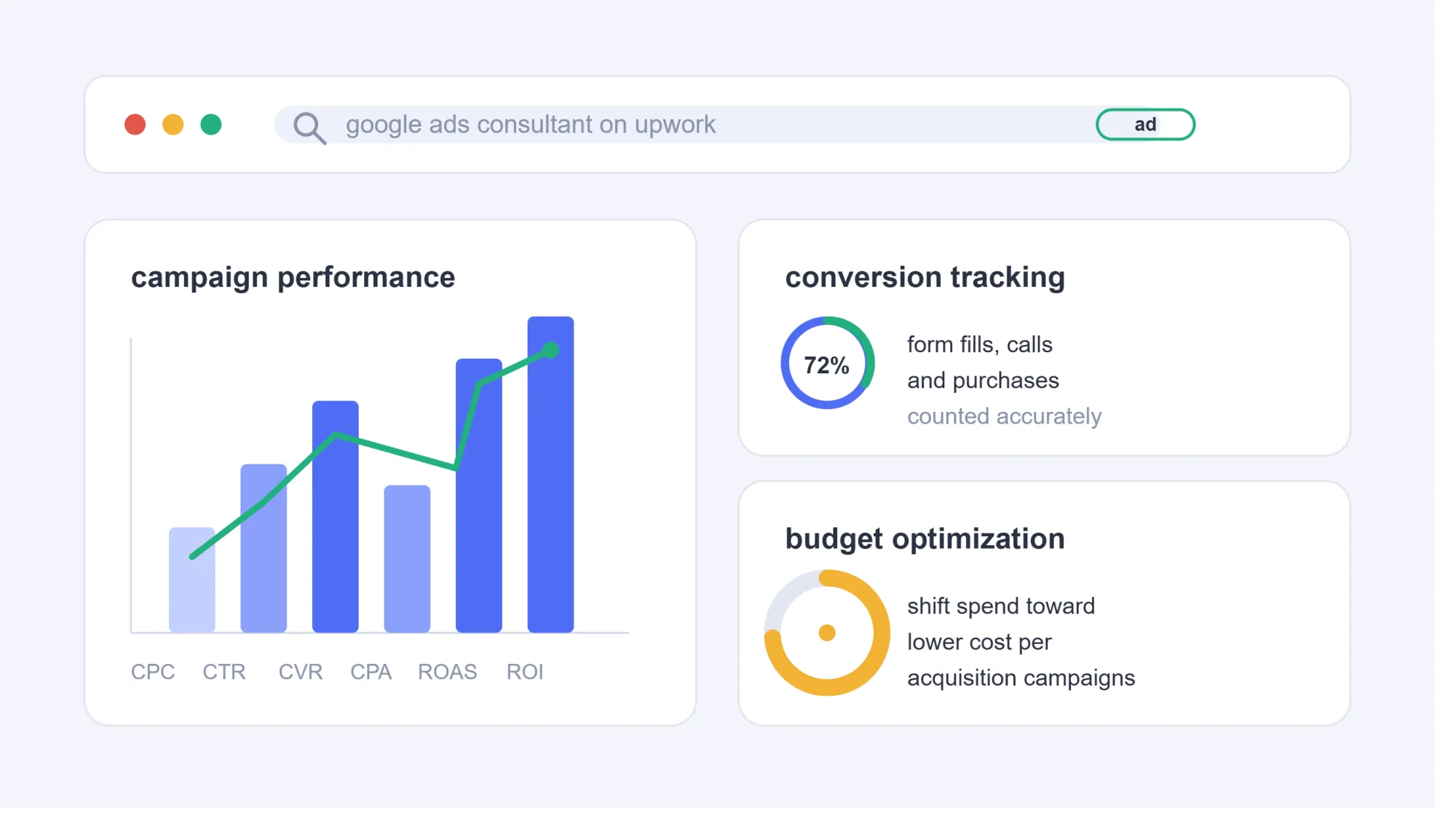
Tracking isn’t about dashboards; it’s about being able to say, “This spend produced these outcomes.”
At minimum, ensure conversion tracking is working, conversion definitions are stable, and the numbers reconcile with what the business can see in its own systems (CRM, call logs, bookings, sales).
If calls matter, call tracking and call outcome notes become part of PPC management, not an optional extra.
The management rhythm that keeps performance from drifting
Most PPC accounts don’t “break” all at once.
They drift.
A healthy rhythm looks like weekly triage, fortnightly deep checks, and monthly strategy adjustments.
Weekly: protect the budget and lead quality
Review search terms to catch irrelevant traffic early and expand negatives.
Scan location and device performance for obvious mismatches with how customers convert.
Check budget pacing so one campaign doesn’t silently eat the month’s spend in week one.
One strong habit is to write down the single decision you’re making this week, and the metric that will confirm it.
Fortnightly: improve efficiency, not just volume
Look for “near misses”: ad groups with strong click-through but weak conversion, or strong conversion but low impression share.
Tighten the message match between ad copy, keyword intent, and landing page content.
If a landing page doesn’t clearly answer “am I in the right place?”, even the best targeting will struggle.
Monthly: make sure the strategy still matches the business
Businesses change faster than ad accounts.
Pricing changes, service areas expand, capacity tightens, and seasonality hits, so ad spend needs to follow operational reality.
If the business is booked out for two weeks, shift budget toward higher-margin jobs, tighten location, or change the conversion focus to calls rather than low-intent forms.
Common mistakes that quietly drain spending
Most costly PPC mistakes don’t look dramatic in the interface.
They show up as “busy” performance that never turns into consistent revenue.
- Optimising to the wrong conversion. If the account is learning from low-intent actions, the machine will find more of them.
- Ignoring search terms for too long. Broad matching can work, but only with disciplined review and negatives.
- Blending unrelated intents. Putting research queries and “ready-to-buy” queries together muddies learning and wastes budget.
- Assuming the website will do the persuasion. Landing pages need to match intent, location, and proof points.
- Chasing CPC rather than cost per qualified enquiry. Cheaper clicks often come with lower intent.
- Changing too many variables at once. If bids, ads, and landing pages all change at the same time, it’s hard to learn what caused the result.
- Reporting that lists numbers but drives no decisions. A useful report ends with actions, not screenshots.
Decision factors: in-house, agency, or hybrid
Choosing how to manage PPC is as important as choosing what to run.
A good decision comes down to capability, time, and how costly mistakes are for the business.
When in-house makes sense
In-house can work well if there’s enough time to manage weekly, the team understands lead quality, and the business has clean measurement in place.
It’s a strong fit for companies with stable offers, steady budgets, and someone accountable for results (not just “posting updates”).
When an agency makes sense
An external team can be valuable when the account needs a tighter structure, stronger measurement, and a consistent optimisation cadence that internal teams struggle to maintain.
It also helps when the business needs access to specialist skills like tracking, landing page testing, or multi-location campaign design.
If a quick health-check would help prioritise fixes, the Warren Digital Google Ads guide can be used as a reference for what to review first in a service-based account.
When is a hybrid the best fit
Hybrid tends to work when the business owns the offer and the landing pages, while a specialist owns the account structure, tracking, and optimisation rhythm.
This reduces the “handover gap” where leads look good in the platform but don’t match operational reality.
A simple first-action plan for the next 7–14 days
The goal of the first two weeks isn’t perfection.
It’s control.
Days 1–2: Define success and stabilise measurement
Confirm what counts as a qualified enquiry, then ensure the primary conversion is tracked reliably and consistently.
Days 3–5: Clean up targeting and intent
Check location settings, remove obvious mismatches, and separate high-intent from exploratory traffic where possible.
Days 6–9: Fix the biggest leakage points
Review search terms, add negatives, and align ad messaging to the top two intents that actually convert.
Days 10–14: Create a repeatable weekly rhythm
Set a weekly review block, choose three metrics that matter, and commit to one meaningful change per week rather than constant tinkering.
Operator Experience Moment
In accounts that feel “mysteriously expensive,” the culprit is often not the bid strategy.
It’s usually a pile-up of small mismatches: broad location settings, vague landing pages, and conversions that don’t reflect lead quality.
When those are corrected, performance often becomes calmer—fewer surprises, clearer decisions, and less reactive spending.
Local SMB Mini-Walkthrough
A trades business covers Inner West, Parramatta, and the Hills District.
The account is rebuilt into separate campaigns for emergency jobs vs planned work.
Location is switched to presence-only, and low-fit areas are excluded after a fortnight of data.
Call tracking is added, and calls are tagged by “job type”, so lead quality can be reviewed weekly.
Landing pages are simplified to show service area, response times, and proof points above the fold.
Budgets are shifted toward the campaign that produces booked calls, not just form fills.
A monthly review aligns spend with capacity, so busy periods don’t attract low-margin work.
Practical Opinions
Prioritise lead quality definitions before chasing new keywords.
Change fewer things at once, but review search terms more often.
If reporting doesn’t end in actions, it isn’t a management system.
Key Takeaways
- Profitable PPC comes from clear lead-quality targets, reliable tracking, and a disciplined optimisation rhythm.
- Account structure should reflect intent and service reality, not just a list of services.
- Weekly search-term and targeting reviews prevent drift and protect the budget.
- The best management model (in-house, agency, hybrid) depends on time, capability, and the cost of mistakes.
Common questions we hear from Australian businesses
Q1) How long should it take before PPC “works”?
Usually, initial traction can appear quickly, but stable performance needs enough time to collect clean conversion data and remove wasted traffic. A practical next step is to set a 4-week baseline period with limited changes, focusing on measurement and search-term clean-up. In most Australian metro markets, competition can be dense, so early volatility is normal.
Q2) Should campaigns be split by suburb or by service?
It depends on whether location meaningfully changes intent, pricing, or serviceability. A practical next step is to start with intent/service separation first, then only split by location when you can defend the extra complexity with better control. In Greater Sydney, travel time and service radius often matter more than suburb boundaries.
Q3) Are automated bidding strategies worth it for small budgets?
In most cases, automation can help, but only when conversion tracking is reliable, and the conversion chosen truly reflects qualified intent. A practical next step is to audit conversion setup and run a short test with clear guardrails (budget caps, campaign separation, and weekly checks). Australian accounts with low conversion volume may need a simpler approach until data builds.
Q4) What’s the fastest way to reduce wasted spend without killing volume?
Usually, the quickest wins come from search-term reviews, stronger negative keywords, and tightening location settings rather than dramatic bid cuts. A practical next step is to do two weeks of disciplined search-term triage and add exclusions based on real lead outcomes. In Australia, service-area businesses often waste when geo settings include people who are only “interested” in a location rather than actually in it.





























Sign in to leave a comment.