
A reliable car battery is essential for every vehicle, powering everything from the engine ignition to the lights and electronic systems. However, no battery lasts forever. Knowing when it's time for car battery replacement can save you from unexpected breakdowns, costly towing, and the inconvenience of being stranded. Whether you drive every day or only occasionally, recognizing the warning signs of a failing battery helps you replace it before it completely stops working.
Why Your Car Battery Is Important
Your car battery supplies the electrical power needed to start your engine and supports various electrical components until the alternator takes over. It powers systems such as:
- Engine starter
- Headlights and taillights
- Dashboard electronics
- Power windows
- Air conditioning controls
- Infotainment system
- Central locking
- Safety features
A healthy battery ensures your vehicle starts reliably and all electrical systems function properly.
How Long Does a Car Battery Last?
On average, a car battery lasts between 3 and 5 years. However, several factors can affect its lifespan, including:
- Weather conditions
- Driving habits
- Battery quality
- Vehicle type
- Frequency of use
- Maintenance
Vehicles driven in hot climates often experience shorter battery life because heat speeds up internal chemical wear.
Signs Your Car Battery Needs Replacement
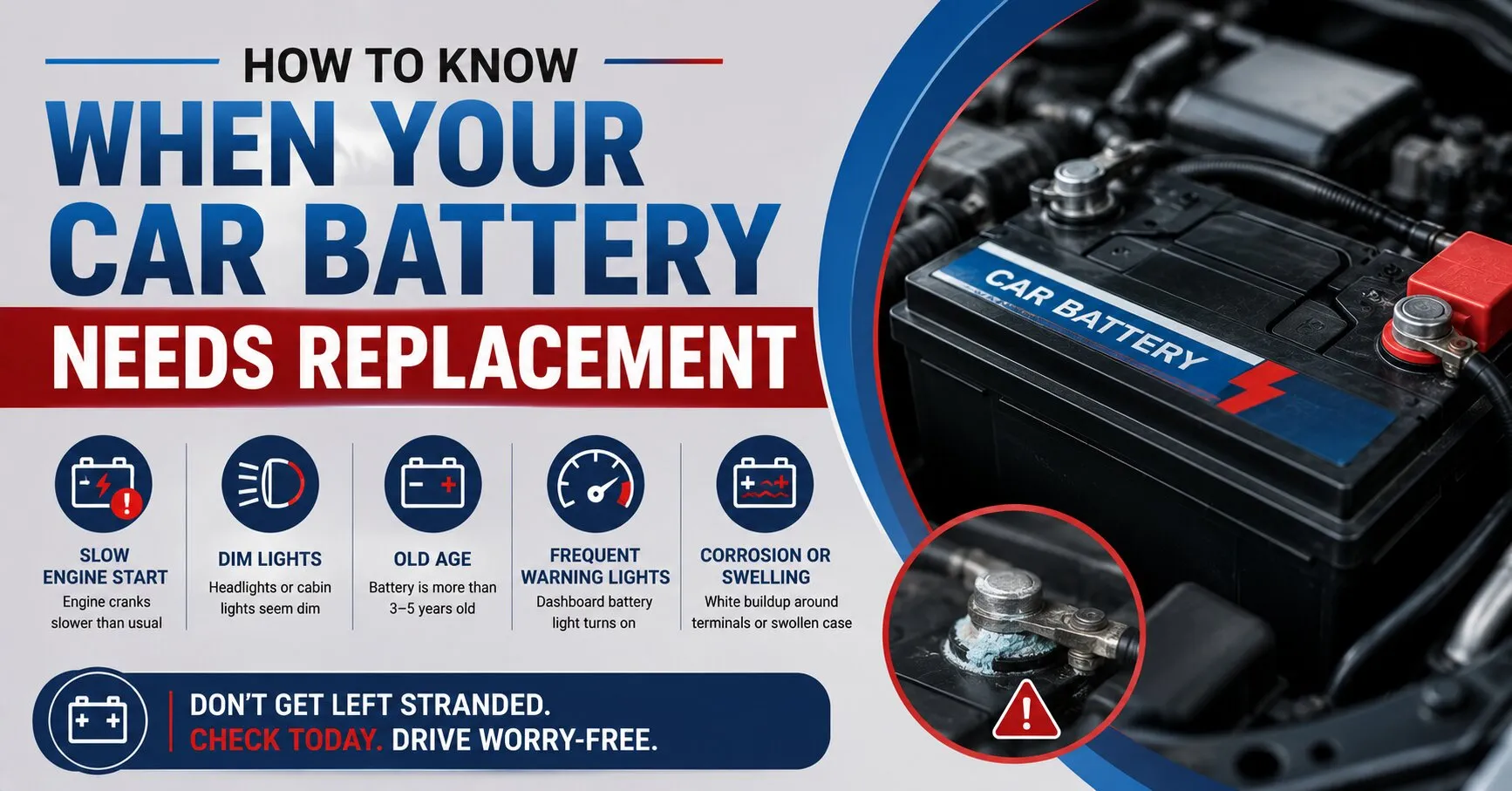
1. Slow Engine Cranking
One of the first signs of a weak battery is a slow engine crank. If the engine takes longer than usual to start or sounds sluggish when you turn the key, the battery may not be delivering enough power.
2. Difficulty Starting the Vehicle
If your car struggles to start or requires multiple attempts before the engine turns over, the battery could be reaching the end of its life.
3. Clicking Noise When Starting
A repeated clicking sound usually means the battery doesn't have enough power to operate the starter motor. While other issues can also cause this, a weak battery is one of the most common reasons.
4. Dim Headlights
Weak or flickering headlights often indicate that your battery cannot provide consistent voltage. If the lights become brighter while driving but dim when idling, it's worth having the battery checked.
5. Battery Warning Light
If the battery warning light appears on your dashboard, it could indicate:
- A weak battery
- Charging system problems
- Alternator issues
- Loose battery connections
Don't ignore this warning, as it may lead to complete battery failure.
6. Electrical Problems
Modern vehicles rely heavily on electrical systems. A failing battery may cause problems with:
- Power windows
- Radio or infotainment system
- Dashboard display
- USB charging ports
- Electronic seats
If multiple electrical components start acting strangely, the battery should be inspected.
7. Frequent Jump Starts
Needing a jump start once isn't unusual, especially if you accidentally left your lights on. However, if you're frequently jump-starting your vehicle, the battery has likely lost its ability to hold a charge and should be replaced.
8. Swollen Battery Case
Extreme heat can cause the battery casing to swell or bulge. A swollen battery is unsafe and should be replaced immediately, as it may leak or fail without warning.
9. Corrosion Around the Battery Terminals
White, blue, or green corrosion around the battery terminals can interfere with the electrical connection. While cleaning the terminals may temporarily improve performance, excessive corrosion on an older battery often indicates it's time for a replacement.
10. Battery Is More Than Three Years Old
Even if your battery appears to be working normally, it's a good idea to have it tested once it reaches three years of age. Preventive replacement before complete failure can save you from unexpected roadside emergencies.
Common Reasons Car Batteries Fail
Several factors can shorten battery life:
- Frequent short trips that don't fully recharge the battery
- Leaving headlights or interior lights on
- Loose or dirty battery terminals
- Faulty alternator
- Extreme temperatures
- Heavy use of electrical accessories
Understanding these factors helps you take better care of your battery.
Weather and Battery Performance
Hot Weather
High temperatures accelerate chemical reactions inside the battery, causing fluid evaporation and internal damage over time.
Cold Weather
Cold temperatures reduce battery efficiency and make it harder to start the engine, especially if the battery is already weak.
Both hot and cold weather can reveal batteries that are nearing the end of their lifespan.
How to Check Your Car Battery
A simple visual inspection can help identify potential problems. Look for:
- Cracks in the battery casing
- Swelling or bulging
- Corrosion around terminals
- Loose connections
- Leaking fluid
You should also check the battery's age. If it's over three to five years old, consider having it professionally tested.
Professional Battery Testing
Professional battery testing measures:
- Battery voltage
- Cold Cranking Amps (CCA)
- Charging capacity
- Internal resistance
- Overall battery health
These tests provide a clear picture of whether your battery still has enough life remaining or needs replacement.
Repair or Replace?
Some battery issues, such as dirty terminals or loose connections, can be fixed. However, replacement is recommended if:
- The battery repeatedly loses charge
- It fails a professional battery test
- The casing is swollen or leaking
- Internal cells are damaged
- The battery is more than five years old
Replacing the battery before it completely fails helps avoid unexpected breakdowns.
Tips to Extend Battery Life
You can increase your battery's lifespan by following these simple tips:
- Drive your vehicle regularly.
- Avoid frequent short trips.
- Turn off all lights and accessories before leaving the car.
- Keep battery terminals clean.
- Secure the battery properly to reduce vibration.
- Schedule regular battery inspections.
Proper maintenance can often add months or even years to your battery's service life.
Choosing the Right Replacement Battery
When replacing your battery, make sure you choose one that matches your vehicle's specifications. Consider:
- Correct battery size
- Cold Cranking Amps (CCA)
- Reserve Capacity (RC)
- Warranty
- Manufacturer recommendations
Installing the right battery ensures reliable performance and protects your vehicle's electrical system.
Benefits of Replacing Your Battery on Time
Replacing a weak battery before it fails offers several benefits:
- Reliable engine starts
- Improved electrical performance
- Reduced risk of breakdowns
- Better fuel efficiency in some vehicles
- Peace of mind during long journeys
- Protection for sensitive electronic components
Final Thoughts
Your car battery is one of the most important components of your vehicle, yet it's often overlooked until it fails. Paying attention to warning signs such as slow engine cranking, dim headlights, electrical issues, corrosion, or frequent jump starts can help you identify when it's time for a replacement.
Regular inspections, professional battery testing, and timely car battery replacement can prevent inconvenient breakdowns and keep your vehicle running smoothly. Investing in a new battery at the right time is a small cost compared to the inconvenience and expense of being stranded with a dead one. With proper care and maintenance, you can maximize your battery's lifespan and enjoy dependable performance every time you start your car.
























Sign in to leave a comment.