
Introduction
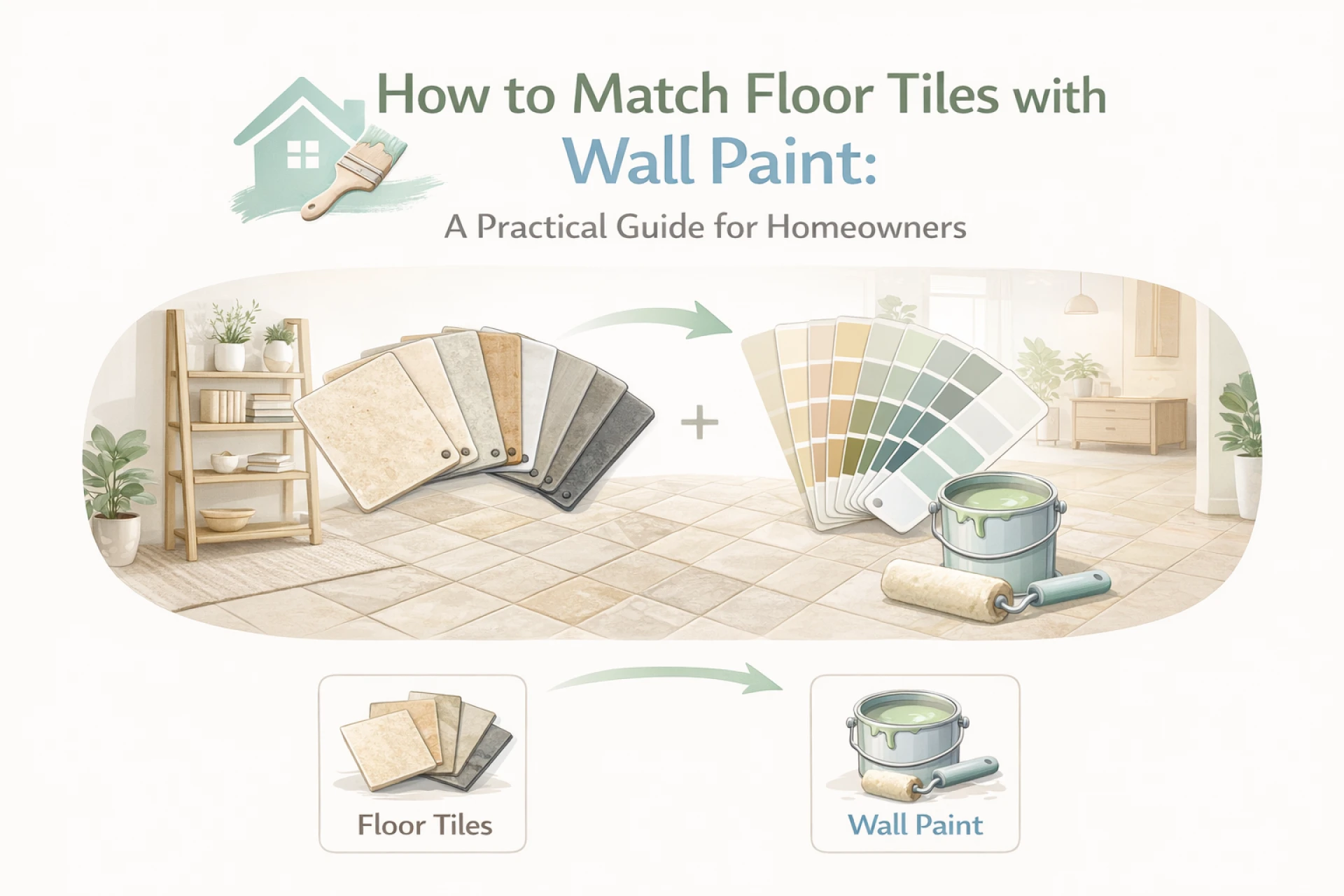
Walk into any well-designed room and something feels right, even if you cannot immediately explain why. The floor and walls seem to belong together. That feeling does not happen by accident. It comes from deliberate choices made before a single tile was set or a brush was lifted. Matching floor tiles with wall paint is one of the most consequential decisions in any renovation, and getting it wrong can make an otherwise beautiful space feel unsettled.
This guide breaks down how to approach that process thoughtfully, whether you are redesigning a single bathroom or overhauling an entire home.
Understanding the Relationship Between Tile and Paint
Tiles and paint do not compete. They communicate. The goal is to create a conversation between the two surfaces so the room feels unified rather than assembled from separate parts.
The most common mistake homeowners make is treating these decisions independently. They fall in love with a tile at a showroom, then try to reverse-engineer a paint color that somehow works with it. Sometimes that approach succeeds, but more often it leads to mismatches that are difficult to pinpoint and even harder to fix once everything is installed.
A better starting point is to treat the floor tile as the anchor. Tiles are permanent. Paint is not. You can repaint a wall in an afternoon. Replacing tile takes a crew, a budget, and several days of disruption. So choose your tile first, then build your wall color around it.
Reading the Undertones in Your Tile
Every tile has an undertone, even tiles that appear completely neutral. A white marble tile might carry a warm cream undertone. A gray porcelain might lean toward blue or toward green depending on the light. Beige travertine often has a distinctly pink or orange cast that only becomes obvious once it is installed.
Before you select paint, spend time studying your tile under different lighting conditions. Pull a sample home and place it under natural daylight, then under evening artificial light. The undertone may shift noticeably between the two.
Once you identify whether your tile reads warm or cool, apply that same logic to your paint selection. Warm tiles coordinate best with paint shades that carry similar warm undertones, such as creamy whites, gentle taupes, amber infused beiges, or subtle terra cotta hues.
Cool tiles harmonize better with paints that carry gray, blue, or green hints.
This does not mean every warm tile demands a warm wall and every cool tile demands a cool wall. Contrast can work beautifully. But when you mix undertones intentionally, you need to commit fully rather than landing somewhere ambiguous in the middle.
Working with Color Value and Contrast
Color value refers to how light or dark a color is on a scale from white to black. The relationship between the value of your tile and the value of your wall paint shapes how dramatic or serene the room feels.
A high-contrast pairing, like dark slate floor tiles against a crisp white wall, creates energy and visual definition. It works well in modern kitchens, contemporary bathrooms, and spaces with strong architectural lines.
A low-contrast approach, where tile and wall sit close together in value, produces a quieter, more seamless effect. Think of sandy beige floor tiles against a warm off-white wall. The floor and wall seem to melt into each other, which can make a small room feel more expansive.
Mid-range contrast falls between these two extremes and is the most forgiving choice for homeowners who are uncertain. If you select a medium-toned tile and a paint color two or three shades lighter, you will almost always land somewhere that reads as intentional and cohesive.
The Role of Tile Pattern and Texture
Heavily patterned tiles, such as encaustic cement tiles with geometric designs or traditional Moroccan patterns, carry a lot of visual weight on their own. When the floor is doing that much work, the walls generally benefit from restraint. A solid, muted paint color lets the tile breathe and prevents the room from feeling busy.
Take a bathroom with a bold black-and-white hexagonal tile floor as an example. If the walls are painted a stark, saturated color, the room quickly becomes overwhelming. But a soft warm gray or a pale sage green allows the tile pattern to stay the star without making the space feel chaotic.
Textured tiles, like rough-hewn stone or heavily veined marble, already introduce a great deal of visual complexity through surface variation. With these materials, both bold and neutral paint colors can work, but the finish of the paint matters. A flat or matte finish tends to complement the organic quality of natural stone, while a semi-gloss can feel at odds with the handcrafted texture.
Sampling Before Committing
No amount of careful planning replaces testing paint samples in the actual space. The light in your bathroom is not the same as the light in a paint store, and the colors will behave differently once surrounded by your specific tile, your fixtures, and your available window exposure.
Buy two or three sample pots of your top contenders and paint large swatches directly on the wall, at least twelve by twelve inches each. Live with them for a few days. Check how they look in the morning, at midday, and at night with lamps on. You will quickly learn which option genuinely works with your tile and which one only seemed right in the showroom.
Considering the Grout Line
Grout is a surface too. A wide grout line in a contrasting color can alter how the tile reads entirely. If you have warm cream tiles with charcoal grout, the overall floor impression shifts toward a cooler, more graphic look. Factor that visual shift into your paint selection rather than ignoring it.
Specific Room Considerations
Kitchens
Kitchens typically have more surfaces competing for attention, including cabinetry, countertops, backsplash, and appliances, in addition to floor tile and wall paint. The most effective approach is to decide on your floor tile and cabinetry first, then select a paint color that bridges or complements both.
Neutral paint tends to perform reliably in kitchens because it accommodates the range of materials without forcing a hard commitment to one direction.
Bathrooms
Small bathrooms benefit from tonal approaches. Matching the floor tile and wall paint within the same color family, even with obvious value differences, keeps the eye moving fluidly and makes the space feel larger than it is.
Living Areas
Open-plan living areas often use large-format floor tiles that extend across significant square footage. Here, the paint color you choose will live alongside far more of that tile than in a contained room. Subtle differences in undertone that might pass unnoticed in a small bathroom can become glaring across an open floor plan.
A Note on Professional Guidance
Even experienced homeowners sometimes find the matching process difficult, and that is entirely normal. Tile selection involves technical factors beyond aesthetics, including slip resistance ratings, porosity, grout compatibility, and subfloor requirements. An experienced tile installer in las vegas can often offer practical perspective on which materials will hold up well in the local climate while also helping you visualize how different tiles will read against the wall colors you are considering. That kind of hands-on professional insight, combined with your own preparation and sampling, gives you the best possible foundation for a result you will be happy with for years.



Sign in to leave a comment.