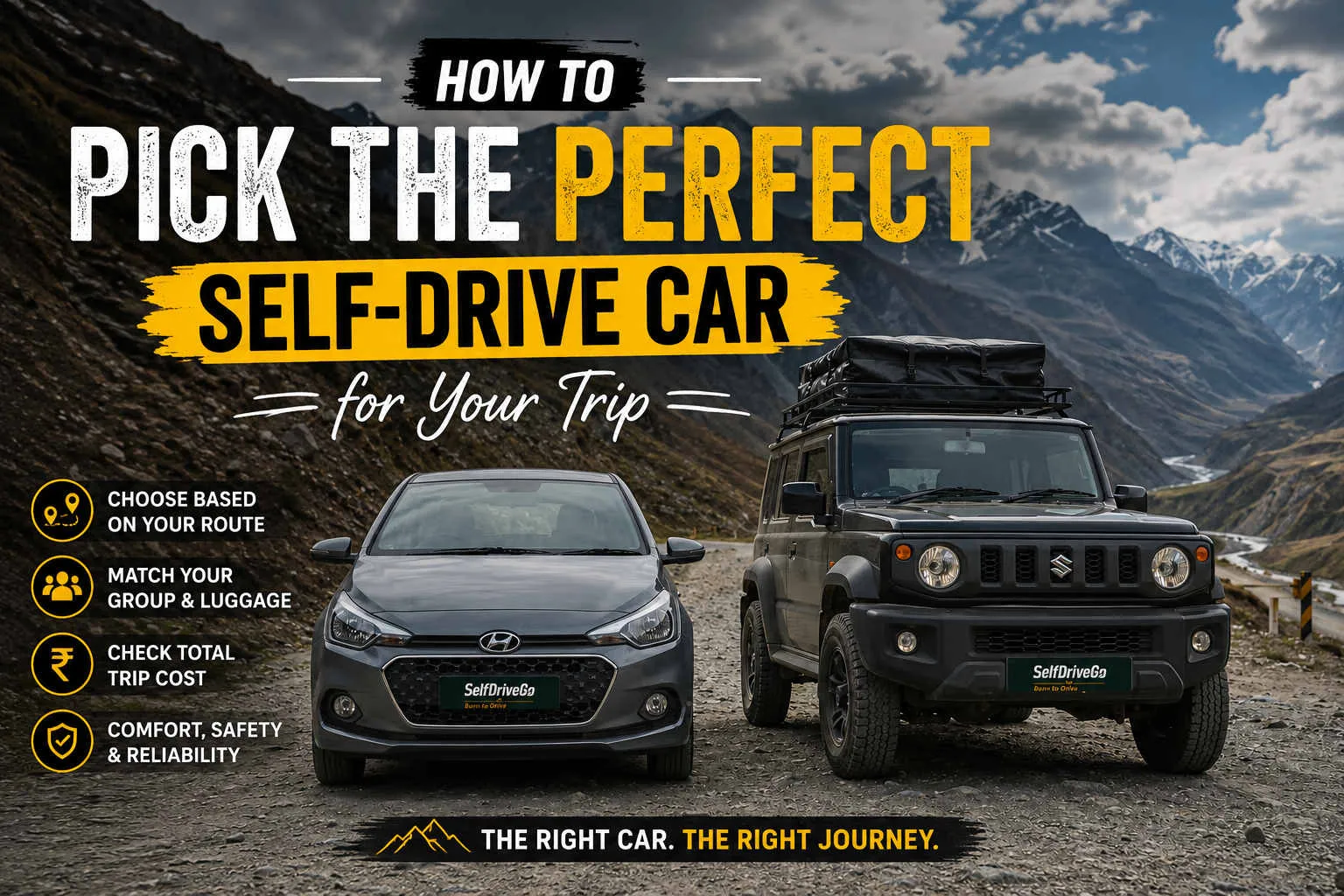

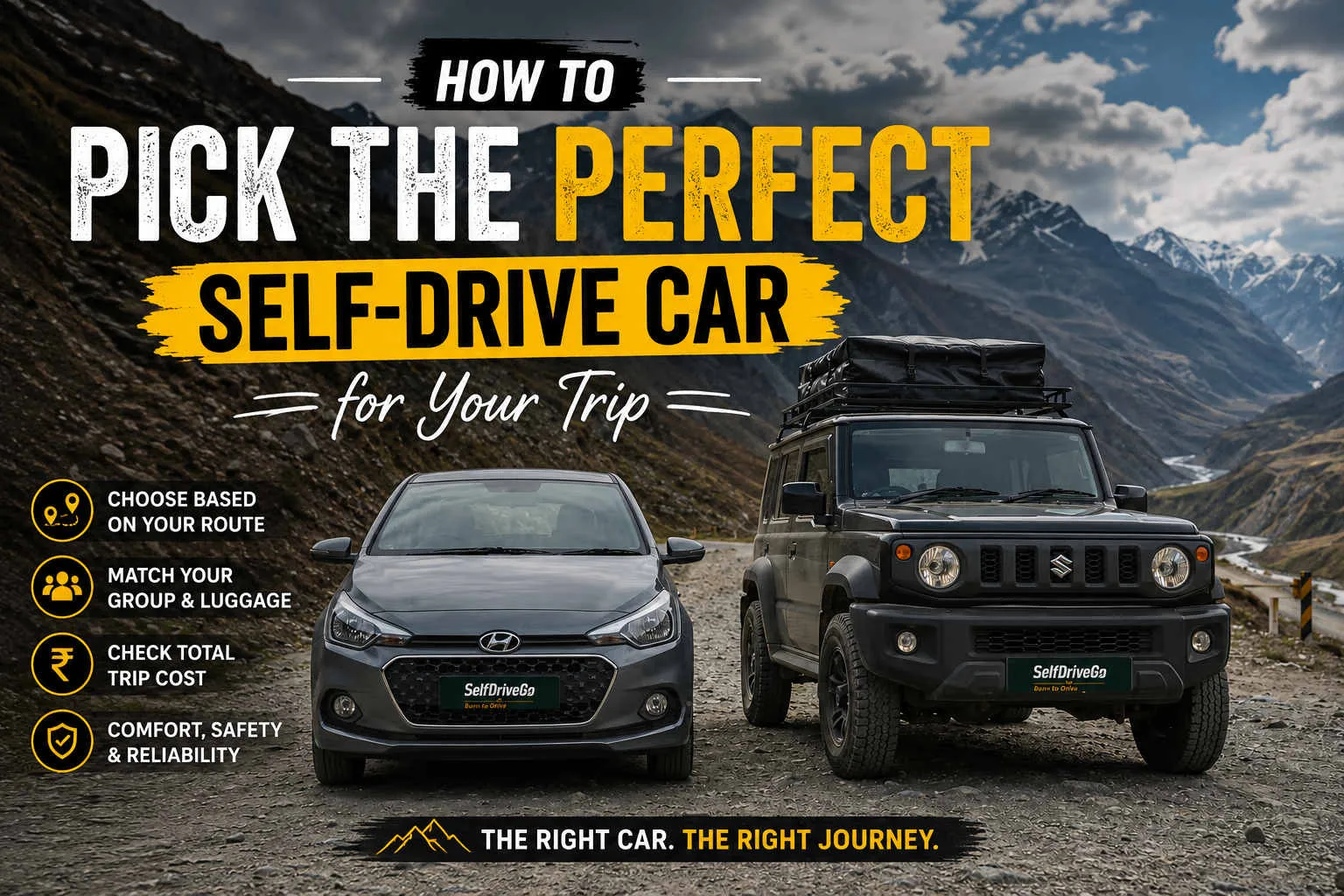
Choosing the right self-drive car is easier when you focus on three things: the road you’ll drive on, the number of passengers and luggage, and the total trip cost. Whether you need a hatchback, SUV, or 4x4, matching the car to your journey can save money and prevent problems on the road.
1. Start With the Road
The type of road should be your first consideration.
For city driving, highways, and paved routes, a hatchback such as a Swift or Baleno is usually sufficient. If you're travelling to hill stations such as Shimla, Kasauli, or Dharamshala, a well-maintained hatchback or compact SUV can handle most paved roads comfortably.
For high-altitude destinations such as Spiti, Leh, Rohtang, or parts of the Manali route, the requirements change. Rough roads, steep climbs, gravel, and water crossings make a capable 4x4 a better choice. Vehicles such as the Jimny or Thar are more suitable for challenging terrain.
Tip: Don't assume that every SUV is a 4x4. Check whether the vehicle actually offers four-wheel drive and suitable gearing for difficult roads.
2. Consider Passengers and Luggage
Choose a car based on your actual group size rather than the advertised seating capacity.
A hatchback works well for 2–4 people with moderate luggage. For family trips, a compact SUV such as the Creta provides additional cabin and boot space.
If you're travelling with 6–7 passengers or lots of luggage, consider a larger SUV such as the Scorpio N or Fortuner. Trying to fit too many people and bags into a smaller car can make a long journey uncomfortable.
3. Manual or Automatic?
For highways and paved hill roads, both manual and automatic cars can work well. An automatic is particularly convenient in traffic and during long drives.
However, challenging mountain routes may require a vehicle with better control and appropriate gearing. If you're planning an off-road or high-altitude trip, check the car's drivetrain and capabilities before booking.
4. Compare the Total Cost
Don't choose a rental based only on its daily price. Your final cost may also include fuel, kilometre limits, extra-kilometre charges, deposits, and other applicable fees.
For example, a cheaper car with a strict kilometre limit may cost more on a long road trip than a slightly more expensive vehicle with a generous allowance.
Before booking, estimate your expected distance and compare it with the rental company's kilometre policy.
Quick Car Guide
- Hatchback: Best for cities, highways, and paved hill stations.
- Compact SUV: Ideal for families and comfortable hill-road travel.
- 4x4 SUV: Best for Spiti, Leh, Rohtang, and rough mountain routes.
- Large SUV: Suitable for larger groups and plenty of luggage.
Final Thoughts
The best self-drive car isn't necessarily the biggest or most expensive one. Choose the vehicle according to your route first, then consider passengers, luggage, comfort, and budget. A suitable car will make your journey safer, more comfortable, and more enjoyable while helping you avoid unnecessary rental costs.
Read Blog: https://selfdrivego.com/blog/how-to-choose-the-right-self-drive-car



























Sign in to leave a comment.