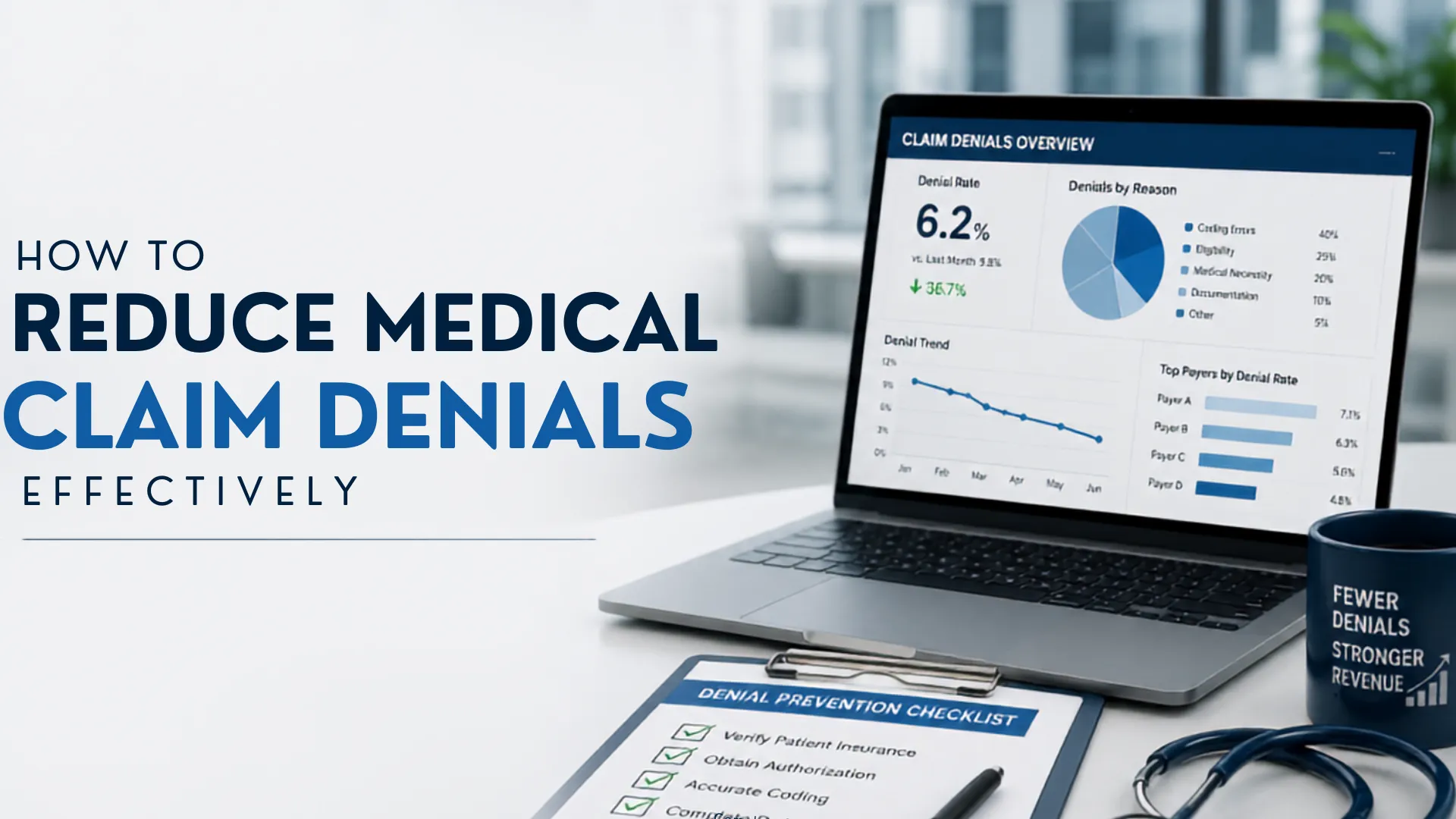

Learn how to reduce medical claim denials with stronger revenue cycle processes, accurate coding, and proactive claim management strategies.
How to Reduce Medical Claim Denials Through Better Revenue Cycle Processes
Medical claim denials remain one of the biggest challenges for healthcare organizations. Every denied claim represents delayed reimbursement, increased administrative work, and potential revenue loss. As payer requirements become more complex, healthcare providers must focus on strengthening their revenue cycle processes to minimize denials and improve financial performance.
Reducing medical claim denials is not simply about fixing errors after they occur. It requires a proactive approach that addresses issues throughout the entire revenue cycle, from patient registration to final payment collection.
Why Medical Claim Denials Happen
Medical claim denials occur when an insurance payer refuses to reimburse a healthcare provider for services rendered. While some denials are unavoidable, many result from preventable mistakes.
Common causes of medical claim denials include:
- Incomplete or inaccurate patient information
- Eligibility and coverage verification errors
- Missing prior authorizations
- Incorrect medical coding
- Lack of supporting documentation
- Duplicate claim submissions
- Failure to meet payer filing deadlines
Understanding these root causes is the first step toward reducing denial rates.
Strengthen Patient Registration and Eligibility Verification
Many medical claim denials begin at the front end of the revenue cycle. Incorrect patient demographics, outdated insurance information, or incomplete registration details can trigger claim rejections before the claim is even reviewed.
Healthcare organizations should implement a thorough patient registration process that includes:
- Verifying insurance coverage before appointments
- Confirming patient demographics
- Checking policy status and benefits
- Identifying referral and authorization requirements
Accurate information collected at the start helps prevent costly downstream errors.
Improve Medical Coding Accuracy
Coding mistakes are among the leading contributors to medical claim denials. Even minor coding errors can cause payers to reject or deny claims.
To improve coding accuracy:
- Provide ongoing education for coding staff
- Stay current with coding updates and payer guidelines
- Conduct regular coding audits
- Utilize coding technology to identify potential errors
Accurate coding supports proper reimbursement and reduces the likelihood of claim disputes.
Implement Strong Documentation Practices
Payers increasingly require detailed documentation to justify medical necessity and support billed services. Missing or incomplete records often result in denied claims.
Healthcare providers should focus on:
- Timely clinical documentation
- Complete physician notes
- Consistent documentation standards
- Accurate linkage between services and diagnoses
When documentation clearly supports the services provided, claims are more likely to be approved on the first submission.
Use Claim Scrubbing and Automation Tools
Technology plays an important role in reducing medical claim denials. Modern claim scrubbing software can identify errors before claims are submitted to payers.
These tools help detect:
- Missing data fields
- Coding inconsistencies
- Eligibility issues
- Modifier errors
- Payer specific requirements
By catching mistakes early, healthcare organizations can significantly improve first pass claim acceptance rates.
Monitor Denial Trends and Analytics
A successful denial reduction strategy requires continuous monitoring. Healthcare leaders should regularly review denial data to identify recurring issues and process gaps.
Key metrics to track include:
- Denial rate by payer
- Denial rate by service line
- First pass resolution rate
- Days in accounts receivable
- Appeal success rate
Data driven insights allow organizations to address problems before they become widespread revenue cycle challenges.
Enhance Communication Across Revenue Cycle Teams
Revenue cycle success depends on collaboration between front desk staff, coders, billers, clinicians, and financial teams. When departments work in isolation, errors are more likely to occur.
Regular communication helps ensure:
- Consistent workflows
- Faster issue resolution
- Improved documentation quality
- Better understanding of payer requirements
A coordinated approach creates a stronger and more efficient revenue cycle process.
Develop a Proactive Denial Management Program
Even with strong preventive measures, some medical claim denials will still occur. Organizations should establish a structured denial management program to address denied claims quickly and effectively.
A proactive program should include:
- Denial categorization and tracking
- Root cause analysis
- Timely appeals management
- Staff accountability
- Continuous process improvement initiatives
The goal is not only to recover lost revenue but also to prevent similar denials in the future.
Conclusion
Reducing medical claim denials requires more than correcting rejected claims after they occur. Healthcare organizations that focus on improving patient registration, coding accuracy, documentation quality, claim validation, and denial analytics can significantly strengthen their revenue cycle performance.
By implementing better revenue cycle processes and maintaining a proactive denial management strategy, providers can improve cash flow, reduce administrative burdens, and increase overall financial stability. In today's healthcare environment, preventing medical claim denials is one of the most effective ways to protect revenue and enhance operational efficiency.
Frequently Asked Questions
1.What are medical claim denials?
Medical claim denials occur when an insurance company refuses to pay for healthcare services due to errors, missing information, eligibility issues, or lack of medical necessity documentation.
2.How can healthcare providers reduce medical claim denials?
Providers can reduce medical claim denials by improving eligibility verification, ensuring coding accuracy, strengthening documentation, and using claim scrubbing technology before submission.
3.What is the most common cause of medical claim denials?
Incorrect patient information, coding errors, and missing authorizations are among the most common causes of medical claim denials.
4.Why is denial management important in revenue cycle management?
Denial management helps healthcare organizations recover lost revenue, identify recurring issues, and improve processes that reduce future denials.
5.How does technology help reduce medical claim denials?
Technology can automate eligibility checks, identify claim errors before submission, provide analytics on denial trends, and streamline appeals management, resulting in fewer denied claims.






























Sign in to leave a comment.