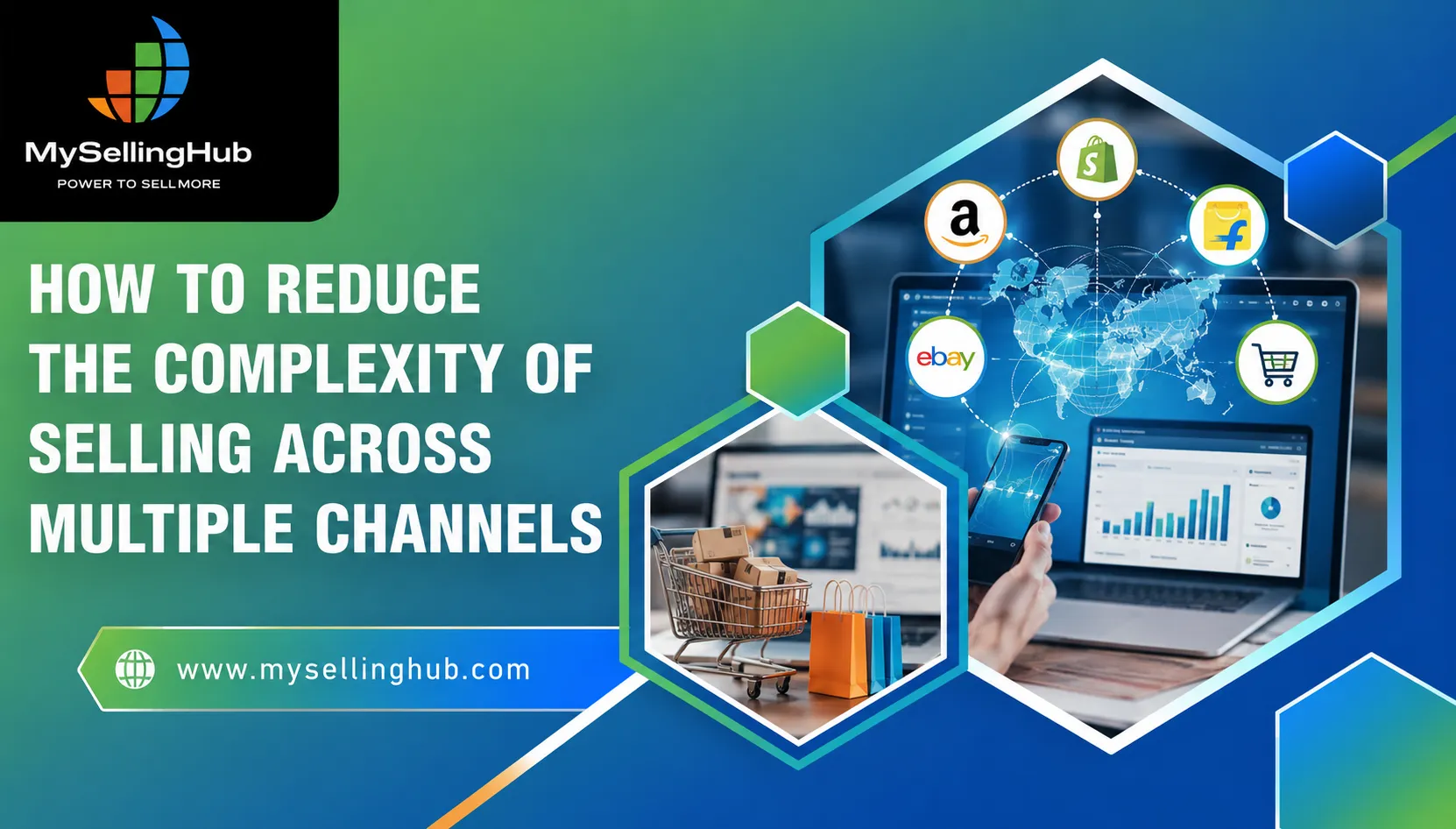

Selling on several online platforms can help a business reach a lot more customers, but it usually brings a fair bit of extra work along with it too. Products, prices, stock levels, orders, and listings all need to stay accurate everywhere at once. Multichannel ecommerce software makes this a lot easier by pulling the important selling tasks into one connected system. Instead of jumping between different dashboards all day, sellers can manage most of their online business from a single place.
Why Does Selling on Multiple Channels Become Complicated?
Selling on just one platform feels simple enough at first. Add a second marketplace, a website, or another sales channel, and the work gets harder fast.
Every new channel needs its own product info, pricing, stock updates, and order handling. Handle these separately and small mistakes turn into bigger problems before you know it.
The more channels a business runs, the more it matters to keep everything actually connected.
Keep Product Information in One Central Place
Managing the same products across different platforms eats up a lot of time.
A seller might end up updating product names, descriptions, prices, images, and other details several times over. Repeating the same work also raises the odds of missing an update somewhere along the way.
A central system lets product info get managed a lot more efficiently. MySellingHub connects product catalogues with multiple marketplaces and ecommerce platforms, so sellers aren't stuck juggling separate systems for the same job.
Keep Stock Levels Updated Across All Channels
Inventory problems come up constantly when products sell in more than one place.
A product might sell on one marketplace while its stock stays untouched on another. That mismatch leads to overselling, cancelled orders, and customers who aren't happy about either.
Real-time inventory syncing helps stop this before it starts. Once a sale happens, connected channels get the updated stock info right away. MySellingHub is built to update stock across connected sales channels, which helps sellers keep their inventory numbers a lot more accurate.
Manage Orders Without Checking Every Dashboard
Orders coming in from different platforms get hard to track fast.
Rather than opening one dashboard for Amazon, another for eBay, and yet another for the online store, sellers can pull order information together in one central system instead.
That cuts down on the constant switching between platforms throughout the day. It also gives teams a clearer view of what's actually sold and what still needs attention.
Keep Prices Consistent Across Different Platforms
Prices shift often in online selling, sometimes more than people expect.
Competitors change their prices, suppliers update their costs, or a seller just decides to try a different pricing strategy. Making these changes by hand across several channels takes real time.
Automated pricing tools cut this workload down significantly. MySellingHub offers seller-controlled, AI-assisted pricing that factors in things like supplier costs, competitor prices, stock levels, sales velocity, and minimum price limits.
Connect Suppliers With Your Online Business
Supplier communication can turn into its own source of confusion.
Stock and pricing updates might come through emails, messages, or a completely separate system. Digging up the latest info takes time and can cause real delays.
A connected platform brings supplier info closer to inventory and product management. MySellingHub lets suppliers and sellers communicate right within the platform, and it can map supplier inventory directly to the seller's own inventory.
Reduce Repetitive Work With Automation
Repetitive tasks eat up a big chunk of a seller's working day.
Copying product info, checking stock, updating prices, jumping between dashboards, none of it directly helps a business grow. Automation can take over a lot of these routine processes instead.
That frees sellers up to focus on customers, marketing, product selection, and other work that actually matters for the business.
Manage More Products Without Adding More Complexity
A growing catalogue makes multichannel selling a lot harder, and fast.
Managing a handful of products across a few platforms is one thing. Managing thousands of products across many channels is an entirely different challenge.
MySellingHub says its platform supports businesses managing anywhere from 20 to more than 2 million products, and works with 20+ global sales channels, so sellers can expand without needing a whole separate system for every new channel they add.
Give Your Team One Place to Work
Different teams often handle product listings, inventory, orders, and supplier communication separately.
When everyone's using different tools, information gets scattered fast. Team members lose track of which update is actually the latest one.
A shared platform gives everyone access to the same business information at once. MySellingHub also includes built-in communication tools like MSH Chat and MSH Mail, so teams and suppliers can talk within the same environment instead of bouncing between apps.
Make It Easier to Add New Sales Channels
Adding a new marketplace should create new opportunities, not a mountain of new work.
With a connected system in place, adding channels becomes a lot simpler, since core product, inventory, and pricing info can all get managed centrally.
MySellingHub supports marketplaces and ecommerce platforms including Amazon, eBay, Walmart, Shopify, WooCommerce, BigCommerce, Wix, Magento, nopCommerce, and Google Shopping.
Use Better Data to Make Everyday Decisions
Good information leads to better decisions, plain and simple.
When product, inventory, pricing, and sales data are scattered across different platforms, it gets hard to actually see what's going on with the business.
A central system gives sellers a much clearer picture of their operations. That helps them spot stock problems, review pricing, manage products, and figure out where to actually focus their effort.
How Can You Make Multichannel Selling Simpler?
Start by cutting down the number of separate tasks you're managing by hand. Bring products, inventory, orders, pricing, suppliers, and communication into one connected workflow wherever you can.
The goal isn't just selling on more channels. It's managing those channels without piling on unnecessary work.
Why Is a Connected Selling System Worth Using?
Multiple sales channels open up more opportunities for growth, but they also bring more operational work along with them. A connected system eases that load by keeping important information together and automating the repetitive stuff.
Fewer manual updates and fewer disconnected tools means sellers get to spend more time actually improving their products and growing the business.
Conclusion
Selling across multiple channels doesn't have to mean juggling endless dashboards and repeating the same tasks over and over. Centralising product information, syncing inventory, managing pricing, connecting suppliers, and automating routine work can make daily operations a whole lot easier. MySellingHub brings all of these functions together in one connected platform, helping sellers manage multiple channels selling with more control and a lot less manual effort.


























Sign in to leave a comment.