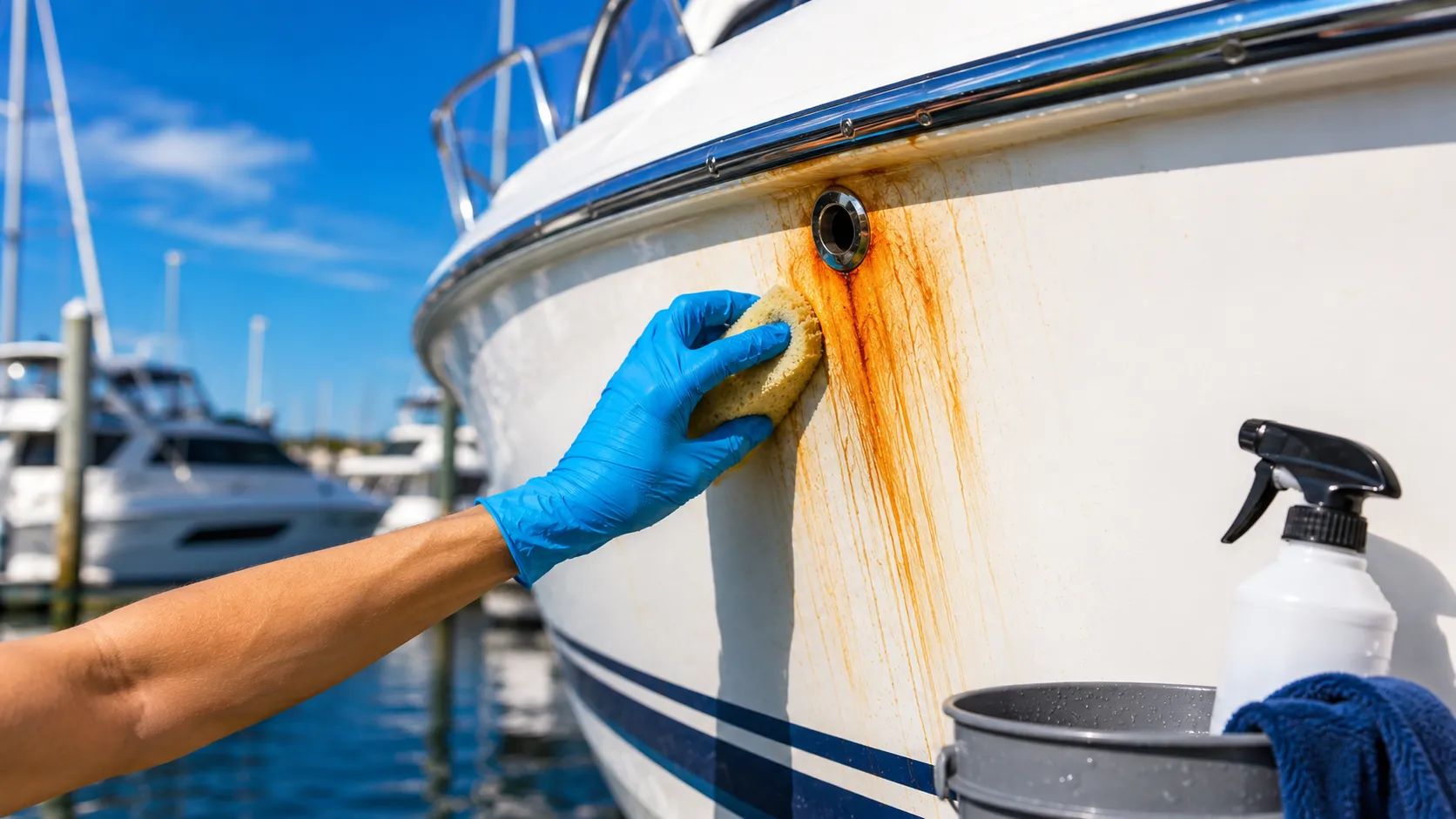
Rust stains on a boat hull rarely mean the hull itself is rusting. In most cases, the source is external a corroded cleat, a rub rail screw, nearby metal fittings, or even hardware on a neighboring boat. As water runs over these components, it carries iron deposits onto the hull, leaving behind the familiar orange-brown streaks. By the time the stain is noticed, a standard boat wash has usually shown that it won't come off easily.
The reason is simple: rust stains don't sit on the surface like dirt or grime. Iron oxide penetrates the tiny pores in the gelcoat, so washing with soap and a sponge only cleans the surrounding area rather than removing the stain itself. To lift it completely, you need a product specifically formulated to break down and dissolve iron oxide.
Removing the stain is straightforward. Start by rinsing the affected area with fresh water to wash away loose salt, dirt, and grit, preventing scratches during cleaning. Apply a marine rust remover directly to the stain without diluting it, then allow it to work for a few minutes. Be careful not to let the product dry on the surface. If the stain is particularly stubborn, gently scrub with a soft brush before rinsing the area thoroughly.
Rust stains on vertical surfaces can be more challenging because thin liquid cleaners tend to run off before they have enough time to work. A thicker gel formula stays in place longer, giving it enough contact time to dissolve the stain effectively. That's why it's a practical product to keep with boat and yacht cleaning products, especially since dock hardware and marine fittings are constantly exposed to corrosion.
Conclusion
Rust stains may look permanent, but they're simply iron oxide deposits—not ordinary dirt. With the right approach, the process is quick: rinse the surface, apply a rust remover designed for marine use, let it work for a few minutes, and rinse again. Removing stains early makes the job easy, while leaving them exposed to months of sun and weather can make them much harder to eliminate.
FAQs
Q1. Will rust stain remover damage my boat's paint or gelcoat?
Not if it's designed for marine surfaces and used according to the instructions. Household rust removers should be avoided, as they may damage gelcoat or remove protective wax.
Q2. How long can rust stains sit before they become permanent?
The longer rust stains remain, the more difficult they become to remove. Prolonged sun exposure can cause them to set much more quickly.
Q3. Can I stop rust stains from forming in the first place?
Yes. Regularly rinse metal fittings after each trip, avoid docking near heavily rusted hardware, and protect the hull with a quality marine sealant.
Q4. Do I need to polish the hull after the stain comes out?
In most cases, no. Polishing is only necessary if the cleaned area appears dull or slightly hazy afterward.





























Sign in to leave a comment.