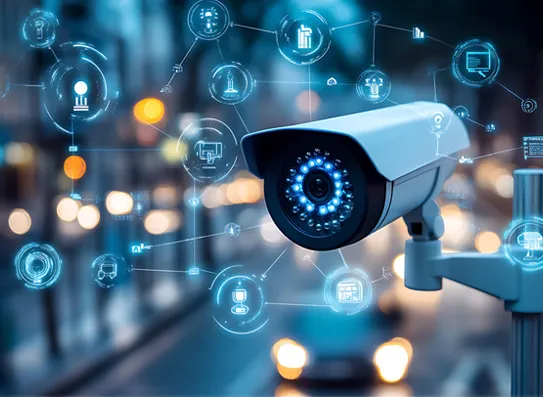

A surveillance system is an important part of security planning for offices, villas, retail outlets, warehouses, residential buildings, hotels, and industrial facilities. However, purchasing cameras is only one part of creating an effective security solution. Camera positioning, network infrastructure, recording, storage, configuration, testing, and maintenance all influence the final result.
When evaluating cctv installers in Dubai, property owners and businesses should therefore look beyond the equipment catalogue and installation price. The quality of the installation can determine whether cameras provide useful coverage, whether recordings remain accessible, and whether the system can be expanded when security requirements change.
A properly planned surveillance system should be designed around the property, its security risks, operating environment, and the way recorded footage will actually be used.
Why Professional CCTV Installation Matters
Modern surveillance systems can include fixed cameras, PTZ cameras, network video recorders, storage systems, monitors, network switches, analytics, and remote viewing applications.
These components need to work together correctly.
A camera with excellent technical specifications may still produce poor results if it is installed at the wrong height, pointed toward a bright light source, positioned too far from the area being monitored, or connected through unsuitable infrastructure.
Professional installation helps address these issues before they become operational problems.
Important considerations include:
- Camera positioning
- Field of view
- Lighting conditions
- Image resolution
- Recording requirements
- Network connectivity
- Storage capacity
- Power requirements
- Remote access
- Environmental conditions
- Future expansion
Start With a Proper Site Survey
A site survey should generally take place before the equipment list is finalized.
Every property has different security requirements. An office may need monitoring at entrances, reception areas, corridors, and server rooms. A warehouse may require coverage of loading bays, storage areas, access points, and perimeter zones.
During a site assessment, the installer can examine:
- Building entrances and exits
- Parking areas
- Reception areas
- Staircases
- Corridors
- Restricted rooms
- Perimeter areas
- Loading zones
- Lighting conditions
- Existing network infrastructure
The findings can then be used to create a camera layout that focuses on meaningful security coverage rather than simply increasing the number of cameras.
Camera Placement Is More Important Than Camera Quantity
One of the most common mistakes in surveillance projects is assuming that more cameras automatically mean better security.
The objective should instead be effective coverage.
For example, placing a camera directly facing a strong light source can create glare and reduce useful image detail. Mounting a camera too high may provide a broad view but make facial identification more difficult.
Camera positioning should consider:
- Viewing angle
- Mounting height
- Distance from the target
- Lighting
- Expected movement
- Potential obstructions
- Required identification detail
The appropriate placement depends on what the camera is expected to accomplish.
Choosing the Appropriate CCTV Camera
Different locations may require different camera types.
Fixed Cameras
Fixed cameras are suitable for areas where the monitoring direction is known and consistent.
They can be used for entrances, corridors, offices, reception areas, and other defined locations.
PTZ Cameras
Pan-tilt-zoom cameras can move and zoom across a wider area. They can be useful where operators need the ability to monitor different directions from a single camera position.
Outdoor Cameras
Outdoor installations require equipment appropriate for the environmental conditions. Protection against dust, moisture, temperature variations, and physical exposure should be considered.
Specialized Cameras
Certain environments may benefit from cameras designed for specific lighting or operational conditions. The correct choice depends on the site's security objectives rather than simply selecting the most expensive model.
Understanding Image Quality
Camera resolution is important, but it is not the only factor affecting image quality.
A useful surveillance image depends on several elements working together:
- Resolution
- Lens selection
- Sensor performance
- Lighting
- Camera position
- Field of view
- Compression
- Distance from the subject
A high-resolution camera installed incorrectly may perform worse than a lower-resolution camera that has been properly positioned and configured.
The purpose of each camera should therefore be defined before choosing its specifications.
Lighting Conditions Should Be Considered
Lighting changes throughout the day.
An entrance that appears well lit during daylight hours may have significantly different conditions at night. Outdoor areas may experience direct sunlight, shadows, vehicle headlights, or artificial lighting.
Installers should assess these conditions when selecting and positioning cameras.
Features designed to improve performance in difficult lighting can be useful where the environment requires them, but correct camera placement remains essential.
IP CCTV and Network Infrastructure
Many modern surveillance systems use IP cameras that communicate through a network.
This means the quality of the network infrastructure can affect surveillance performance.
A typical IP surveillance architecture may include:
IP Cameras → PoE Switches → Network Infrastructure → NVR → Storage/Monitoring
Power over Ethernet can simplify deployment by allowing compatible cameras to receive power and data through the same network cable.
However, network capacity, cable quality, switch selection, bandwidth, and power availability should all be considered during system design.
Storage Planning for CCTV Recordings
Recording capacity is another important part of surveillance planning.
The required storage depends on factors such as:
- Number of cameras
- Resolution
- Frame rate
- Compression
- Recording schedule
- Motion-based recording
- Retention period
For example, a property requiring continuous recording for a large number of cameras will need substantially more storage than a small installation using motion-based recording.
Storage should therefore be calculated during the design stage rather than added as an afterthought.
Remote CCTV Monitoring
Many businesses and property owners want to view cameras remotely.
Remote access can allow authorized users to check their property through suitable applications or monitoring platforms.
However, remote viewing should be configured carefully.
Security considerations may include:
- Strong user authentication
- Individual user accounts
- Appropriate permissions
- Secure network configuration
- Regular password management
- Firmware updates
- Controlled remote access
Convenience should not compromise the security of the surveillance infrastructure.
The Role of Testing After Installation
A CCTV installation should be thoroughly tested before handover.
Testing can verify that:
- Every camera is connected
- Images are clear
- Camera angles are correct
- Recording is functioning
- Playback works correctly
- Storage is available
- Network connections are stable
- Remote access operates as intended
- Time and date settings are correct
Testing also provides an opportunity to identify blind spots and make adjustments before the system enters regular operation.
Maintenance Is Part of Effective Surveillance
CCTV equipment operates continuously in many properties.
Over time, cameras can become dirty, connections can deteriorate, storage devices can develop problems, and network configurations can change.
Regular maintenance can help identify issues before they affect security coverage.
A maintenance program may include:
- Camera inspection
- Lens cleaning
- Recording checks
- Storage health checks
- Cable inspection
- Network testing
- Configuration review
- Firmware assessment
- Backup verification
For critical facilities, preventive maintenance can be particularly valuable.
How to Compare CCTV Installers
Choosing between cctv installers in Dubai should involve more than comparing quotations.
Businesses can evaluate potential contractors based on the following criteria:
Technical Capability
Does the installer understand IP networking, recording, storage, camera selection, and system integration?
Site Assessment
Does the company conduct a proper survey before recommending equipment?
Installation Quality
Are cables properly routed, labelled, protected, and organized?
Testing
Does the installer test cameras, recording, storage, connectivity, and remote access before handover?
Documentation
Will the customer receive useful information about camera locations, equipment, network connections, and system configuration?
Maintenance
Does the contractor provide ongoing support when equipment or infrastructure requires attention?
Scalability
Can additional cameras or other security technologies be integrated later?
These factors provide a more meaningful basis for comparison than the initial price alone.
CCTV Installation for Different Property Types
Commercial Offices
Office surveillance commonly focuses on entrances, reception areas, corridors, parking facilities, and restricted areas.
Retail Stores
Retail environments may require monitoring of entrances, sales floors, payment areas, storage rooms, and customer circulation zones.
Warehouses
Warehouse surveillance can involve loading bays, storage aisles, entrances, vehicle areas, and perimeter monitoring.
Residential Properties
Homes and residential buildings may require coverage around entrances, driveways, gates, parking areas, and external boundaries.
Industrial Facilities
Industrial sites can have larger perimeters and more complex operational environments, requiring careful planning of camera locations and network infrastructure.
Each property should receive a design based on its specific risks rather than using a generic camera package.
Common CCTV Installation Mistakes
Several problems can reduce the effectiveness of an otherwise expensive surveillance system.
Common mistakes include:
- Installing cameras without a site survey
- Focusing only on megapixel count
- Ignoring nighttime lighting
- Creating blind spots
- Using inadequate storage
- Poor cable management
- Insufficient network capacity
- Neglecting remote-access security
- Failing to test the complete system
- Not planning for future expansion
Avoiding these issues during the design stage can improve reliability and reduce unnecessary modifications later.
SevenLines Approach to CCTV Projects
At SevenLines Link Security Systems L.L.C, CCTV projects are approached with attention to the property's layout, security objectives, network infrastructure, recording requirements, and future needs.
Our services can cover system planning, equipment supply, installation, configuration, integration, testing, and maintenance for different project environments.
The emphasis is on creating surveillance infrastructure that is practical for the property rather than simply installing a predetermined number of cameras.
Conclusion
Effective surveillance depends on much more than installing cameras around a property. Site assessment, camera placement, image quality, network infrastructure, storage, configuration, testing, and maintenance all contribute to the performance of a CCTV system.
For businesses and property owners comparing cctv installers in Dubai, evaluating the complete installation process can help identify a contractor capable of delivering reliable and maintainable surveillance infrastructure.
With proper planning and professional installation, a CCTV system can provide meaningful monitoring while creating a foundation that can be expanded as security requirements evolve.

























Sign in to leave a comment.