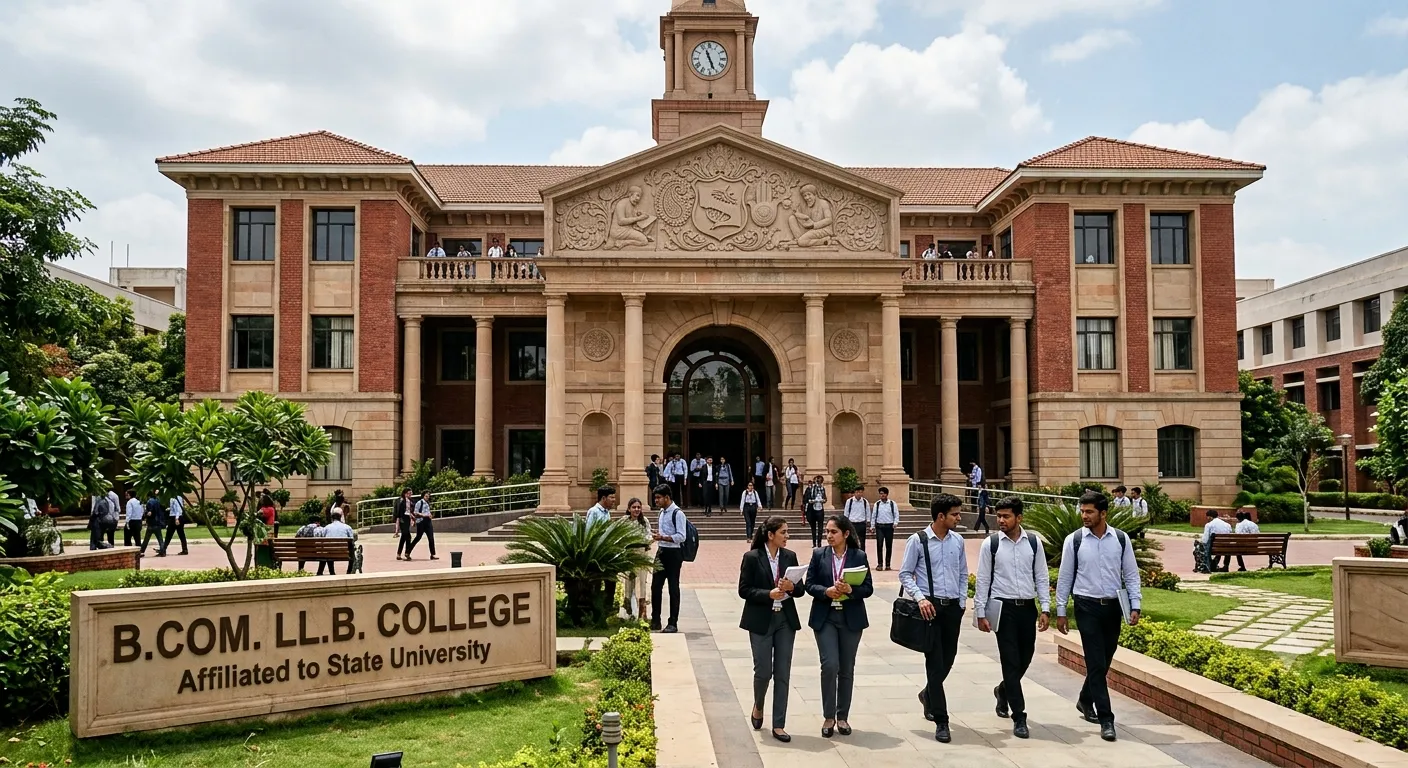

Choosing the right law college is one of the most important decisions for students planning to pursue a BCom LLB degree. The institution you select will shape your legal knowledge, practical skills, career opportunities, and professional network. With several colleges offering integrated law programmes, it is essential to evaluate each option carefully before making your decision.
A well-designed BCom LLB programme combines commerce and legal education, preparing students for careers in corporate law, taxation, banking, compliance, and business litigation. Here are the key factors to consider while selecting the right college for your legal journey.
Check the College's Recognition and Affiliation
Before applying, ensure the college is approved by the Bar Council of India (BCI) and affiliated with a recognized university. Accreditation reflects the quality of education and ensures your qualification is accepted for higher studies and legal practice.
Evaluate the Curriculum
A comprehensive BCom LLB course should offer a balanced mix of commerce and law subjects. Look for a curriculum that covers business law, constitutional law, contract law, company law, taxation, accounting, and legal research. An updated syllabus helps students stay aligned with current legal and business trends.
Focus on Practical Learning
Legal education goes beyond classroom lectures. Choose a college that provides practical exposure through:
- Moot court competitions
- Legal aid clinics
- Court visits
- Research projects
- Workshops and seminars
- Internship opportunities
These experiences help students build confidence and develop real-world legal skills.
Assess Faculty and Infrastructure
Experienced faculty members play a crucial role in shaping legal professionals. Learn about the qualifications and industry experience of professors before making your decision. Additionally, modern classrooms, a well-equipped library, digital resources, and research facilities contribute to a better learning environment.
Look for Internship and Placement Support
Internships are essential for gaining industry exposure. A reputed institution should have strong connections with law firms, corporate organizations, legal consultancies, and judicial bodies. Good placement assistance can also improve career opportunities after completing your BCom LLB degree.
Consider Industry Exposure
The best law colleges regularly organize guest lectures, legal conferences, corporate interactions, and networking events. Such activities help students understand industry expectations while expanding their professional connections.
Choose a College That Supports Overall Development
Apart from academics, students should look for colleges that encourage participation in debates, moot courts, cultural events, leadership activities, and legal research. These opportunities help develop communication, analytical thinking, and leadership skills that are valuable throughout a legal career.
Why Choose Asian Law College?
The BCom LLB course at Asian Law College is designed to provide students with academic excellence and practical legal training. The programme combines commerce and law education with moot court activities, internships, judicial coaching, legal workshops, and industry interactions. Students also benefit from experienced faculty, modern infrastructure, and opportunities for experiential learning, helping them build a strong foundation for successful legal careers.
Conclusion
Selecting the right law college is an investment in your future. By evaluating recognition, curriculum, faculty, infrastructure, internships, and industry exposure, you can choose a college that supports both your academic and professional goals. A quality BCom LLB programme equips students with the knowledge and practical skills required to excel in today's competitive legal and corporate landscape.
FAQs
1. What is the duration of a BCom LLB course?
Ans. A BCom LLB course is generally a five-year integrated programme combining commerce and legal education.
2. What careers can I pursue after a BCom LLB degree?
Ans. Graduates can work in corporate law, taxation, compliance, banking, legal consultancy, litigation, and government legal services.
3. Why is practical training important in a BCom LLB programme?
Ans. Practical learning through internships, moot courts, and legal workshops helps students apply legal concepts in real-world situations.



























Sign in to leave a comment.