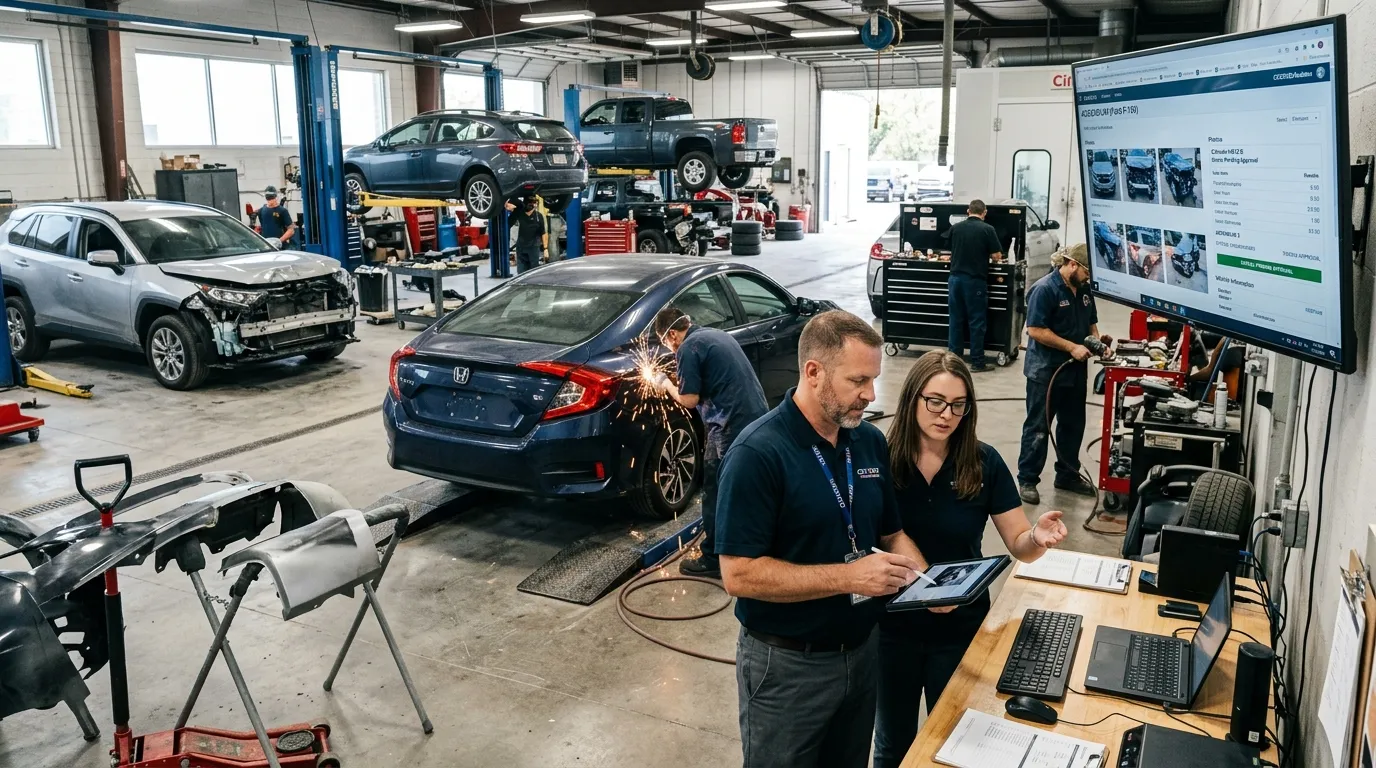

A repair shop can handle difficult repairs, tight deadlines, and demanding schedules, but paperwork confusion can still bring everything to a halt.
I have seen busy auto repair shops lose valuable time not because technicians lacked skill, but because addenda documentation became disorganized. Missing photos, incomplete updates, unclear notes, and scattered communication created delays that affected the entire workflow.
When your shop handles multiple repair jobs every day, documentation can quickly become overwhelming if there is no clear system in place. The good news is that simplifying the process is possible, and it often starts with small operational changes.
Why Addenda Documentation Becomes Complicated
Addenda documentation is rarely difficult because of one single task. It becomes complicated because many moving parts need to stay connected.
Additional damage changes the workflow
Once technicians discover hidden damage, the original repair estimate often needs updates. That means new photos, revised labor costs, and approval requests all need to be documented properly.
In busy shops, those updates can happen constantly throughout the day.
Manual systems create confusion
Many repair shops still rely on:
- Paper notes
- Email chains
- Text messages
- Separate spreadsheets
- Verbal updates between staff
While these methods may seem manageable at first, they often create confusion when multiple repair jobs are active at once.
Information gets lost between departments
Technicians, estimators, and front office staff may all handle different parts of the process. Without clear organization, important updates can easily be missed.
How Poor Documentation Slows Down Repair Work
Documentation problems affect much more than paperwork.
Delayed approvals
Insurance companies and decision makers need complete information before approving addenda. Missing details or unclear documentation can slow down the process significantly.
Technicians lose productive time
If approval status or estimate updates are unclear, technicians may pause work unnecessarily while waiting for clarification.
Customers become frustrated
Customers expect updates and transparency during repairs. When communication feels inconsistent, confidence in the repair process begins to weaken.
As Henry Ford once said, “Nothing is particularly hard if you divide it into small jobs.” That idea applies perfectly to addenda documentation. Simplifying the process into clear steps makes the workload much easier to manage.
Signs Your Shop Needs a Simpler Documentation System
Sometimes shops become so used to disorganization that they stop recognizing it as a problem.
Here are common signs your documentation process may need improvement:
- Staff frequently searching for photos or approvals
- Repeated customer calls asking for updates
- Delays caused by incomplete addenda submissions
- Confusion about estimate revisions
- Too much dependence on memory or handwritten notes
If these issues happen regularly, your system may be creating unnecessary stress.
Practical Ways to Simplify Addenda Documentation
Improving documentation does not always require major changes. Often, simple adjustments create the biggest improvements.
Create a consistent workflow
Every addendum should follow the same process from beginning to end.
For example:
- Identify additional damage
- Capture clear photos immediately
- Update the estimate
- Submit approval request
- Track status updates
- Notify the repair team once approved
Consistency reduces confusion and prevents missed steps.
Centralize documentation in one place
One of the easiest ways to simplify operations is by keeping all information connected in a single system.
When photos, approvals, notes, and estimate changes are stored together, your team spends less time searching for information.
Reduce unnecessary communication channels
Too many communication methods often create more confusion instead of improving efficiency.
Limiting communication to a structured workflow helps everyone stay aligned.
Why Digital Systems Make Documentation Easier
Manual systems can work for smaller workloads, but busy repair shops often need more visibility and organization.
This is why many shops are improving their documentation process through tools designed specifically for managing addenda updates, approvals, and estimate changes in one place. Structured systems help reduce missing information and make daily workflows easier to manage.
Faster access to information
Digital tracking allows your team to see updates immediately instead of searching through emails or paper files.
Better coordination between departments
When everyone works from the same information, communication becomes more accurate and efficient.
Reduced administrative stress
I have noticed that organized systems help staff feel calmer because they spend less time chasing updates and correcting mistakes.
How Better Documentation Improves Customer Experience
Customers may never see your internal systems directly, but they absolutely feel the results.
Faster updates create confidence
When your documentation is organized, you can provide customers with accurate information quickly.
Fewer delays improve satisfaction
Clear documentation helps approvals move faster, which shortens repair timelines.
Professional communication builds trust
Customers appreciate repair shops that appear organized and transparent throughout the process.
Even simple updates become easier when your documentation system is structured properly.
Common Mistakes Shops Should Avoid
Many documentation problems come from habits that seem harmless at first.
Waiting too long to document changes
If updates are delayed until later in the day, details can be forgotten or overlooked.
Relying too heavily on verbal communication
Verbal updates may work temporarily, but they are difficult to track accurately over time.
Using inconsistent naming or filing methods
When every employee organizes information differently, finding updates becomes much harder.
Avoiding these habits can significantly improve workflow efficiency.
Building a Long Term Documentation Strategy
Simplifying documentation is not just about reducing paperwork. It is about creating a process your team can rely on consistently.
Train staff on documentation standards
Make sure everyone understands how updates should be recorded and communicated.
Review workflow regularly
As your shop grows, your documentation process should evolve with it.
Focus on clarity over complexity
The best systems are usually the simplest ones. Your process should make information easier to access, not harder.
Final Thoughts
Busy repair shops already deal with enough pressure from deadlines, customer expectations, and changing repair conditions. Documentation should support the workflow, not complicate it.
When addenda documentation becomes organized, repair jobs move more smoothly, approvals happen faster, and communication improves across the entire shop. Technicians stay focused, customers receive clearer updates, and your team spends less time dealing with avoidable confusion.
The key is simplicity.
By creating consistent workflows, centralizing information, and improving communication, you can turn documentation from a daily frustration into a reliable part of your operation.
In the end, simplifying addenda documentation is not just about efficiency. It is about giving your repair shop the structure and clarity needed to operate confidently every single day.


























Sign in to leave a comment.