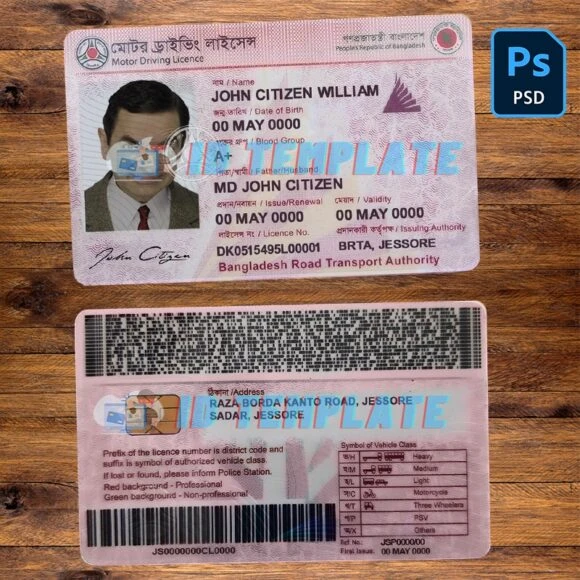

Identifying fraudulent identification has become an increasingly important skill, especially for businesses, law enforcement, and security professionals. Among the many U.S. states, Texas has a well-recognized driver's license format that includes specific features to prevent counterfeiting. However, counterfeiters are constantly improving their methods, which makes it critical to know how to spot a Fake Driver License ID designed to mimic the official Texas driver's License Format.
Key Features of a Genuine Texas Driver's License
1. Holograms and UV Features
A real Texas driver's license includes embedded holograms that shift under light. These holograms are difficult to replicate accurately. Additionally, genuine IDs contain ultraviolet (UV) features that are invisible under normal lighting but appear under a UV scanner.
2. Raised Lettering and Textures
The Texas license uses raised printing for certain numbers and letters, which can be felt by running your fingers over the surface. Counterfeit IDs often miss these textural elements, opting instead for flat printing.
3. Microprinting
Small text is used in various places on the license, often too tiny to read with the naked eye but clear under magnification. Most fake IDs either blur these details or omit them entirely.
4. Ghost Image and Secondary Photo
Alongside the primary photo, genuine Texas licenses include a smaller, faint ghost image of the license holder. Fraudulent IDs frequently fail to position this correctly or produce it with low quality.
Common Signs of a Fake Texas Driver's License
1. Poor Print Quality
Fake IDs often have fuzzy text or off-color printing. If any part of the license looks pixelated or unclear, it is a red flag.
2. Incorrect Fonts or Alignment
The Texas Department of Public Safety uses strict formatting rules for spacing, font style, and alignment. Any deviation—like text that looks slightly off-center—can indicate forgery.
3. Barcode or Magnetic Stripe Issues
Authentic Texas driver's licenses contain machine-readable barcodes and magnetic strips. When scanned, fake cards often fail to produce correct information or may display errors.
4. Mismatched Information
A forged license may list inconsistent details, such as an unrealistic date of birth, incorrect zip codes, or mismatched city names. Cross-checking details can quickly expose a counterfeit.
Tips for Verifying Authenticity
- Use a UV Light Scanner: Many genuine security features appear only under UV light.
- Check Expiry Dates Carefully: Counterfeiters may use unrealistic issue or expiration dates.
- Compare with a Known Genuine License: Having a real Texas driver's license as a reference point can help spot discrepancies.
- Rely on Technology: Barcode scanners and verification systems are effective tools for detecting inconsistencies.
Final Thoughts
The rise of advanced printing technologies has made counterfeit IDs harder to detect, but careful observation of security features, print quality, and personal data can make a big difference. Understanding the details of the Texas Drivers License Format allows individuals and businesses to spot suspicious documents quickly. By staying informed, you can protect yourself and your organization from fraud. At ID Template, you can find more insights and resources on how to distinguish genuine identification documents from forged ones.



























Sign in to leave a comment.