

Crypto presale market attracts both serious projects and opportunistic cash grabs. Telling them apart requires more than reading whitepapers or checking social media follower counts. By 2026, the patterns separating legitimate ventures from schemes have become clearer, but many investors still fall for the same traps.
This guide focuses on what actually matters when evaluating early-stage token sales, based on observable patterns rather than marketing promises.
What a Crypto Presale Actually Offers
A crypto presale represents the earliest public fundraising stage for a token project. Developers sell tokens at discounted rates before exchange listings, using the capital to build infrastructure, hire teams, and fund operations. Investors receive tokens at lower prices in exchange for taking on maximum risk.
The model works when both sides fulfill their obligations. Projects must deliver on roadmaps and maintain liquidity post-launch. Investors must accept that most presales either fail completely or underperform relative to expectations. This fundamental dynamic hasn't changed despite market evolution.
Red Flags That Should Stop You Immediately
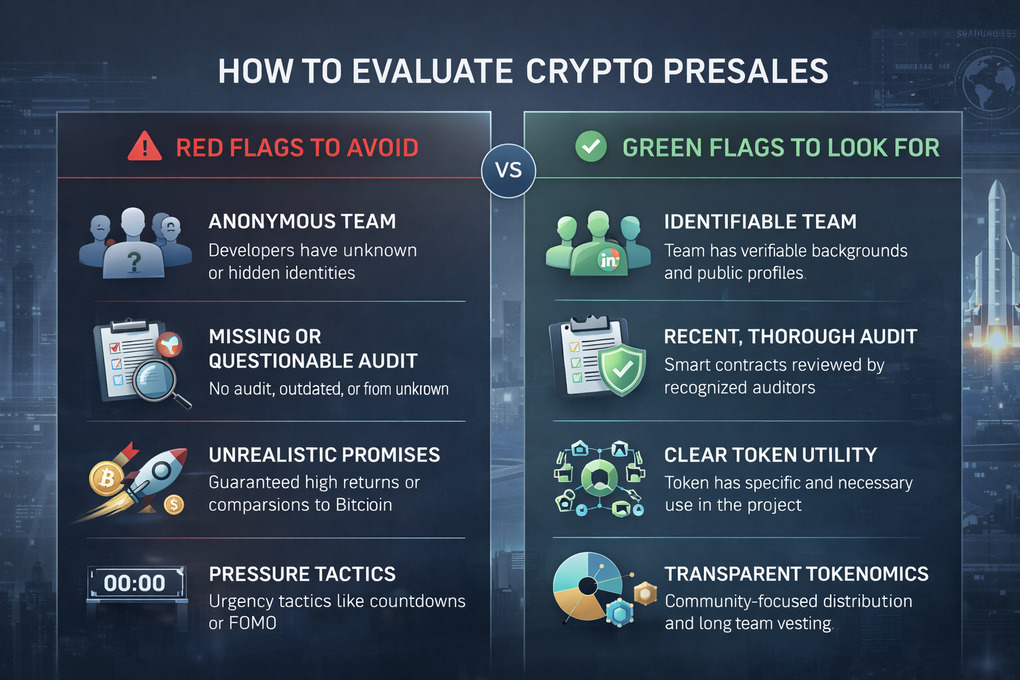
Anonymous teams remain the biggest warning sign. Projects claiming privacy concerns while asking for capital rarely end well. Legitimate ventures feature founders with verifiable backgrounds, LinkedIn profiles, and public track records. When team information stays vague or uses stock photos, walk away.
Missing or suspicious audits signal danger. Every serious project gets smart contracts audited by recognized firms like CertiK, Hacken, or Trail of Bits. Projects skipping audits or using unknown auditors expose investors to preventable risks. Audit reports should be publicly available and recent, not outdated or generic.
Unrealistic promises about returns deserve skepticism. Any project guaranteeing specific gains or comparing itself to early Bitcoin ignores how markets actually work. Legitimate projects discuss utility, adoption plans, and technical roadmaps without making price predictions.
Pressure tactics indicate trouble. Artificial urgency through countdown timers, limited supply claims, or "last chance" messaging exists to prevent careful evaluation. Real opportunities allow time for research and don't disappear overnight. Therefore, it is important to take these crypto presale red flags into consideration.
Green Flags Worth Looking For
Clear token utility matters more than most investors realize. The token should serve a specific function within the ecosystem, whether enabling governance, facilitating payments, or providing staking rewards. Projects that can't explain why their token needs to exist beyond fundraising rarely succeed long term.
Transparent tokenomics demonstrate professionalism. Distribution should favor community and ecosystem development over team allocations. Vesting schedules for team tokens should extend at least 12 months, preferably longer. When projects lock significant supply for years, they signal commitment beyond quick profits.
Active development proves work is happening. Public GitHub repositories with regular commits show real progress. Testnets allow users to interact with actual products before launch. Projects delivering working prototypes before presale completion inspire more confidence than those selling pure concepts.
Realistic funding goals align with actual needs. Projects raising tens of millions for basic infrastructure raise questions about capital efficiency. Modest fundraising targets with detailed budget breakdowns suggest teams understand their requirements and don't just chase maximum raise amounts.
The Role of Presale Platforms
Using established presale platforms adds a layer of filtering. Platforms like those offering structured presale token opportunities typically perform basic due diligence before listing projects. While not foolproof, platform listings eliminate the worst scams and provide some baseline credibility.
However, platform approval doesn't guarantee success. Projects can pass basic checks and still fail due to execution problems, market conditions, or competitive pressures. Platform listings help narrow the field but don't replace individual research.
What Research Actually Looks Like
Reading the whitepaper matters, but cross-reference claims against reality. Does the technical approach make sense? Do the timelines seem achievable? Can the team actually build what they're describing?
Check community discussions beyond official channels. Reddit threads, Twitter conversations, and Discord servers outside project control reveal concerns official channels suppress. Criticism and tough questions indicate engaged communities rather than paid shillers.
Verify partnerships independently. Projects claiming relationships with major companies should have reciprocal announcements. One-sided claims without confirmation usually mean the partnership doesn't exist as described.
Final Reality Check
Even projects passing every check can fail. Market conditions, technical challenges, and competition affect outcomes regardless of team quality or preparation. Presale investment requires accepting substantial risk.
The goal isn't finding guaranteed winners. It's avoiding obvious losers and improving odds through systematic evaluation. Most presales still lose money for participants. Better filtering just increases the percentage that don't.

Sign in to leave a comment.