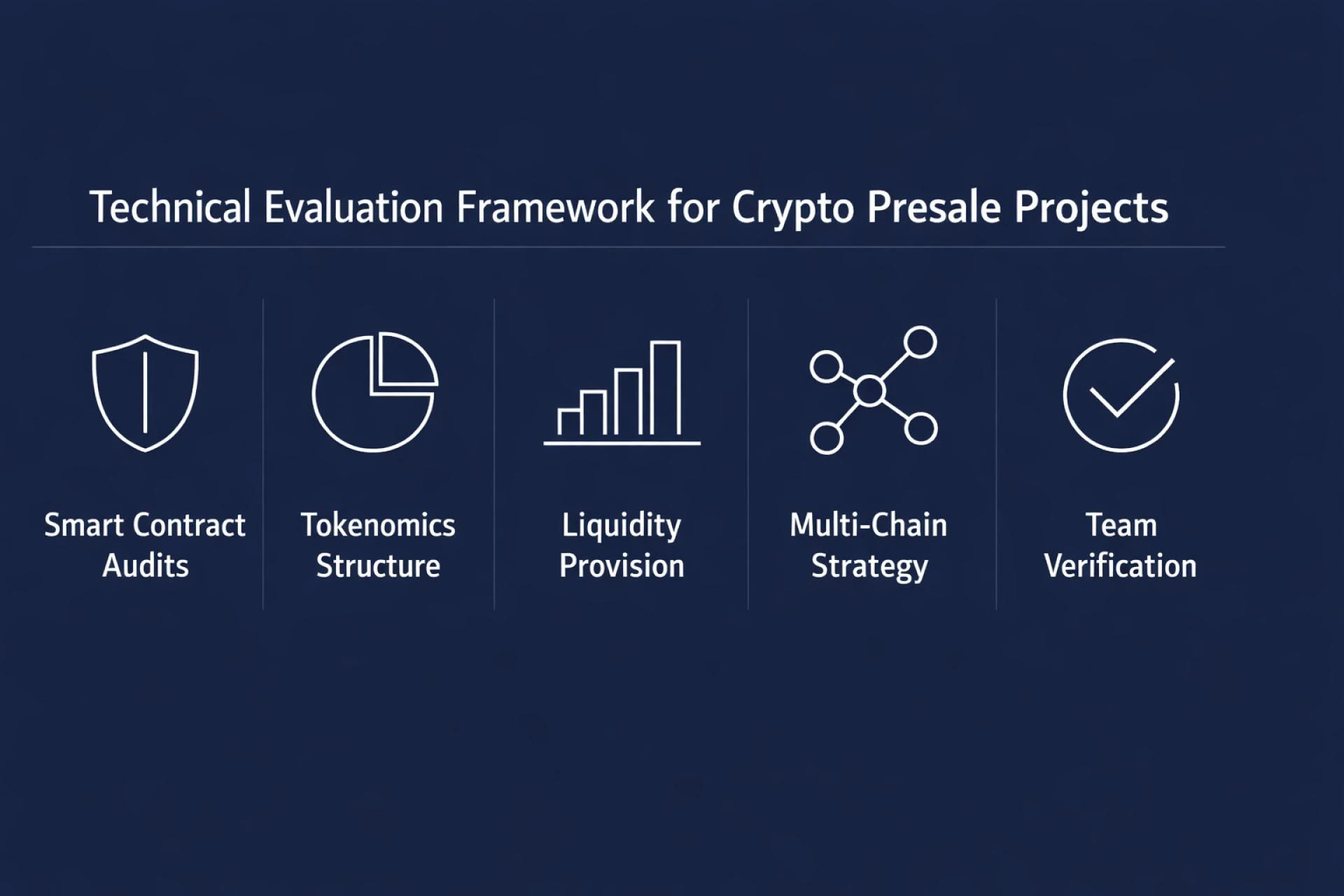

The crypto presale market continues attracting investor attention, yet most participants lack systematic evaluation frameworks. Technical assessment beyond marketing narratives separates legitimate projects from opportunistic launches.
Smart Contract Fundamentals
Smart contract audits represent the foundation of presale credibility. Third-party security firms like CertiK, OpenZeppelin, and Trail of Bits provide independent verification of code quality and security measures. Projects launching without audits introduce unnecessary risk regardless of marketing appeal.
Audit reports should address common vulnerabilities: reentrancy attacks, integer overflow, access control issues, and front-running risks. The absence of critical or high-severity findings indicates proper development practices. Medium and low-severity issues require documented mitigation strategies rather than dismissal.
Transparency extends beyond audit completion. Publishing audit reports publicly demonstrates confidence in security measures and allows community verification. Projects hiding audit details or selectively sharing findings warrant skepticism.
Tokenomics Structure
Token distribution reveals project priorities and long-term sustainability. Excessive allocations to teams (above 20%) or private investors create selling pressure post-launch. Balanced distribution across presale, liquidity, development, and community rewards indicates thoughtful planning.
Vesting schedules protect against immediate dumps. Team tokens should vest over 12-24 months minimum. Advisor and early investor allocations benefit from similar restrictions. Projects with no vesting or minimal lock periods prioritize quick exits over sustainable growth.
Burning mechanisms provide deflationary pressure but require careful implementation. Percentage-based burns on transactions create ongoing supply reduction. One-time burns offer limited long-term impact. Theburn rate should balance deflation with sufficient circulating supply for utility.
Liquidity Provision
Adequate liquidity determines trading viability post-launch. Presale projects should allocate 30-40% of total supply to liquidity pools. Lower allocations create volatile trading conditions and manipulation opportunities.
Liquidity locking demonstrates commitment beyond launch. Minimum lock periods of 12 months protect against rug pulls. Projects using reputable locking services (Unicrypt, Team Finance) provide verifiable security. Manual locking or obscure platforms introduce counterparty risk.
Initial liquidity depth affects price discovery and slippage. Projects launching on decentralized exchanges should provide sufficient depth for meaningful trading volume. Thin liquidity amplifies price manipulation and restricts market participation.
Multi-Chain Strategy
Cross-chain deployment expands accessibility but introduces complexity. Each chain requires separate smart contracts, audits, and liquidity provision. Projects claiming multi-chain support should demonstrate functional deployment across advertised networks.
Bridge security becomes critical for multi-chain operations. Centralized bridges introduce trust assumptions. Decentralized bridge protocols like LayerZero or Wormhole provide trustless transfers but carry their own security considerations. Projects should document bridge mechanisms and associated risks.
Gas efficiency varies significantly across chains. Ethereum mainnet remains expensive for small transactions. BSC, Polygon, and Solana offer lower costs but different security tradeoffs. Project choice of chains should align with target user base and transaction patterns.
Development Roadmap
Realistic timelines indicate professional project management. Aggressive roadmaps promising major milestones within weeks suggest inexperience or intentional overpromising. Quarterly milestones with specific deliverables demonstrate structured planning.
Technical milestones carry more weight than marketing activities. Smart contract deployment, exchange listings, and partnership integrations require verification. Community events and social media campaigns lack substance without accompanying technical progress.
Past delivery performance predicts future execution. Projects consistently missing deadlines or pivoting roadmaps mid-execution reveal planning failures or deliberate misdirection. Transparent communication about delays and challenges indicates professional management.
Team Verification
Anonymous teams increase risk regardless of technical competence. KYC verification through reputable services (Assure DeFi, SolidProof) provides accountability. Public team profiles with verifiable work history strengthen credibility.
Technical expertise matters more than marketing skills for long-term success. Teams with blockchain development experience, previous project launches, or relevant industry backgrounds bring practical knowledge to execution.
Real-World Application
Hexydog crypto presale demonstrates several evaluation criteria in practice: third-party audit completion, transparent tokenomics documentation, multi-chain deployment, and clear utility focus in pet care services. The project combines technical fundamentals with practical service industry applications.
Conclusion
Technical evaluation requires examining smart contract security, tokenomics structure, liquidity provision, and team credibility rather than marketing narratives. Systematic assessment reduces risk and identifies projects with sustainable fundamentals.
Investors applying technical frameworks make informed decisions based on verifiable criteria rather than speculation or social media sentiment. This approach doesn't guarantee success but significantly improves risk management in presale participation.





















Sign in to leave a comment.