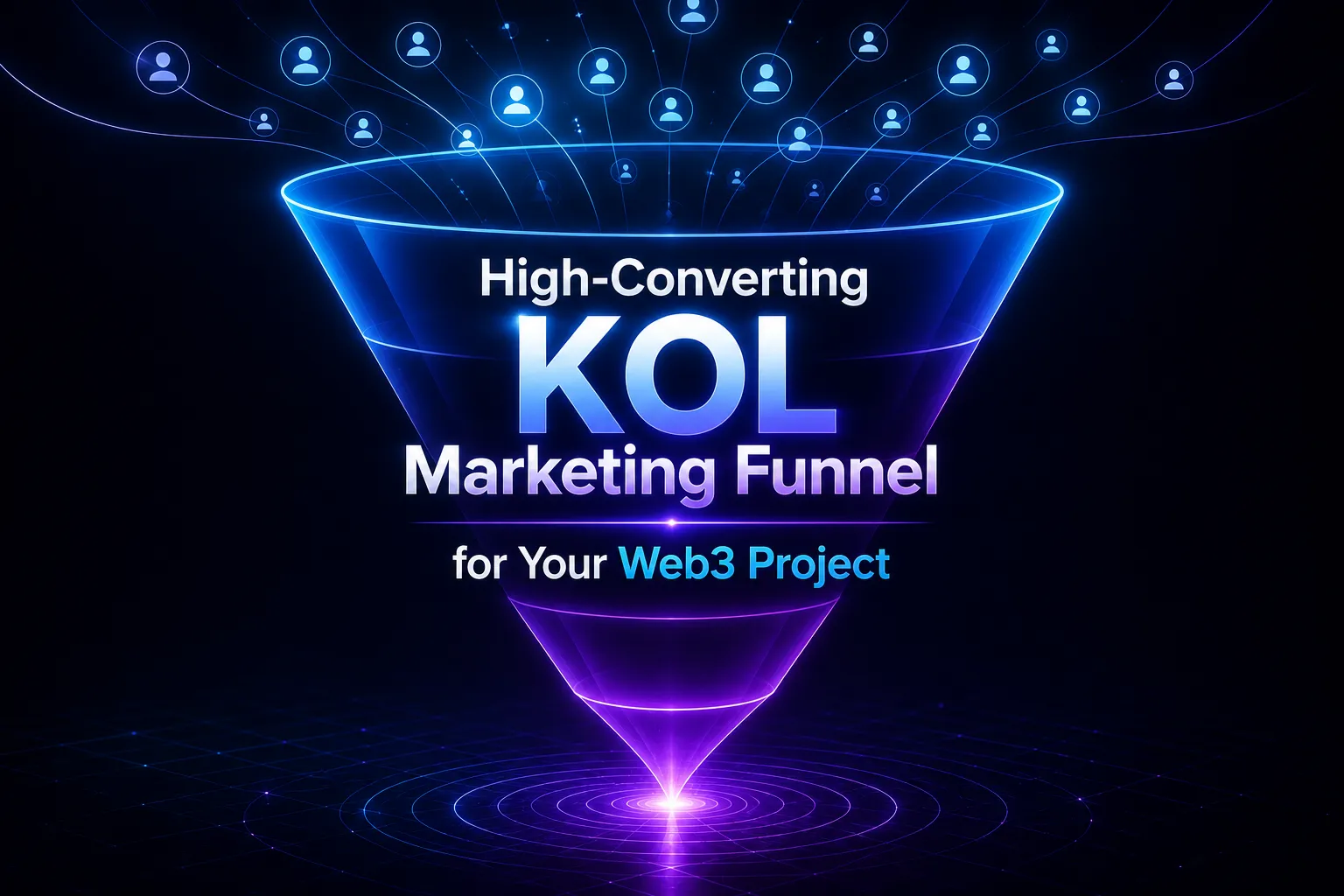

KOL marketing can bring massive attention to your Web3 project.
But attention alone doesn’t build growth.
Many projects collaborate with influencers, generate impressions, and drive traffic but fail to convert that traffic into real users, community members, or long-term participants.
The missing piece? A proper funnel.
In 2026, successful KOL marketing isn’t about isolated promotions. It’s about building a structured funnel that guides users from discovery to conversion and beyond.
In this blog, we’ll break down how to build a high-converting KOL marketing funnel for your Web3 project.
What is a KOL Marketing Funnel?
A KOL marketing funnel is a step-by-step journey that moves users from first exposure to meaningful action.
Instead of relying on one-time influencer posts, it creates a system where every stage has a purpose.
A simple version looks like this:
Awareness → Interest → Engagement → Conversion → Retention
Each stage plays a role in turning passive viewers into active users.
Why Most KOL Campaigns Fail Without a Funnel
Without a funnel, KOL marketing becomes random.
Here’s what usually happens:
- Influencers post about your project
- Users see it but don’t fully understand it
- There’s no clear next step
- Interest fades quickly
This leads to:
- Low conversion rates
- Poor ROI
- Short-lived impact
A funnel fixes this by giving users direction and continuity.
Step 1: Awareness – Getting the Right Attention
This is where KOLs come in.
But instead of chasing big names, focus on relevance.
Choose KOLs based on:
- Niche alignment (DeFi, NFT, AI, etc.)
- Audience engagement
- Content quality
At this stage, the goal is not to sell but to introduce your project in a way that sparks curiosity.
Step 2: Interest – Make Users Care
Once users discover your project, they need a reason to stay interested.
This is where messaging matters.
Your KOL content should clearly answer:
- What is the project?
- Why does it matter?
- What makes it different?
Avoid overcomplicated explanations. Clarity drives interest.
Step 3: Engagement – Bring Users Closer
Now that users are interested, you need to engage them.
This can include:
- Inviting them to your community
- Encouraging discussions
- Providing more detailed content
- Hosting AMAs or interactive sessions
Engagement builds trust and increases the chances of conversion.
Step 4: Conversion – Drive Action
This is where users take meaningful action.
Depending on your project, this could be:
- Signing up
- Joining your ecosystem
- Participating in campaigns
- Using your product
To improve conversions:
- Use clear calls-to-action
- Reduce friction in the process
- Create urgency (limited access, rewards, etc.)
Step 5: Retention – Turn Users into Long-Term Participants
Most projects stop at conversion. That’s a mistake.
Retention is what drives real growth.
Focus on:
- Continuous engagement
- Rewards and incentives
- Regular updates
- Building relationships with users
A strong retention strategy turns one-time users into loyal community members.
Building a Multi-Touch KOL Campaign
A high-converting funnel requires multiple touchpoints.
Instead of a single post, structure your campaign like this:
- First post → Awareness
- Second post → Explanation
- Third interaction (AMA/video) → Engagement
- Final push → Conversion
This builds familiarity and trust over time.
Optimizing Your Funnel for Better Results
To improve performance:
1. Track the Right Metrics
Focus on:
- Click-through rate
- Engagement rate
- Conversion rate
- Retention
2. Test and Improve
Experiment with:
- Different KOLs
- Messaging styles
- Content formats
3. Align with Your Project Timeline
Coordinate campaigns with:
- Product launches
- Updates
- Announcements
Timing plays a huge role in conversions.
Common Mistakes to Avoid
Even with a funnel, mistakes can reduce effectiveness:
- Skipping stages in the funnel
- Using weak or unclear CTAs
- Choosing the wrong KOLs
- Not following up after campaigns
- Ignoring retention
Fixing these can significantly improve results.
A Practical Perspective
From what many Web3 teams experience, KOL marketing starts delivering better results when it’s treated as a structured journey rather than a single event.
Projects that build funnels guiding users step by step end to see stronger engagement and higher conversions. Some teams also combine KOL campaigns with community and content strategies to support each stage of the funnel.
It’s not just about getting attention it’s about guiding that attention toward action.
Final Thoughts
Building a high-converting KOL marketing funnel is what separates successful Web3 projects from those that struggle to grow.
Without a funnel, campaigns remain disconnected and short-lived. With a funnel, every interaction becomes part of a larger system designed to move users forward.
In 2026, KOL marketing is no longer about visibility alone. It’s about creating a clear path from discovery to engagement to conversion and ensuring users don’t drop off along the way.
Projects that understand this shift will not only generate attention but turn that attention into real, measurable growth.
Because in the end, it’s not about how many people see your project it’s about how many choose to be part of it.



















Sign in to leave a comment.