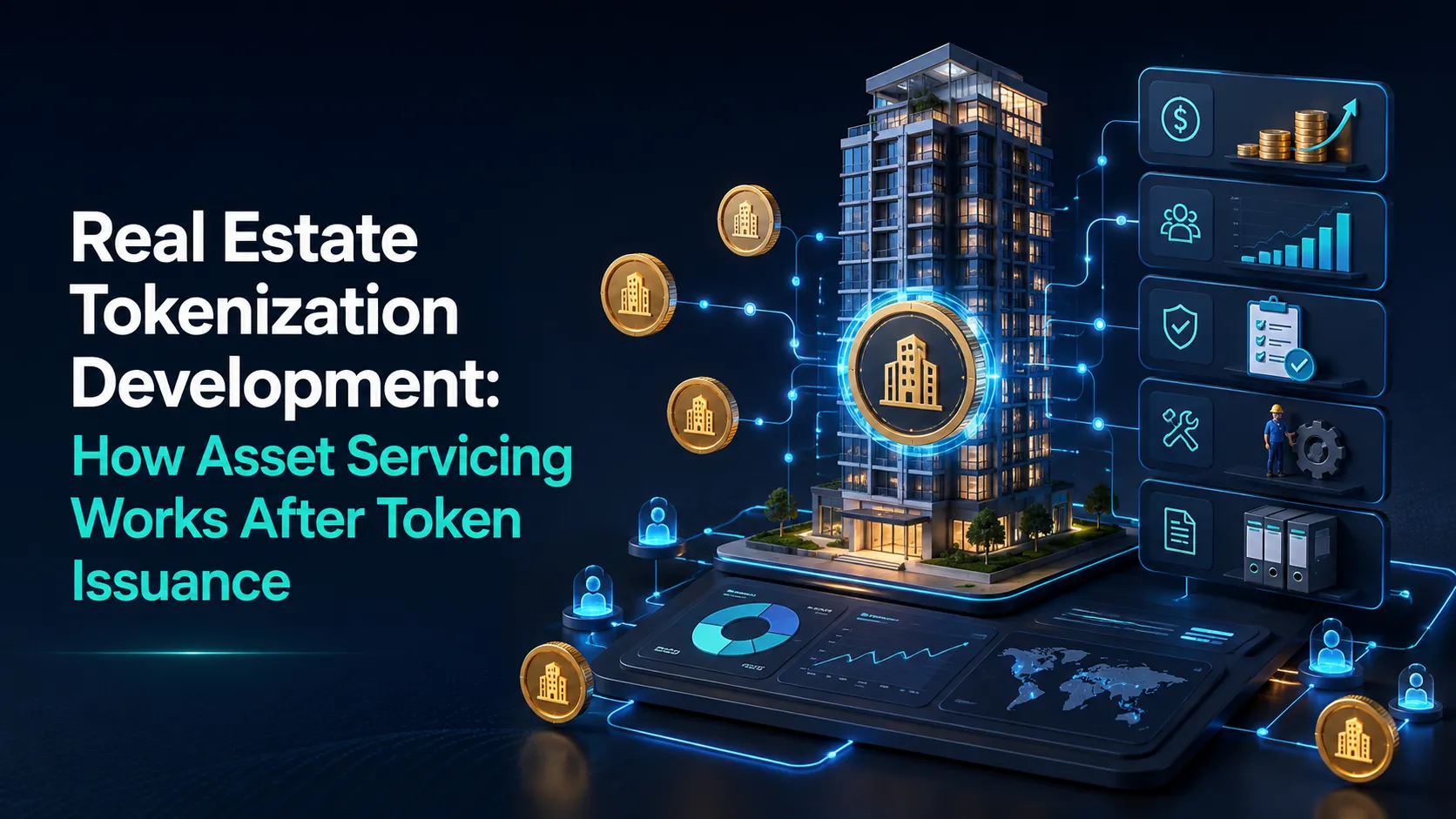

Real estate tokenization does not end when digital tokens are issued and distributed to investors. Issuance is only one stage in the asset lifecycle. Once investors hold tokens linked to a property or property-related interest, several ongoing activities must take place to keep ownership records, income distributions, reporting, compliance, and property administration in order.
This is where asset servicing becomes important. In a real estate tokenization model, asset servicing refers to the activities performed after issuance to manage the relationship between the underlying property, token holders, legal entities, financial flows, and the blockchain network. A well-planned servicing structure helps investors receive information and distributions while property operators continue handling the physical asset.
For businesses planning real estate tokenization development, post-issuance servicing should be considered during the platform planning stage rather than added later. The technology, legal structure, investor workflows, smart contracts, and property management processes all need to work together.
What Asset Servicing Means in Real Estate Tokenization
Asset servicing covers the ongoing administration of a tokenized real estate investment. It can include rent collection, expense management, income distribution, investor reporting, ownership record maintenance, tax documentation, corporate actions, compliance checks, and property-related updates.
For example, suppose an office building is represented through digital tokens. Investors may receive a portion of rental income according to their token holdings. The property manager collects rent from tenants, deducts approved expenses, and sends the eligible amount to the entity responsible for investor distributions. The tokenization platform can then calculate each investor's allocation and record the distribution.
The blockchain records token ownership, but it does not automatically manage every real-world activity connected to the property. Asset servicing connects these off-chain activities with the digital ownership structure.
Method 1: Maintaining Token Holder Records
The first servicing activity is maintaining accurate investor and token ownership records. Every transfer of tokens can change the distribution entitlement associated with an investor.
A real estate tokenization platform development project may include a wallet registry, investor profile system, transaction history, and ownership database. When tokens move between approved wallets, the system can update the relevant records while preserving transaction history on the blockchain.
Investor verification also remains important. Depending on the jurisdiction and offering structure, investors may need to complete identity verification, accreditation checks, suitability assessments, or other compliance procedures before receiving or transferring tokens.
This creates a connection between blockchain ownership and regulated investor records. A real estate tokenization company needs processes that can manage both sides without relying only on blockchain data.
Method 2: Collecting Property Income
Income collection is another major part of asset servicing. Tokenized properties may generate revenue from residential rent, commercial leases, hotel operations, storage facilities, or other property activities.
The property manager or operating entity collects revenue from tenants or customers. Property expenses, taxes, maintenance costs, management fees, and other approved deductions may then be handled according to the legal agreement.
After calculating the distributable amount, the servicing system can determine how much each eligible token holder should receive.
For example, if a property generates $100,000 in distributable income during a period and an investor owns 5% of the eligible tokens, the investor may receive 5% of the amount available for distribution, subject to the offering terms and applicable deductions.
The important point is that the token itself does not collect rent. The servicing structure connects property cash flows with investor entitlements.
Method 3: Processing Investor Distributions
Once income is available for distribution, the platform needs a reliable process for sending funds to investors.
A smart contract may calculate distribution amounts based on token balances recorded at a specific date. The actual payment can then occur through supported payment rails, stablecoins, bank transfers, or another approved mechanism depending on the project structure.
Some platforms may use a record date. Investors holding eligible tokens on that date qualify for the relevant distribution. Others may use automated calculations based on current holdings, depending on the legal and technical model.
A well-designed real estate token development system should record the distribution amount, payment status, transaction reference, and relevant reporting information. Investors should also have access to their historical distributions through a dashboard.
Method 4: Managing Property Expenses
Asset servicing is not limited to collecting revenue. Expenses associated with the property also need to be recorded and processed.
These may include:
- Property management fees
- Maintenance costs
- Insurance payments
- Property taxes
- Utility expenses
- Legal and accounting fees
- Renovation expenses
- Financing costs
The servicing layer can connect approved expense records with the financial information shown to investors. This gives investors a more complete view of how property income is calculated before distributions are made.
For a real estate asset tokenization company, this accounting workflow can be particularly important because token holders may have economic rights linked to net property income rather than gross revenue.
Method 5: Handling Investor Reporting
Investors generally need periodic information about the property and their investment position. Asset servicing therefore includes the production and delivery of reports.
Reports may include property income, expenses, occupancy information, distributions, token balances, valuation updates, transaction history, and other information required under the investment arrangement.
A real estate tokenization platform development company can include an investor dashboard where users view their holdings and financial activity. Administrators may have separate tools for uploading property reports, approving financial information, and managing investor communications.
The exact reporting requirements depend on the jurisdiction, asset structure, investor type, and offering model.
Method 6: Managing Corporate Actions
Tokenized real estate investments may experience events that affect investor rights or distributions. These events can be treated as corporate actions within the servicing framework.
Examples include refinancing, property sales, additional capital requirements, changes in ownership structure, mergers involving the holding entity, or liquidation of an investment.
Suppose a property is sold. The servicing system may need to calculate the amount payable to token holders after deducting relevant obligations and expenses. Tokens may then be redeemed or marked according to the terms of the investment.
This process requires coordination between legal entities, property managers, administrators, custodians, and the technology platform.
Method 7: Updating Property Valuations
Property values can change over time because of market conditions, rental income, occupancy, development activity, interest rates, and other factors.
A tokenization platform may display valuation information alongside token holdings. However, valuation data usually comes from external property assessments, financial models, or approved valuation providers rather than directly from the blockchain.
The servicing process can record valuation updates and associate them with the relevant property and investment entity. Investors can then review historical valuation information together with income and distribution records.
This is particularly useful for platforms supporting multiple properties or investment vehicles.
Method 8: Supporting Compliance After Issuance
Compliance does not stop after investors receive their tokens. Ongoing checks may be required throughout the investment lifecycle.
Depending on the jurisdiction and structure, the servicing process may involve sanctions screening, investor status checks, transaction monitoring, transfer restrictions, tax documentation, and periodic reviews.
Transfer controls can also be connected to token contracts. If a tokenized security is restricted to verified investors, the platform may check whether the receiving wallet is approved before a transfer takes place.
For businesses working with a real estate tokenization development company, these requirements should be considered when designing the wallet system, smart contracts, investor database, and administrative controls.
Method 9: Connecting Smart Contracts With Real-World Data
Smart contracts can manage rules recorded on a blockchain, but property servicing depends on information from the physical world.
Rental payments, property expenses, valuation reports, tenant information, bank transactions, and legal documents typically exist outside the blockchain. The platform therefore needs methods for bringing approved information into the digital investment environment.
This can involve APIs, administrative approval workflows, data feeds, accounting systems, payment providers, or other external systems.
The objective is to create a reliable connection between real-world property activity and token-related records without assuming that blockchain data alone represents the complete financial picture.
Method 10: Handling Secondary Transfers
After issuance, investors may want to transfer or sell their tokens. Asset servicing must account for these transactions because a change in ownership can affect future distributions and reporting.
A compliant transfer process may check wallet eligibility, investor status, holding restrictions, transfer limits, and transaction records before allowing a transfer.
Depending on the structure, tokens may trade on a dedicated marketplace or another permitted secondary venue. The servicing system then updates ownership information and future entitlement records.
This is one area where a real estate tokenization platform development project needs careful coordination between the token contract, investor database, compliance system, and marketplace.
Technology Behind Post-Issuance Asset Servicing
A typical servicing architecture can contain several connected layers. The blockchain layer records token ownership and relevant smart contract activity. The application layer manages investor dashboards, administrator tools, reporting, and workflows. The compliance layer handles investor verification and transfer controls. The financial layer manages income, expenses, payments, and reconciliation.
External integrations may connect the platform with banks, accounting software, property management systems, valuation providers, identity verification services, and document management tools.
The architecture will vary according to the property type and legal structure. A single commercial property may require a different setup from a platform managing hundreds of residential properties.
How Businesses Should Plan Asset Servicing
Businesses considering real estate tokenization development should define the post-issuance operating model before launching the token. Questions should include who manages the property, who collects income, who approves expenses, who maintains investor records, who performs compliance checks, and who handles distributions.
The responsibilities of the property manager, issuer, administrator, custodian, technology provider, and investors should be documented. The platform should also define what happens when a property is refinanced, sold, transferred, damaged, or placed under a new management arrangement.
Companies researching the Top real estate tokenization companies or Best real estate tokenization companies should therefore look beyond token issuance features. The quality of post-issuance administration can have a major effect on how the investment platform operates over time.
Why Asset Servicing Matters for Real Estate Tokenization
Real estate tokenization creates a digital representation of investment rights, but the underlying property continues to exist in the physical economy. Tenants still pay rent, maintenance bills still arrive, taxes still need to be handled, valuations still change, and investors still expect financial information.
Asset servicing provides the operational connection between these activities and token ownership.
For a real estate tokenization company, this means the project should not be viewed only as a token creation exercise. The platform must support activities that continue for months or years after issuance.
A real estate tokenization development company can therefore treat servicing workflows as part of the wider platform architecture. This approach can help businesses plan investor dashboards, payment systems, reporting tools, compliance functions, smart contracts, and administrative workflows around the full investment lifecycle.
Conclusion
Real estate tokenization involves much more than issuing digital tokens against a property. After issuance, asset servicing manages the activities that keep the investment arrangement functioning, from investor records and income collection to distributions, expense tracking, reporting, compliance, valuations, corporate actions, and secondary transfers. Businesses planning real estate tokenization platform development should consider these processes from the beginning because the post-issuance period represents a significant part of the asset lifecycle. A well-planned servicing structure can connect property operations with digital ownership while giving investors access to relevant financial and investment information. Blockchain App Factory provides Real estate tokenization development services for businesses planning platforms that cover token issuance, investor management, smart contracts, asset administration, and post-issuance workflows.
FAQs
1. What is asset servicing in real estate tokenization?
Asset servicing refers to the activities performed after token issuance to manage investor records, property income, expenses, distributions, reporting, compliance, valuations, and other investment-related processes.
2. Why is asset servicing important after token issuance?
Token issuance creates digital ownership records, but the underlying property continues to generate income and expenses. Asset servicing connects those real-world activities with investor ownership and distribution processes.
3. Can smart contracts handle all real estate asset servicing activities?
No. Smart contracts can manage predefined blockchain-based rules, but many property activities, such as rent collection, property valuation, maintenance, accounting, and legal administration, take place outside the blockchain.
4. What features can a real estate tokenization platform include for asset servicing?
Common features include investor dashboards, token ownership records, distribution management, property financial reporting, compliance workflows, expense tracking, valuation updates, transaction history, and administrative controls.
5. How does token ownership affect rental income distribution?
The investment agreement generally defines how income is allocated. The platform can use eligible token balances or holdings on a specified record date to calculate each investor's share.
6. Does asset servicing continue after a property is sold?
Yes. A property sale may require calculations for final distributions, settlement of obligations, token redemption, investor notifications, and closure or restructuring of the relevant investment entity.
7. What role does a real estate tokenization platform development company play?
Such a company can provide technology for token issuance, smart contracts, investor management, compliance workflows, financial records, dashboards, and post-issuance asset servicing.
8. What should businesses consider before starting real estate token development?
Businesses should assess the property structure, legal framework, investor requirements, token rights, compliance obligations, payment methods, servicing responsibilities, blockchain selection, smart contract design, and long-term administration process.

























Sign in to leave a comment.