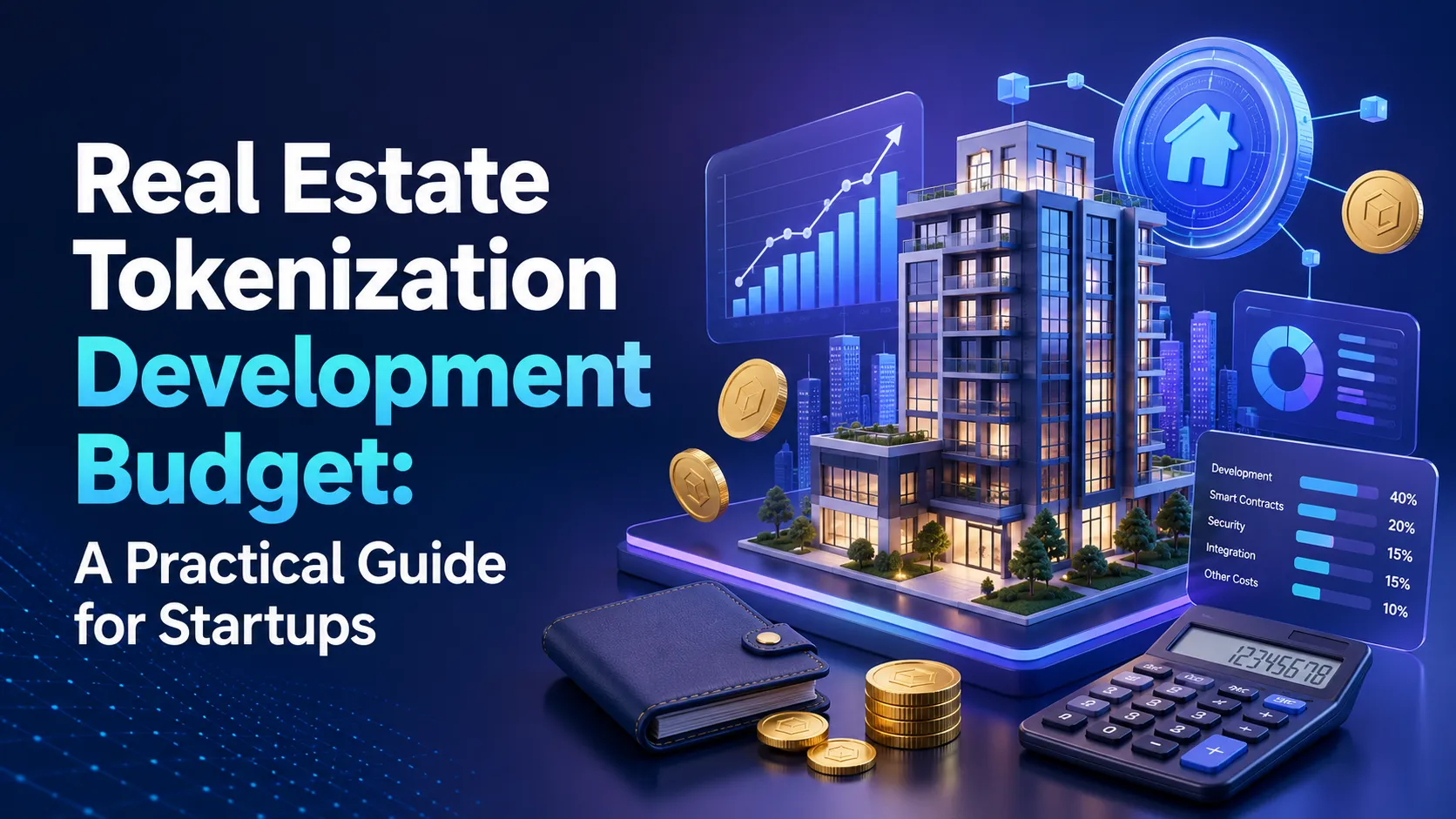

Real estate tokenization is gaining attention among startups looking for new ways to structure property investments, manage ownership records, and create digital participation models. Instead of treating a property as a single investment unit, tokenization can divide ownership or economic rights into digital tokens recorded on a blockchain network. This approach can support smaller investment amounts, digital record management, and secondary trading models when the legal and market structure allows it.
For startups, the main challenge is often the development budget. The cost is not limited to blockchain coding. Legal work, property evaluation, smart contracts, investor management, compliance processes, wallet integration, security reviews, user interfaces, and marketplace functions can all affect the final investment.
A startup planning real estate tokenization development should therefore begin with a business and technology assessment rather than choosing a fixed development package. The required budget depends on the property type, target market, token model, blockchain network, platform functions, compliance requirements, and expected user volume.
What Does Real Estate Tokenization Development Include?
Real estate tokenization development involves creating a digital system that represents property ownership, investment rights, revenue participation, or another legally defined interest through blockchain-based tokens. The development process can cover several technology layers, including the investor application, property management interface, token contracts, wallet connections, payment processing, identity verification, compliance tools, and administrative controls.
The development scope changes according to the business model. A startup launching a private investment platform may require fewer functions than a company planning a public marketplace. Likewise, a platform serving commercial properties may require different workflows from one focused on residential properties.
Before allocating funds, founders should define what the platform will actually offer. This prevents unnecessary development work and provides a more realistic budget.
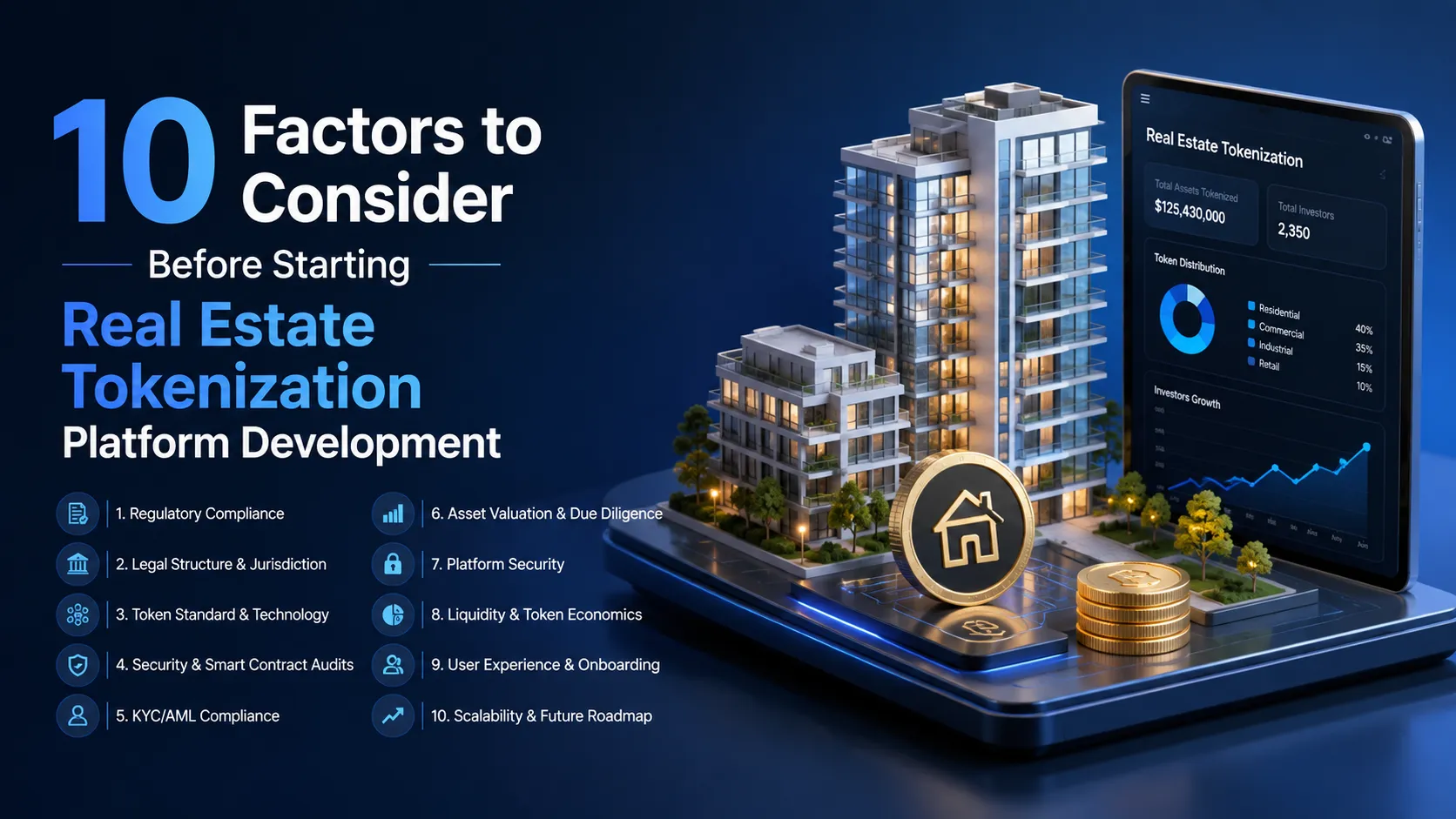
Main Factors That Affect the Development Budget
Several factors influence the cost of a real estate tokenization platform development project. The first is platform scope. A basic platform containing investor registration, property listings, token issuance, wallet connectivity, and an admin panel will generally require less development work than a marketplace with trading, portfolio management, automated distributions, reporting, and several payment methods.
The blockchain network also affects expenses. Different networks have different transaction structures, development ecosystems, and infrastructure requirements. The token standard selected for the project can influence smart contract design and integration work.
Legal and regulatory requirements also require a separate budget. Real estate tokens may represent securities or other regulated interests depending on the jurisdiction and structure. Startups may need legal opinions, entity structuring, investor eligibility rules, KYC and AML procedures, offering documentation, and compliance reviews.
Security is another major cost factor. Smart contracts and financial applications require testing and security assessment before production use. External audits may add to the initial budget but can reduce the likelihood of expensive contract issues later.
Typical Budget Ranges for Startups
There is no single price for real estate tokenization development because projects differ considerably. A startup planning a basic MVP may spend around $40,000 to $80,000, while a mid-level platform with investor management, token issuance, compliance functions, wallet integration, and property administration can range from approximately $80,000 to $150,000.
A larger platform with marketplace functions, secondary trading, automated distributions, multiple user roles, reporting systems, integrations, and extensive security testing may require $150,000 to $300,000 or more.
These figures are planning ranges rather than fixed quotations. Legal costs, third-party services, blockchain fees, security audits, payment providers, and post-launch maintenance may be charged separately.
Budget Allocation by Development Area
A practical budget can be divided across several areas. Product planning and UI design may account for roughly 10% to 15% of the technology budget. This stage covers user journeys, interface planning, property workflows, investor dashboards, and administrative screens.
Blockchain and smart contract development can account for about 20% to 30%. This includes token contracts, ownership logic, transfer restrictions, distribution mechanisms, and blockchain integration.
Frontend and backend development may represent another 25% to 35%. These components manage user accounts, property information, investment records, dashboards, APIs, databases, and administrative operations.
Security testing and quality assurance can take around 10% to 15%. The exact amount depends on the number of smart contracts and application components.
Integrations may require another 10% to 20%. These can include KYC providers, AML services, payment gateways, wallets, property data systems, analytics tools, email services, and other external systems.
Legal and compliance work should be budgeted separately because requirements differ substantially between jurisdictions and token structures.
MVP Development: A Practical Starting Point
For a startup entering the market for the first time, an MVP can help control initial spending. The MVP should focus on functions required to validate the business model rather than attempting to provide every possible marketplace feature.
A basic MVP may include investor registration, KYC integration, property listings, token issuance, wallet connectivity, investment tracking, an investor dashboard, an administrator dashboard, and basic reporting.
Secondary trading, complex automated distributions, advanced analytics, multiple payment currencies, mobile applications, and extensive third-party integrations can be considered for later releases.
This approach allows founders to test user demand before committing a larger budget. It also gives the development team a smaller technical scope to test before wider deployment.
Smart Contract Development Costs
Smart contracts handle important token functions, so they require careful planning. Depending on the token model, contracts may manage issuance, ownership records, transfers, investor restrictions, distributions, redemption, and administrative permissions.
Development costs depend on the number and complexity of contracts. A simple token contract is less expensive than a group of contracts handling property ownership structures, transfer restrictions, investor categories, revenue distributions, and governance rules.
Testing should be included in the budget from the beginning. Developers should test expected transactions as well as unusual cases such as failed payments, unauthorized transfers, incorrect permissions, and rejected investors.
A professional audit can be considered before launch, particularly when the platform handles significant investment amounts.
Compliance and Legal Expenses
Legal planning is one of the areas startups should not overlook. Tokenized real estate can involve property law, securities regulation, investment rules, tax requirements, KYC, AML, data protection, and investor eligibility requirements.
The applicable rules depend on the country where the property, platform operator, and investors are located. A startup should work with legal professionals familiar with both real estate and digital assets before finalizing its token model.
The platform may also require automated investor restrictions. For example, certain offerings may be available only to eligible investors in particular jurisdictions. These requirements can affect smart contract logic, account verification, transaction workflows, and administrative processes.
Choosing a Development Partner
Selecting a real estate tokenization development company requires more than comparing development quotations. Startups should review the team's blockchain experience, real estate project knowledge, smart contract capabilities, security practices, previous platform work, technology stack, and post-launch support.
A real estate asset tokenization company may also provide assistance with token architecture, investor workflows, property onboarding, and platform integrations. However, founders should confirm exactly which services are included before signing an agreement.
Companies researching the market may also review the Top real estate tokenization companies and Best real estate tokenization companies to understand common platform functions, business models, user experiences, and market positioning. These comparisons can help founders decide which features are necessary for their own product.
How to Reduce Initial Development Spending
Startups can reduce unnecessary spending by defining the product scope before development begins. A detailed feature list helps prevent repeated changes during implementation.
Using an established blockchain ecosystem can also reduce certain technical requirements compared with creating an entirely new blockchain network. Reusable modules for identity verification, wallet connections, notifications, and administration can further reduce development time when they fit the project's requirements.
Another practical method is phased development. The first release can focus on property onboarding, investor registration, token issuance, and investment tracking. Trading, analytics, mobile applications, and additional payment options can follow after the initial product receives market feedback.
Startups should avoid reducing costs by removing security testing or legal review. Saving money in these areas can create much larger expenses later.
Development Timeline and Its Effect on Budget
Development time has a direct relationship with project cost. A small MVP may take approximately three to five months, depending on the team and requirements. A more feature-rich platform can take six to nine months or longer.
The timeline can increase when the project requires several integrations, complex smart contracts, multiple user roles, compliance workflows, or extensive testing.
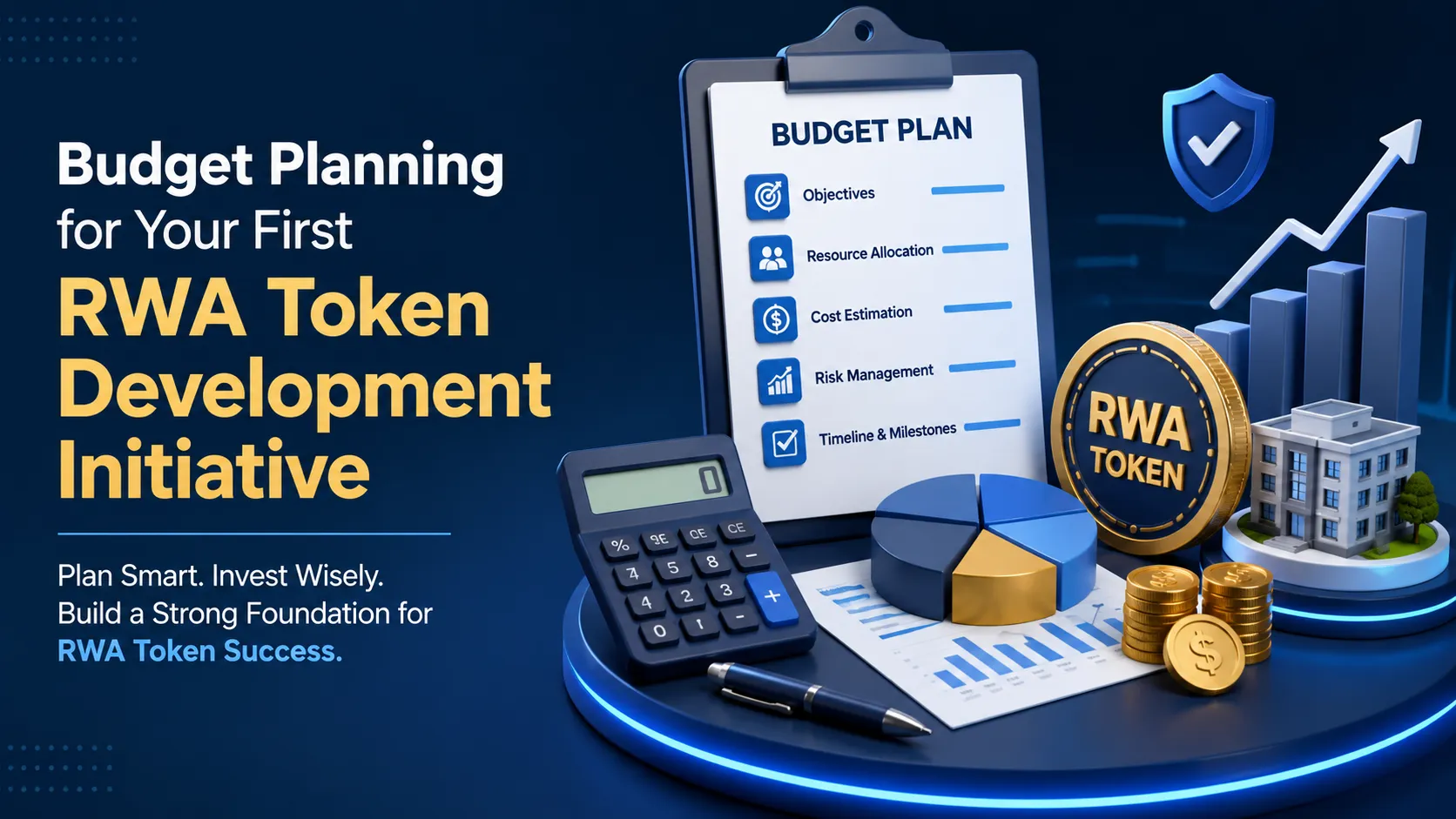
A startup should therefore create a product roadmap before selecting a development team. The roadmap can divide work into discovery, design, blockchain development, application development, integrations, testing, security review, deployment, and post-launch maintenance.
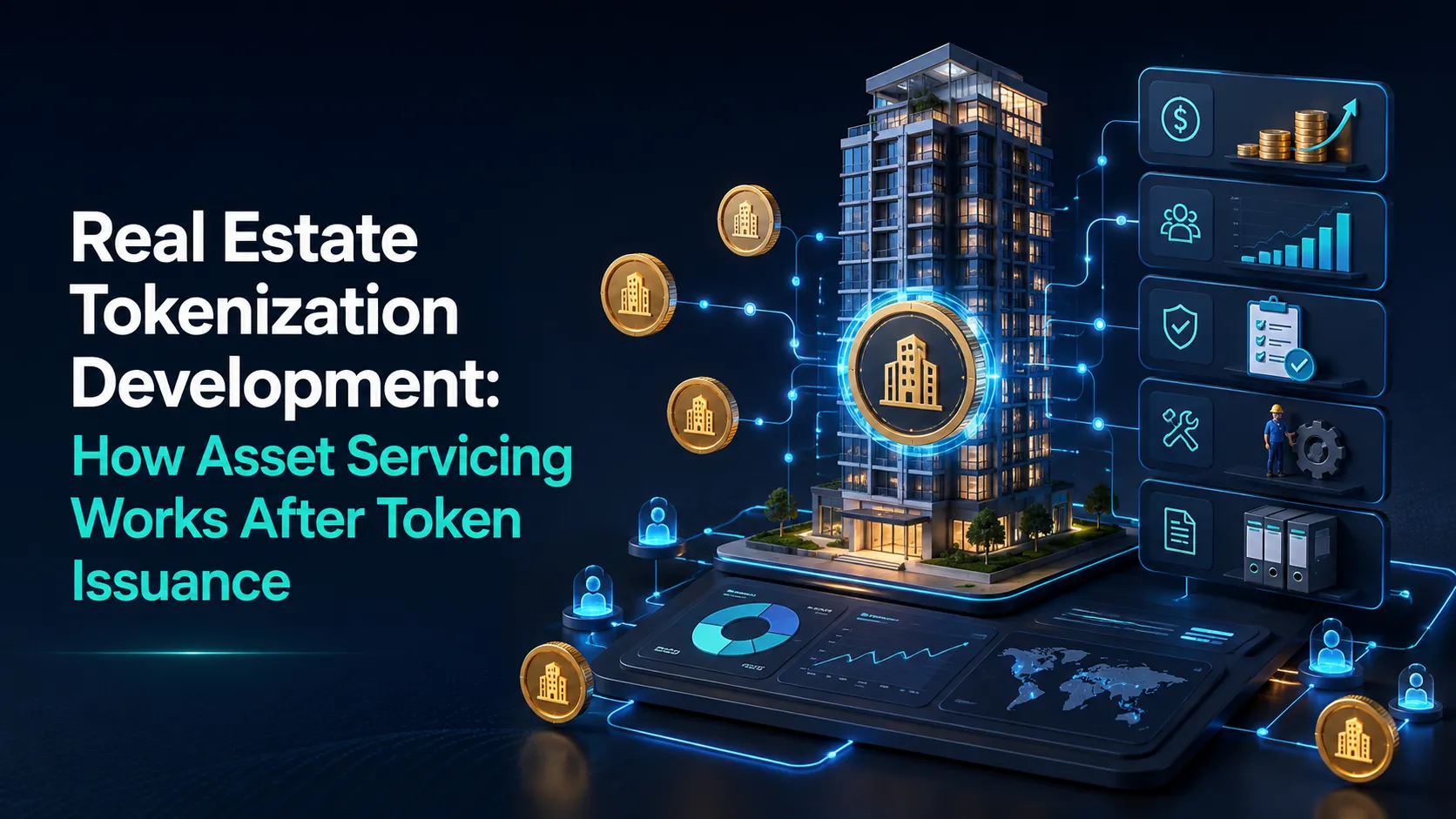
Ongoing Costs After Launch
The initial development budget is only one part of the financial plan. A real estate tokenization platform also requires ongoing expenses after launch.
Infrastructure, blockchain transactions, security monitoring, software maintenance, third-party API subscriptions, KYC and AML checks, customer support, compliance updates, marketing, and future feature development can contribute to recurring costs.
The platform may also require periodic smart contract reviews and application security testing. If the startup expands into additional countries, legal and compliance costs may increase because local requirements can differ.
Planning these expenses in advance gives founders a more realistic view of the capital required for the first year of operation.
A Sample Startup Budget Plan
A startup with a moderate product scope could divide its initial technology budget across product planning and design, frontend and backend development, smart contracts, blockchain integration, testing, security review, and deployment.
For example, a $100,000 technology budget could allocate approximately $10,000 to product planning and design, $30,000 to frontend and backend work, $25,000 to blockchain and smart contracts, $15,000 to integrations, and $10,000 to testing and security. The remaining $10,000 could cover deployment, documentation, and initial technical support.
This is only an example. The actual allocation should reflect the project's property model, jurisdiction, token structure, and platform requirements.
Questions Startups Should Ask Before Hiring a Development Company
Before selecting a partner for real estate token development, founders should ask whether the team has experience with tokenized assets, smart contract development, blockchain security, investor management systems, and property-related workflows.
They should also ask how the company handles source code ownership, testing, documentation, third-party integrations, maintenance, upgrades, and security incidents.
The contract should describe the project scope, milestones, delivery schedule, payment terms, technology stack, testing responsibilities, intellectual property rights, and post-launch support. A detailed agreement can prevent misunderstandings during development.
Final Thoughts
Real estate tokenization development requires a budget that covers technology, legal preparation, compliance, security, integrations, and ongoing maintenance rather than software development alone. Startups can begin with a focused MVP, validate their business model, and add additional functions as market requirements become clearer. Choosing the right blockchain network, defining the token structure early, selecting suitable integrations, and planning security and compliance expenses can help founders manage their investment more effectively. A realistic budget also makes it easier to compare development proposals and select a suitable real estate tokenization platform development company. Blockchain App Factory provides Real estate tokenization development services for businesses planning property tokenization platforms, token issuance systems, investor applications, and related blockchain solutions.
FAQs
1. How much does real estate tokenization development cost?
A basic MVP may cost around $40,000 to $80,000, while a mid-level platform can range from $80,000 to $150,000. Larger platforms may require $150,000 to $300,000 or more depending on features, compliance, integrations, and security requirements.
2. What is the biggest expense in real estate tokenization development?
Blockchain and smart contract development, application development, compliance work, security testing, and integrations can represent significant portions of the budget. The largest expense varies according to the project scope.
3. Can startups launch a real estate tokenization MVP with a limited budget?
Yes. Startups can begin with property listings, investor registration, KYC, token issuance, wallet connectivity, investment tracking, and administrative functions. Additional marketplace features can be introduced later.
4. How long does real estate tokenization platform development take?
A focused MVP may take around three to five months. A larger platform with marketplace functions, multiple integrations, compliance workflows, and extensive testing may take six to nine months or longer.
5. What expenses should startups consider besides development?
Startups should consider legal services, compliance, smart contract audits, hosting, blockchain transaction fees, KYC and AML services, payment processing, security monitoring, customer support, and ongoing maintenance.
6. How should a startup choose a real estate tokenization company?
Review blockchain experience, smart contract expertise, security practices, previous tokenization projects, development methodology, integration capabilities, documentation, pricing, and post-launch support before making a decision.
7. Is real estate token development different from regular token development?
Yes. Real estate token development can involve property rights, investor restrictions, legal structures, compliance workflows, revenue distribution, property records, and transfer rules. These requirements can make the project more complex than a basic digital token.
8. Why is compliance important for a tokenized real estate platform?
The legal treatment of property-backed tokens varies by jurisdiction and token structure. Compliance planning helps determine who can invest, how ownership or economic rights are represented, what verification is required, and how transfers should be handled.
9. Should startups develop a custom platform or use an existing solution?
The decision depends on budget, product requirements, launch timeline, and desired control. A custom platform can provide greater control over workflows, while an existing solution may reduce initial development work.
10. What should be included in a real estate tokenization platform?
Common functions include property onboarding, investor registration, KYC, token issuance, wallet integration, investment tracking, administrative controls, reporting, payment processing, compliance rules, and transaction management. The final feature set should depend on the startup's business model and target market.

























Sign in to leave a comment.