
Real estate tokenization has gained attention as property owners, investment firms, and technology companies look for digital methods to represent property ownership. Through tokenization, rights connected to a real estate asset can be represented through blockchain-based tokens. These tokens may support fractional participation, digital ownership records, automated transactions, and wider investor access, depending on the legal structure and market in which the platform operates.
Starting a real estate tokenization platform requires more than selecting a blockchain and creating tokens. The project involves property selection, legal arrangements, investor verification, token economics, smart contracts, custody, payments, secondary trading, and platform security. Businesses also need to decide how the platform will generate revenue and which type of users it will serve.
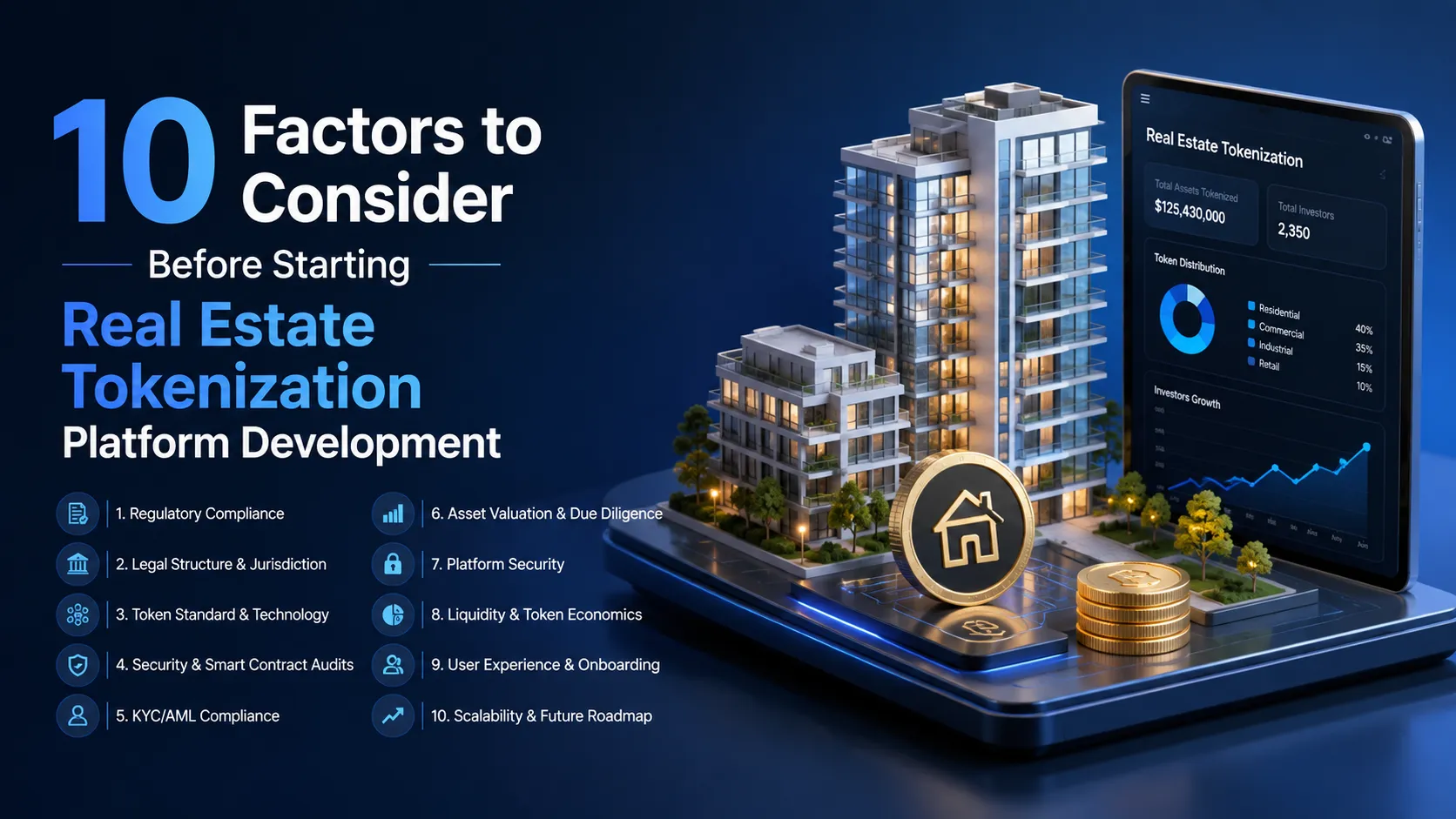
A practical approach to real estate tokenization development begins with business planning. The following ten factors can help companies assess the requirements before starting real estate tokenization platform development.
1. Decide the Type of Real Estate Assets
The first consideration is the type of property that the platform will represent. Real estate can include residential buildings, commercial offices, hotels, warehouses, retail properties, student housing, healthcare facilities, industrial properties, and rental portfolios.
Each property category can involve different ownership structures, revenue models, valuation methods, and investor expectations. For example, a rental property may distribute income from monthly rent, while a development project may depend on future property appreciation.
A company should decide whether its platform will focus on one property category or support multiple asset classes. Starting with a defined asset category can make the initial product scope easier to manage. Property due diligence, valuation, documentation, and token issuance procedures should also be planned around the selected asset type.
2. Study the Legal and Regulatory Environment
Real estate tokenization operates at the intersection of property law, securities regulation, taxation, digital assets, and investor protection. The legal treatment of a token can differ significantly between countries and even between asset structures.
Before development begins, the business should identify the jurisdictions where the platform will operate. It should also determine whether the token represents equity, debt, a revenue share, an ownership interest, or another legal right.
Legal professionals should review property ownership arrangements, offering documents, investor agreements, KYC and AML procedures, taxation requirements, data protection obligations, and securities rules.
A real estate tokenization company should not treat legal compliance as something to address after the software is completed. Legal requirements should influence the platform architecture from the beginning.
3. Select the Right Tokenization Model
There are several ways to structure tokenized real estate. A property may be placed under a special purpose vehicle, with investors receiving tokens connected to interests in that entity. Another model may represent debt linked to a property. Some platforms can also use revenue-sharing arrangements.
The chosen model affects token ownership, investor rights, income distribution, voting procedures, transfer restrictions, and redemption mechanisms.
A business should document what the token represents before moving into real estate token development. Investors need to understand what they receive when they purchase a token and how their rights relate to the underlying property.
The token model should also match the intended audience. A platform aimed at retail investors may require different procedures from one designed for professional or institutional participants.
4. Choose a Suitable Blockchain Network
Blockchain selection has a direct effect on transaction costs, smart contract functionality, wallet compatibility, transaction speed, ecosystem support, and maintenance requirements.
Networks such as Ethereum and several Ethereum-compatible chains are commonly considered for tokenization projects. Other blockchain networks may also be suitable depending on the platform's requirements.
The company should compare transaction fees, network activity, developer resources, security history, token standards, wallet support, and integration options before making a decision.
The blockchain should serve the business model rather than dictate it. A platform expecting frequent investor transactions may have different technical requirements from a platform that primarily handles property issuance and periodic income distributions.
5. Plan the Investor Onboarding Process
Real estate tokenization platforms need a structured investor onboarding process. Investors may need to create accounts, submit identity documents, complete KYC checks, pass AML screening, connect payment methods, and review investment documents before purchasing tokens.
The onboarding process should also consider investor eligibility. Certain offerings may be restricted to accredited investors, professional investors, or residents of specific jurisdictions.
The platform should maintain appropriate records while following applicable privacy requirements. Document verification providers, identity services, sanctions screening systems, and compliance databases can be connected through APIs.
For a real estate tokenization platform development company, investor onboarding is an important product area because poor account setup can create friction before an investor reaches the investment stage.
6. Design the Token Economics
Token economics determine how tokens are issued, priced, distributed, transferred, and retired. In real estate tokenization, the token supply should have a logical relationship with the underlying property or investment structure.
For example, a property valued at a particular amount could be represented through a defined number of tokens. The business then needs to decide the initial token price, minimum investment, distribution schedule, transfer rules, and income model.
The platform may also need functions for dividend or rental-income distribution. Smart contracts can support automated calculations when the legal and financial structure permits it.
Companies should model different scenarios before launch. They can assess investor demand, property income, operating costs, token supply, platform fees, and potential secondary-market activity.
7. Include Property Valuation and Due Diligence
Investors need reliable information about the property associated with a token. Property valuation should therefore form part of the platform's operating process.
The business may work with independent valuation professionals, property managers, legal firms, auditors, and other service providers. Documents such as title records, valuation reports, insurance details, rental agreements, financial statements, and property inspection reports may need to be collected.
The platform can provide a digital record of relevant property information while access controls protect confidential documents.
A real estate asset tokenization company should also define procedures for updating property information. Changes in ownership, valuation, occupancy, rental income, debt, insurance, or property condition may need to be reflected in the platform.
8. Prioritize Smart Contract and Platform Security
Smart contracts manage important operations such as token issuance, transfers, ownership records, and distributions. Errors in contract logic can create financial and operational problems.
Smart contracts should therefore undergo testing and independent security audits before production deployment. The development process should include access controls, transaction validation, emergency procedures, wallet security, and monitoring.
The platform itself also requires protection. Account authentication, API security, database protection, encryption, role-based permissions, and activity monitoring should be considered during development.
A real estate tokenization development company should treat security testing as an ongoing activity rather than a single task completed before launch.
9. Decide Whether Secondary Trading Will Be Supported
Investors may want to sell their tokens after purchasing them. A platform can support this through an internal marketplace or integration with a compliant secondary trading venue, depending on the legal structure.
Secondary trading introduces additional requirements. These can include investor eligibility checks, transfer restrictions, order management, pricing mechanisms, settlement, transaction records, and regulatory controls.
The company should decide whether secondary trading will be included in the first release or introduced later. If it is part of the initial product, the trading architecture should be planned from the beginning.
Businesses researching the Top real estate tokenization companies and Best real estate tokenization companies can also study how existing platforms approach liquidity, investor access, property listings, and trading restrictions.
10. Establish the Business and Revenue Model
A real estate tokenization platform needs a commercial model that supports ongoing operations. Possible revenue sources can include property listing fees, token issuance fees, transaction charges, investor subscription fees, asset management charges, custody fees, or marketplace fees.
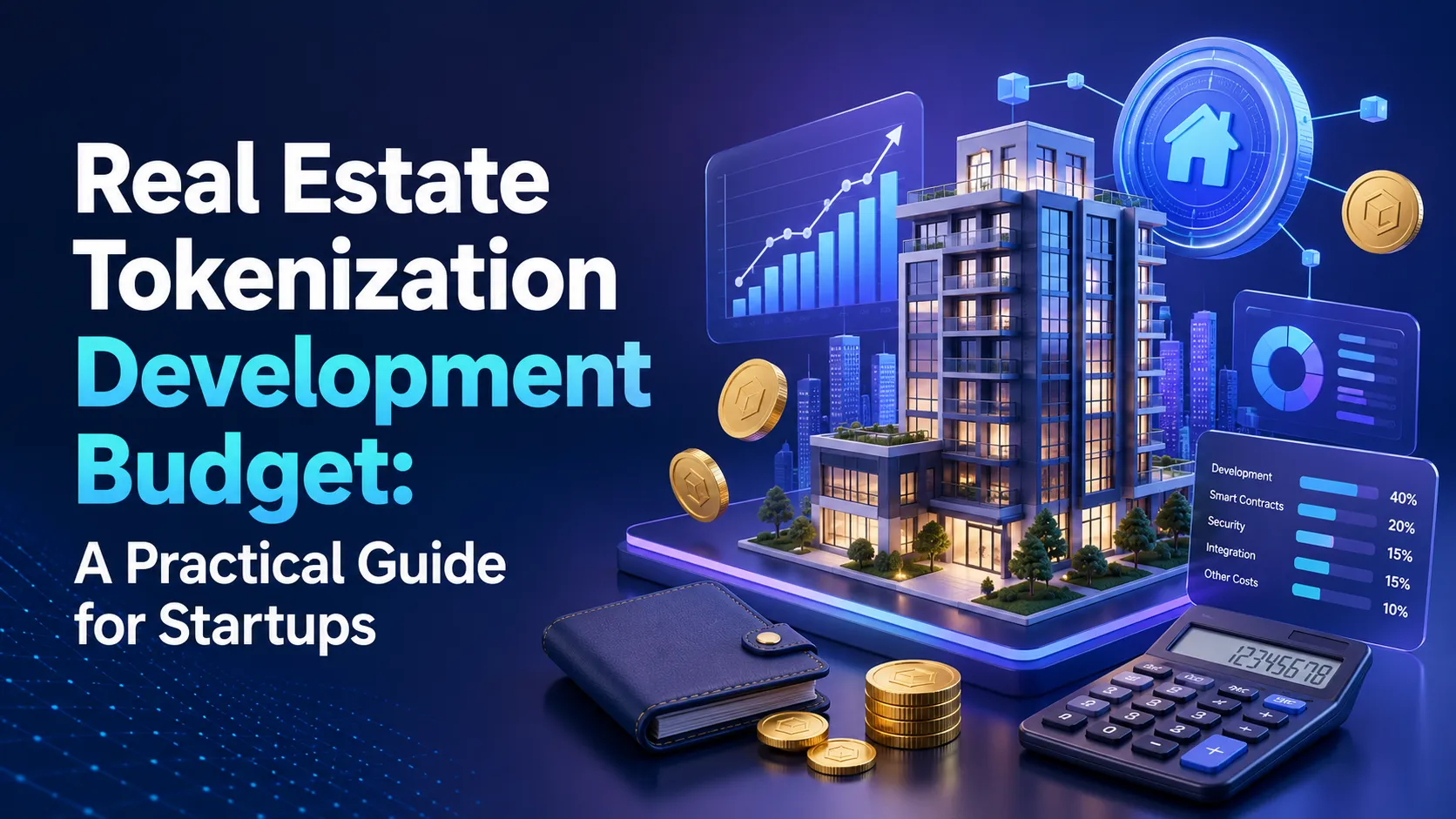
The business should estimate development expenses along with legal costs, property due diligence, compliance services, blockchain transactions, cloud infrastructure, security audits, customer support, marketing, and ongoing maintenance.
Companies should also decide whether they will develop the platform internally or work with a real estate tokenization development company.
For businesses without an existing blockchain development team, working with a real estate tokenization platform development company can reduce the time required to assemble technical resources. A suitable partner should have experience with smart contracts, token standards, KYC integrations, wallet systems, payment processing, property management workflows, and security testing.
Real Estate Tokenization Platform Development Process
Once these factors have been assessed, the project can move into the development process. The first stage generally involves business analysis and technical planning. The team defines the property model, token structure, user roles, compliance workflow, blockchain network, and revenue model.
The next stage covers UI and UX planning, smart contract development, backend systems, wallet integration, payment functions, KYC connections, property management modules, and administrative tools.
Testing follows development. Smart contracts, APIs, user accounts, transactions, security controls, and compliance workflows should be tested before deployment.
After launch, the platform requires monitoring, technical maintenance, security reviews, regulatory updates, and feature improvements. Real estate tokenization development should therefore be treated as an ongoing technology and business project rather than a one-time software release.
What Should Businesses Look for in a Development Partner?
Choosing a development partner can affect the project's cost, timeline, technology decisions, and post-launch maintenance. Businesses should review the provider's blockchain experience, previous tokenization projects, smart contract capabilities, compliance integrations, security practices, and support model.
A real estate tokenization platform development company should also understand the relationship between blockchain technology and real estate operations. Technical knowledge alone may not be enough when the project involves property documents, investor rights, income distribution, and regulatory restrictions.
Companies should request a detailed project scope before signing an agreement. The scope should mention modules, integrations, development stages, testing, deployment, maintenance, and expected deliverables.
Conclusion
Real estate tokenization can create a digital framework for representing property-related ownership and investment rights, but successful implementation requires careful planning across legal, financial, technical, and operational areas. Businesses should evaluate the asset type, regulatory environment, token model, blockchain network, investor onboarding, token economics, property due diligence, security, secondary trading, and revenue model before beginning development. These factors can help reduce avoidable project changes and provide a practical foundation for the platform. Blockchain App Factory provides Real estate tokenization development services that cover the technology requirements involved in creating tokenized property platforms, including smart contracts, token creation, investor modules, wallet integration, compliance-related integrations, marketplaces, and administrative functions.
FAQs
1. What is real estate tokenization?
Real estate tokenization is the process of representing rights or interests connected to a property through blockchain-based tokens. Depending on the legal structure, these tokens may represent ownership, debt, revenue rights, or interests in an entity holding the property.
2. What is required for real estate tokenization platform development?
A typical project may require smart contracts, a blockchain network, investor accounts, KYC and AML integrations, wallets, payment processing, property management features, token issuance functions, administrative controls, and security testing.
3. How does real estate token development work?
Real estate token development begins with defining the legal and economic rights represented by the token. Developers then create the token contracts, connect them with the platform, configure issuance and transfer rules, and test the complete system.
4. Can a real estate tokenization platform support fractional ownership?
Yes, a property can be divided into multiple digital tokens when the legal structure permits fractional participation. The exact ownership rights depend on the jurisdiction and the structure used for the offering.
5. How do I choose a real estate tokenization development company?
Businesses should examine blockchain experience, smart contract expertise, security practices, tokenization knowledge, compliance integrations, previous project experience, technical support, and the proposed development scope before selecting a provider.
6. Is secondary trading possible for tokenized real estate?
It can be possible when the legal and regulatory framework permits it. The platform may include a marketplace or connect with an external compliant trading venue.
7. What blockchain is suitable for real estate tokenization?
The suitable blockchain depends on transaction costs, smart contract requirements, wallet compatibility, token standards, ecosystem support, security considerations, and the expected transaction volume of the platform.
8. Does a tokenization platform need KYC and AML procedures?
Many real estate investment platforms require KYC and AML procedures, particularly when financial interests or regulated securities are involved. The exact requirements depend on the offering structure and jurisdiction.
9. What revenue models can a real estate tokenization platform use?
A platform can generate revenue through issuance fees, listing fees, transaction charges, subscription plans, asset management charges, custody fees, or marketplace fees, depending on its business structure.
10. Why is legal planning important before development?
Legal planning determines what the token represents, who can purchase it, how ownership is recorded, what investor rights apply, and which regulatory obligations the platform must follow. These decisions can directly affect the software architecture.


























Sign in to leave a comment.