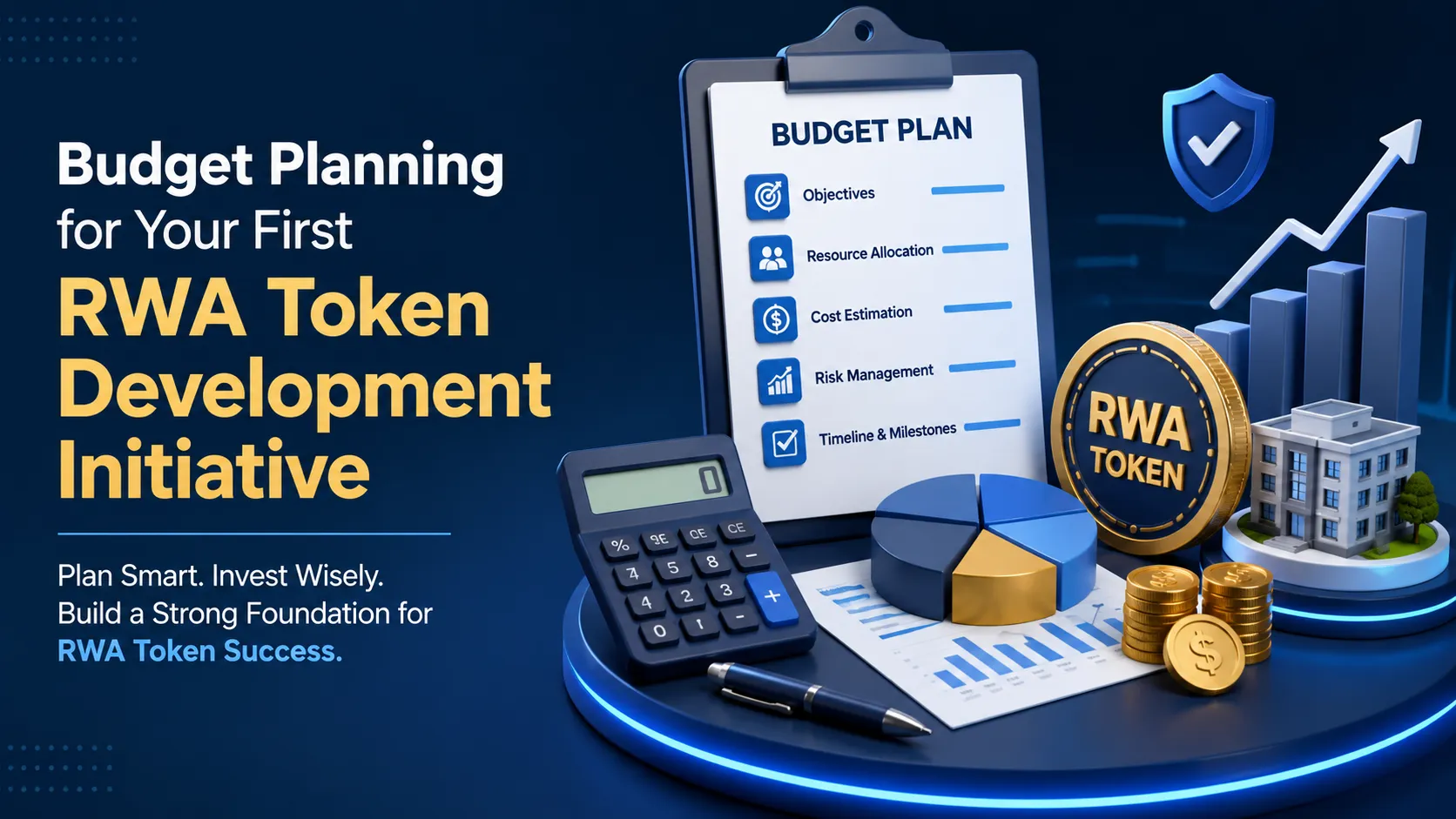

Launching a blockchain project without a financial plan often results in delays, unexpected expenses, or incomplete product delivery. When the project involves real-world assets, financial planning becomes even more important because legal requirements, asset verification, compliance, security, and blockchain development all contribute to the overall budget. Businesses entering this market should understand where their investment goes before beginning development.
As interest in RWA Tokenization continues to grow across real estate, commodities, private equity, invoices, and other physical assets, companies are looking for practical ways to estimate development costs without spending beyond their limits. Budget planning is not only about reducing expenses. It is about allocating resources wisely, selecting suitable technologies, and preparing for both launch and post-launch activities. Whether you are working with a startup budget or an enterprise investment plan, understanding every cost category helps avoid financial surprises during your first RWA token development initiative.
Why Budget Planning Matters Before Development
Many businesses focus only on coding expenses while ignoring legal work, security reviews, infrastructure, and maintenance. This often causes projects to exceed their expected budget before reaching production.
A detailed financial plan provides a complete picture of every stage involved in Real World Asset Tokenization. It also helps investors understand how capital will be used throughout the project lifecycle. Planning early allows businesses to prioritize features, schedule development phases, and prepare funding for future improvements rather than spending heavily at the beginning.
A realistic budget also improves communication between stakeholders, development teams, legal advisors, and compliance specialists.
Define the Purpose of Your RWA Token Project
Every budgeting exercise starts with understanding what the project is expected to achieve.
Some organizations tokenize commercial real estate, while others digitize gold, artwork, agricultural assets, bonds, or invoices. Each asset category introduces different technical and legal requirements that influence development costs.
Questions to answer before budgeting include:
- What asset will be tokenized?
- Which blockchain network will be used?
- Will fractional ownership be supported?
- Who will purchase the tokens?
- Which countries will the platform operate in?
Having answers to these questions prevents unnecessary spending during development.
Identify the Asset You Want to Tokenize
Different assets require different verification procedures.
For example, tokenizing residential property involves ownership verification, valuation reports, legal agreements, and regulatory documentation. Commodity tokenization may require storage verification and supply chain validation.
The complexity of the asset directly affects the budget allocated for:
- Documentation
- Legal verification
- Asset valuation
- Compliance
- Smart contract development
Businesses entering Real World Asset Tokenization Services should understand that asset preparation is often one of the earliest expenses.
Estimate Blockchain Development Costs
Blockchain development usually represents one of the largest budget categories.
Development expenses commonly include:
Smart Contract Development
Smart contracts manage ownership, transfers, compliance rules, and token issuance. They require careful coding and testing before deployment.
Token Creation
The token standard depends on project requirements. Businesses may choose ERC-20, ERC-721, ERC-3643, or other standards depending on the asset model.
Wallet Integration
Users need secure wallets for storing and transferring digital assets.
Blockchain Integration
The application must communicate with blockchain nodes and network infrastructure.
The total development cost depends on project complexity rather than simply the number of developers involved.
Include Compliance and Legal Expenses
Ignoring legal requirements can become one of the most expensive mistakes.
Since tokenized assets represent ownership or financial interests, businesses often need legal professionals to prepare documentation and review compliance obligations.
Budget allocation may include:
- Legal consultation
- Business registration
- Investor agreements
- AML procedures
- KYC verification
- Regulatory documentation
- Licensing where applicable
Companies planning RWA Tokenization development should treat compliance as a planned investment rather than an unexpected expense.
Security Should Be Included from the Beginning
Security is not something that should be added after development finishes.
Every blockchain project handling valuable assets needs proper protection against vulnerabilities.
Budget should include:
Smart Contract Audits
Independent security reviews identify coding issues before deployment.
Penetration Testing
Testing helps identify weaknesses in web applications and APIs.
Multi-Signature Wallet Setup
Administrative wallets benefit from multiple approval mechanisms before transactions are executed.
Backup and Recovery Planning
Businesses should prepare for unexpected technical failures without losing important data.
Security spending usually saves considerably more than recovering from security incidents later.
Infrastructure Costs Often Continue After Launch
Infrastructure expenses continue throughout the project's operation.
Businesses should budget for:
- Cloud hosting
- Database services
- Blockchain nodes
- Storage
- API services
- Monitoring systems
- Backup solutions
- CDN services
Projects with higher transaction volumes generally require additional infrastructure resources over time.
When planning rwa tokenization platform development, recurring infrastructure costs should be included alongside initial development expenses.
User Experience and Platform Design
A technically sound platform still needs an interface that investors can use comfortably.
Design costs may include:
UI Design
Clean layouts simplify investor interaction.
User Experience Planning
Navigation should remain simple throughout registration, investment, and asset management.
Mobile Compatibility
Many investors access investment platforms using smartphones.
Dashboard Development
Users should easily monitor holdings, transactions, and investment performance.
Although design is often overlooked during budgeting, it contributes significantly to user adoption.
Budget for Third-Party Integrations
Modern tokenization platforms rarely operate independently.
Common integrations include:
- Identity verification providers
- Payment gateways
- Crypto payment systems
- Banking APIs
- Email services
- SMS verification
- Analytics platforms
- Document management systems
Each integration may involve development work, subscription fees, or transaction-based pricing.
Working with an experienced RWA Tokenization Company often helps businesses identify which integrations are necessary for their business model.
Development Team Expenses
Project costs vary depending on the team structure.
Typical professionals involved include:
- Blockchain developers
- Backend developers
- Frontend developers
- UI designers
- QA engineers
- Project managers
- DevOps engineers
- Security specialists
- Business analysts
Some companies hire internal teams, while others work with external development partners offering RWA Tokenization Services.
Budget estimates should include salaries, contractor fees, software licenses, communication tools, and project management costs.
Testing Before Production
Testing reduces the likelihood of expensive issues after launch.
Testing activities include:
Functional Testing
Confirms every feature performs as expected.
Smart Contract Testing
Verifies token operations under different scenarios.
Performance Testing
Measures platform behavior during heavy user activity.
Security Testing
Checks for vulnerabilities before deployment.
User Acceptance Testing
Allows stakeholders to validate platform functionality before release.
Skipping testing may reduce initial costs but often increases future expenses.
Marketing and Community Planning
Development alone does not attract investors.
Businesses should allocate funds for:
- Website development
- Brand identity
- Educational content
- Social media campaigns
- Community management
- PR activities
- Investor outreach
- Email marketing
Marketing budgets vary depending on business objectives and geographical reach.
Projects entering competitive markets should prepare promotional activities well before launch.
Reserve Funds for Future Improvements
Every blockchain project continues to evolve after launch.
Businesses should reserve part of their budget for:
- Feature updates
- Compliance changes
- Blockchain upgrades
- Bug fixes
- Customer support
- Performance improvements
- Additional integrations
- Security reviews
Future planning prevents interruptions when additional investment becomes necessary.
Many organizations working with an RWA tokenization development company include contingency funding of around 10% to 20% of the estimated project budget.
Compare Fixed and Flexible Budget Models
There is no single budgeting method suitable for every business.
Fixed Budget
Suitable for projects with clearly defined requirements and limited feature changes.
Advantages include predictable spending and simpler financial planning.
Flexible Budget
Useful when additional features may be added during development.
This approach accommodates changing business requirements while maintaining financial control through periodic reviews.
Businesses beginning their first RWA token development project often choose a phased budgeting model, releasing investment gradually after each milestone is completed.
Questions to Ask Before Finalizing Your Budget
Before starting development, businesses should review several practical questions.
- Is every legal expense included?
- Have security audits been planned?
- Does the budget include post-launch maintenance?
- Are third-party service fees accounted for?
- Has infrastructure growth been estimated?
- Will future feature updates require additional funding?
- Has a contingency reserve been allocated?
Answering these questions reduces financial uncertainty during development.
Selecting the Right Development Partner
Choosing the right technology partner influences both cost and project quality.
Rather than selecting only the lowest-priced proposal, businesses should evaluate:
- Industry experience
- Previous tokenization projects
- Technical expertise
- Security practices
- Communication process
- Support after launch
- Development methodology
- Maintenance services
An experienced provider offering RWA tokenization development services can often identify unnecessary expenses while helping businesses plan realistic development stages.
Conclusion
Planning the budget for your first RWA token development initiative requires more than estimating coding expenses. Asset verification, compliance, legal documentation, blockchain development, infrastructure, security, testing, integrations, maintenance, and marketing all contribute to the total investment. A structured financial plan gives businesses better visibility into each project phase and reduces unexpected costs during development. Working with an experienced technology partner also helps organize priorities and allocate resources efficiently. Blockchain App Factory provides RWA tokenization development services for businesses planning secure and well-managed tokenization projects across different real-world asset categories, helping organizations move from planning to deployment with practical development support.
FAQs
1. What is the first step in planning an RWA token development budget?
The first step is identifying the asset you plan to tokenize, understanding business goals, regulatory requirements, and the expected platform features before estimating development costs.
2. What factors influence the cost of RWA token development?
Several factors affect the budget, including blockchain selection, smart contract development, legal compliance, security audits, infrastructure, platform features, third-party integrations, and ongoing maintenance.
3. Why should businesses include legal expenses in their budget?
Legal documentation, KYC, AML procedures, licensing requirements, and regulatory reviews are often necessary for tokenized asset projects and should be included during the planning stage.
4. How much should be reserved for maintenance after launch?
Many businesses reserve approximately 10% to 20% of the overall project budget for maintenance, software updates, security improvements, infrastructure, and future feature additions.
5. Why should businesses work with an experienced RWA tokenization development company?
An experienced development partner can assist with technical planning, compliance considerations, smart contract development, security practices, testing, deployment, and ongoing platform maintenance while helping businesses manage project costs effectively.
























Sign in to leave a comment.