

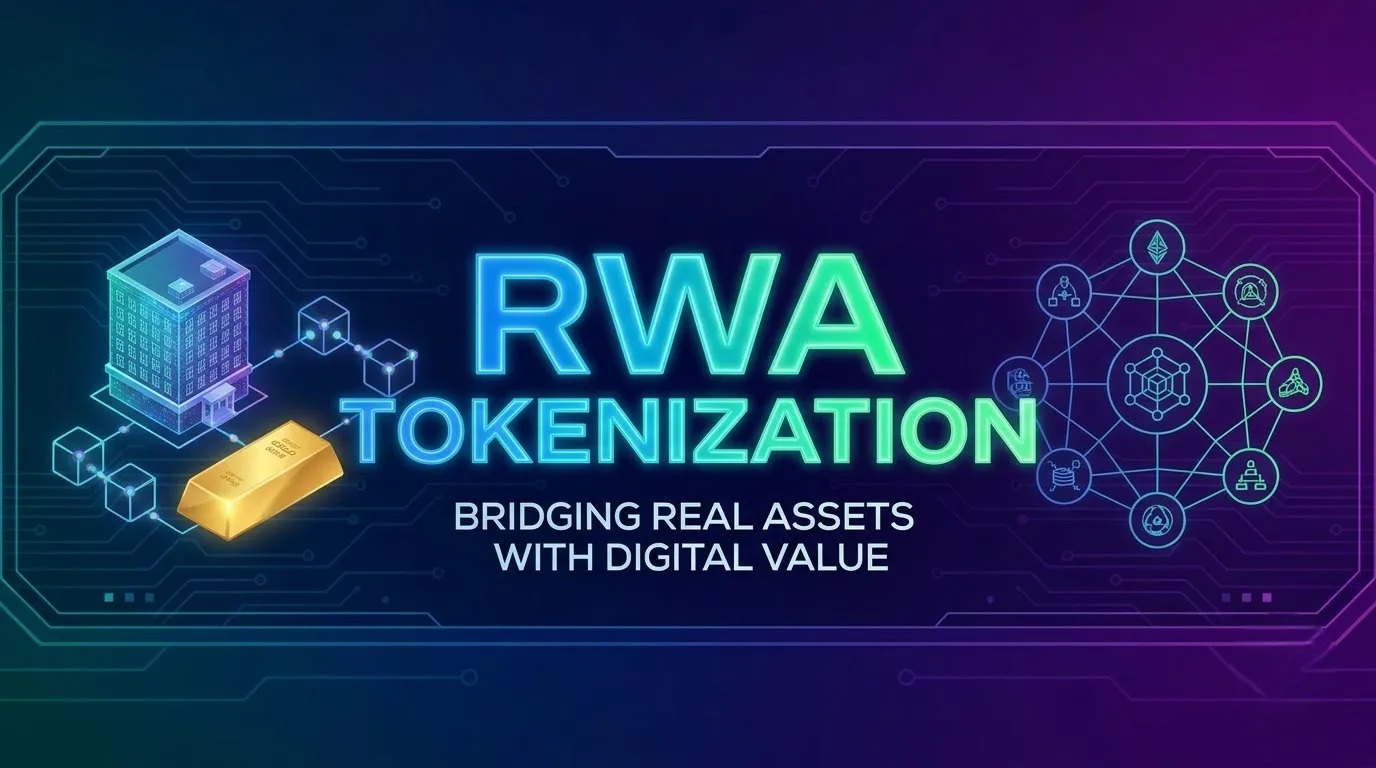
Real-world asset (RWA) tokenization is changing how traditionally illiquid assets such as real estate, private credit, commodities, bonds, and funds can be represented and transferred on blockchain networks. Instead of treating an asset as a static digital record, tokenization creates blockchain-based representations that can carry ownership, economic rights, transfer restrictions, and other conditions.
At the center of this process are smart contracts. They determine how tokens are issued, transferred, redeemed, restricted, and sometimes even frozen. However, developing smart contracts for RWAs is considerably more demanding than creating a conventional cryptocurrency token. RWA contracts must connect blockchain logic with legal ownership, investor eligibility, compliance requirements, asset verification, and operational controls.
This makes smart contract architecture one of the most important components of any RWA tokenization platform.
What Are RWA Tokenization Smart Contracts?
RWA tokenization smart contracts are blockchain programs designed to manage tokens representing claims, ownership interests, or economic rights associated with real-world assets.
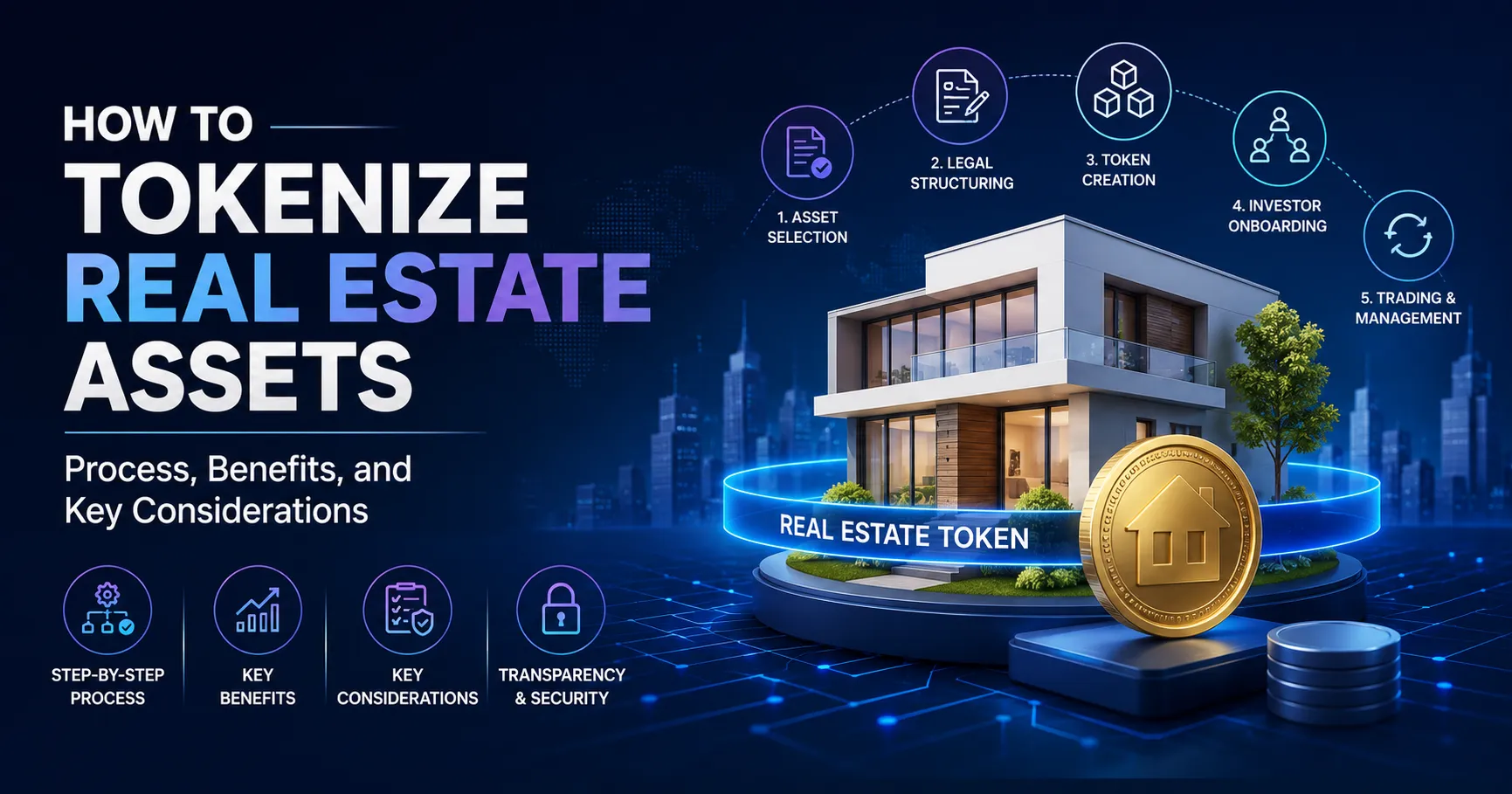
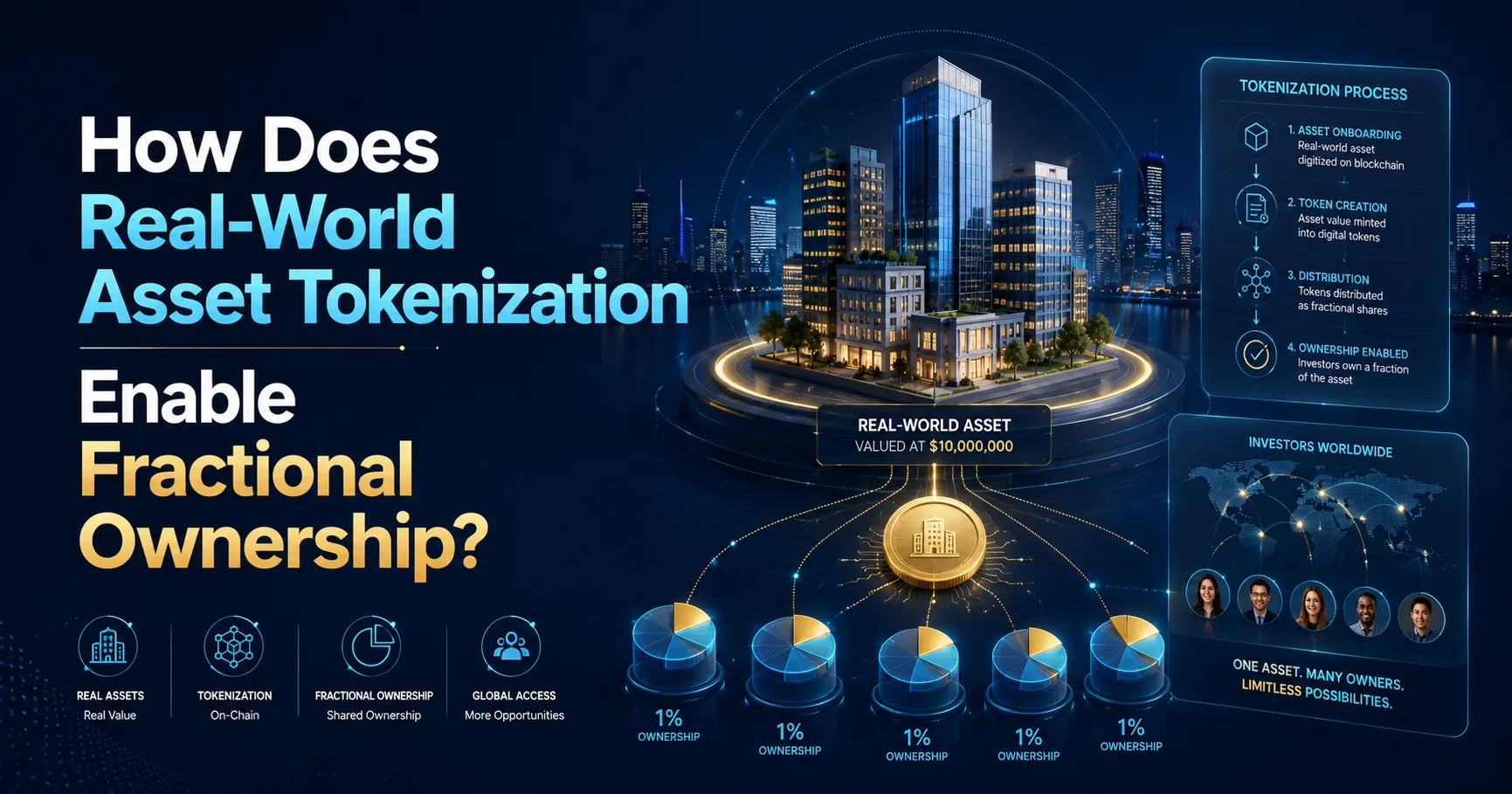
For example, suppose a company wants to tokenize a commercial property worth $10 million. Rather than creating a token that simply represents a number on a blockchain, the system may issue 1 million tokens, with each token representing a defined fractional interest in the investment structure. The smart contract can control who is permitted to hold those tokens, how transfers occur, how tokens are minted or burned, and what happens when an investor exits.
The important distinction is that blockchain ownership does not automatically create legal ownership of an off-chain asset. The legal structure, issuer, custodian, investment vehicle, contractual agreements, and applicable regulations must establish that relationship. Ethereum's security-token proposals have specifically recognized the importance of connecting tokens with legal documentation and off-chain entities.
Therefore, RWA smart contracts should be designed as part of a broader legal and technical architecture rather than as isolated token code.
Key Components of an RWA Tokenization Smart Contract
1. Token Issuance and Asset Representation
The first component is the token contract itself. It defines the digital representation of the underlying asset and establishes the rules governing supply.
Depending on the asset and business model, developers may use a fungible token model for fractional ownership or other token structures when individual assets need distinct identities. The choice should be driven by the economic and legal characteristics of the asset rather than simply by technical convenience.
The issuance mechanism should also specify who can mint tokens, under what conditions minting is permitted, and whether supply can ever increase after the initial offering.
For example, a real estate tokenization platform might allow a regulated issuer to mint tokens only after the underlying property has been legally transferred to an appropriate holding structure. This creates a clear connection between the off-chain asset and its on-chain representation.
2. Identity and Investor Eligibility
One of the biggest differences between conventional crypto tokens and many RWA tokens is the importance of identity.
A public cryptocurrency can generally be transferred between blockchain addresses without knowing the identity of the participants. Tokenized securities, private funds, real estate investments, and other regulated assets may require KYC, AML screening, investor accreditation, geographic restrictions, holding periods, or other eligibility checks.
Consequently, an RWA smart contract may need a compliance layer that determines whether an address is authorized to receive or transfer tokens.
ERC-3643 is an example of a permissioned token architecture specifically designed for this environment. Its framework combines token functionality with identity and compliance mechanisms so that eligibility rules can be enforced while operating on EVM-compatible blockchains. The project describes ERC-3643 as a standard for issuing, managing, and transferring permissioned tokens.
The practical benefit is that compliance becomes part of the transaction logic rather than relying entirely on manual intervention.
3. Transfer Restrictions
Transfer logic is another critical component.
In a traditional ERC-20 token, the basic assumption is that an owner can transfer tokens to another compatible address. RWA tokens may require much more sophisticated rules.
A smart contract might need to verify:
- Whether the recipient has completed KYC
- Whether both parties are eligible investors
- Whether a lock-up period has expired
- Whether a transfer violates jurisdictional restrictions
- Whether the investor has exceeded an ownership limit
- Whether the asset is currently frozen or suspended
For example, if tokens represent shares in a private real estate fund with a 12-month holding period, the contract should prevent an investor from transferring those tokens before the permitted date unless an authorized exception exists.
This is where permissioned token standards and compliance modules become particularly valuable.
4. Role-Based Access Control
RWA systems normally have several operational participants rather than a single administrator. There may be an issuer, compliance officer, custodian, token administrator, auditor, emergency operator, and governance authority.
Giving every administrative function to one wallet creates a major security and operational risk.
Role-based access control allows different accounts to perform only the functions they are authorized to execute. OpenZeppelin's current documentation describes AccessControl for role-based permissions and AccessManager for coordinating permissions across multiple contracts.
For example, a system could separate:
- Issuer role: authorized to create or redeem tokens
- Compliance role: manages investor eligibility
- Operations role: performs approved administrative actions
- Emergency role: can pause transactions
- Governance role: approves major configuration changes
For high-value RWA systems, privileged accounts should also be protected using multisig wallets and carefully controlled administrative procedures.
5. Redemption and Burning Mechanisms
Tokenization is not complete simply because tokens have been issued. Investors also need a clearly defined path for redemption.
A redemption function can allow eligible token holders to return tokens in exchange for the underlying economic value, subject to the terms of the investment structure.
When tokens are redeemed, the corresponding tokens should normally be burned or otherwise removed from circulation. This helps maintain consistency between the outstanding token supply and the underlying asset or investment position.
Consider a tokenized short-term debt instrument. When the instrument matures, investors may redeem their tokens for principal and applicable returns. The smart contract needs to enforce the redemption rules and prevent the same claim from being redeemed multiple times.
6. Oracles and Off-Chain Data
Blockchain networks cannot independently know whether a property was sold, whether a bond matured, or whether an asset reserve still exists. These facts originate outside the blockchain.
Oracles therefore become an important part of sophisticated RWA architectures.
An oracle can provide information such as asset valuations, reserve status, interest rates, market prices, or other verified external data. Chainlink, for example, provides Proof of Reserve infrastructure that can connect reserve verification with token minting and other on-chain actions. Its documentation describes mechanisms for using verified reserve information to prevent the creation of inadequately backed tokens.
However, developers must remember that an oracle introduces another trust and security boundary. Poor-quality data sources, compromised oracle infrastructure, delayed updates, or incorrect assumptions about external data can create serious risks.
Security Requirements for RWA Smart Contracts
Security should be considered from the architecture stage rather than added after development.
Reentrancy and Transaction Safety
Functions involving transfers, redemptions, payments, and external contract calls should be carefully designed to prevent reentrancy and unexpected state changes. Established security patterns and audited libraries can reduce common implementation mistakes.
OpenZeppelin provides security utilities such as ReentrancyGuard and Pausable specifically for protecting contract functionality and responding to incidents.
Emergency Pause Mechanism
RWA platforms often need the ability to temporarily stop transfers, minting, or redemptions when a serious issue is detected.
A pause function can provide an emergency response mechanism while developers investigate an exploit or operational problem. OpenZeppelin's token modules support pausable token functionality, although developers must ensure that pause and unpause functions themselves are properly access-controlled.
The pause authority should not simply be a privately controlled wallet with unlimited power. Multisig protection, governance procedures, and clearly documented emergency policies can significantly improve operational security.
Upgradeability and Governance
RWA projects may need to update contracts when regulations, business requirements, or technical dependencies change. Upgradeable contracts can provide this flexibility, but upgradeability also creates an administrative risk.
If a compromised administrator can arbitrarily replace implementation logic, the security of the entire token ecosystem may effectively depend on that administrator.
A safer architecture can combine controlled upgrade mechanisms with multisig approval, time delays, transparent governance, and clearly documented upgrade procedures.
Supply and Reserve Integrity
The token supply should accurately correspond to the underlying asset or investment structure.
Developers should define strict minting conditions and ensure that unauthorized accounts cannot create additional tokens. Where appropriate, reserve verification or independent asset attestations can strengthen confidence in the relationship between on-chain supply and off-chain assets.
This is particularly important for tokenized funds, commodities, stable-value instruments, and other assets where overissuance could create direct financial losses.
A Practical Development Process
Developing an RWA smart contract should begin with requirements rather than code.
First, the project team should define the asset, legal ownership structure, investor rights, jurisdictions, compliance obligations, redemption model, and lifecycle of the investment.
Next, developers can design the token architecture, identity layer, compliance engine, oracle infrastructure, administrative roles, and integration interfaces.
The contracts should then be developed using established standards and security-tested libraries where appropriate. Extensive unit testing, integration testing, fuzz testing, and adversarial testing should follow.
Before deployment, an independent smart contract audit is highly advisable. The audit should examine not only conventional vulnerabilities but also business-logic failures, access-control mistakes, incorrect token supply assumptions, oracle manipulation, upgrade risks, and compliance bypasses.
Finally, deployment should be treated as a controlled operational process. Contract addresses, administrator roles, upgrade permissions, emergency procedures, and monitoring systems should all be documented and secured.
Real-World Example: Tokenizing a Commercial Property
Consider a $20 million commercial property placed into a legally structured investment vehicle. The issuer wants to distribute fractional interests to eligible investors.
The system could use a permissioned token contract where each investor must first pass identity and compliance checks. Once approved, the investor's blockchain address becomes eligible to receive tokens.
The token contract controls issuance and transfers, while an administrative layer manages approved roles. Rental income could be distributed through a separate payment mechanism, while property valuation data could be supplied through trusted off-chain data infrastructure.
If the property is sold, the investment vehicle can initiate a redemption process according to the legal terms. Tokens can then be burned as investors receive their corresponding proceeds.
This example demonstrates why RWA tokenization is more complex than simply deploying an ERC-20 contract. The smart contract has to reflect an entire asset lifecycle.
Why Security and Compliance Must Be Designed Together
The most important lesson in RWA tokenization is that technical security and regulatory compliance cannot be treated as separate concerns.
A contract can be technically secure against reentrancy yet still fail because unauthorized investors can acquire the token. Conversely, a highly restricted token can still be vulnerable if its administrator privileges are compromised.
Successful RWA infrastructure therefore combines secure coding practices, identity verification, permission management, asset verification, legal documentation, monitoring, and governance.
For businesses planning such systems, experienced RWA tokenization development services can help translate the asset's legal and operational requirements into an appropriate blockchain architecture. Likewise, professional RWA tokenization services can cover areas ranging from token design and smart contract development to compliance integration, testing, auditing, and deployment.
Conclusion
RWA tokenization smart contracts are becoming a foundational technology for bringing traditional assets onto blockchain networks, but their development requires much more than creating a digital token. A robust architecture must address issuance, investor identity, transfer restrictions, redemption, access control, oracle data, supply integrity, emergency response, and upgrade governance while remaining aligned with the underlying legal structure. Businesses entering this space should prioritize security and compliance from the beginning and work with experienced blockchain professionals rather than treating smart contracts as a standalone development task. Blockchain App Factory provides best RWA tokenization services, helping businesses build secure and scalable tokenization solutions designed around their asset, business model, and operational requirements.
FAQs
1. What is an RWA tokenization smart contract?
It is a blockchain-based program that manages tokens representing ownership, claims, or economic rights connected to real-world assets.
2. Why do RWA tokens need compliance controls?
Many tokenized assets may be subject to securities, KYC, AML, investor eligibility, and jurisdictional requirements. Compliance controls help restrict participation and transfers accordingly.
3. Which token standard can be used for RWA tokenization?
The appropriate standard depends on the asset and requirements. Permissioned standards such as ERC-3643 can be suitable for regulated tokenized assets because they support identity and compliance mechanisms.
4. Why are oracles important for RWA projects?
Oracles can bring verified off-chain information, such as asset values or reserve data, onto blockchain networks so smart contracts can respond to real-world conditions.
5. Is a smart contract audit necessary for RWA tokenization?
Yes. An independent audit can identify vulnerabilities, access-control weaknesses, logic errors, and other risks before valuable assets and investor funds depend on the contracts.


























Sign in to leave a comment.