
Real estate has traditionally been viewed as a valuable but relatively illiquid asset class. Buying a property often requires substantial capital, extensive documentation, legal verification, intermediaries, and long settlement periods. Even after purchasing an asset, selling it can take weeks or months. Real estate tokenization is emerging as a way to address some of these limitations by representing ownership or economic rights in a property through blockchain-based tokens.
Instead of treating a property as a single investment that must be purchased by one buyer or a small group of investors, tokenization can divide the economic interest into digital units. These tokens can potentially make fractional participation more accessible, automate certain processes through smart contracts, and create more efficient systems for managing ownership records and transactions.
However, tokenizing real estate is not simply a matter of putting property details on a blockchain and issuing tokens. A successful project requires legal structuring, asset verification, regulatory analysis, smart-contract development, investor compliance, custody arrangements, and an appropriate secondary-market strategy. This article explains how the process works, the benefits it can offer, and the most important considerations businesses and investors should understand.
What Is Real Estate Tokenization?
Real estate tokenization is the process of converting ownership interests, economic rights, or claims associated with a real-world property into blockchain-based digital tokens. Depending on the legal structure, a token may represent fractional ownership in an entity that owns the property, a right to a portion of rental income, debt secured by real estate, or another legally defined economic interest.
For example, imagine a commercial property valued at $10 million. Rather than requiring one investor to provide the entire amount, a project could establish a legally compliant ownership structure and issue 100,000 tokens representing defined interests in that structure. An investor could then acquire a smaller number of tokens, subject to applicable securities and financial regulations.
The important distinction is that the blockchain token itself does not automatically create legal ownership. The legal agreement between the token holder, issuing entity, property owner, and other participants determines what rights the token represents. Blockchain provides the infrastructure for recording, transferring, and managing those rights, while the legal framework gives them enforceability.
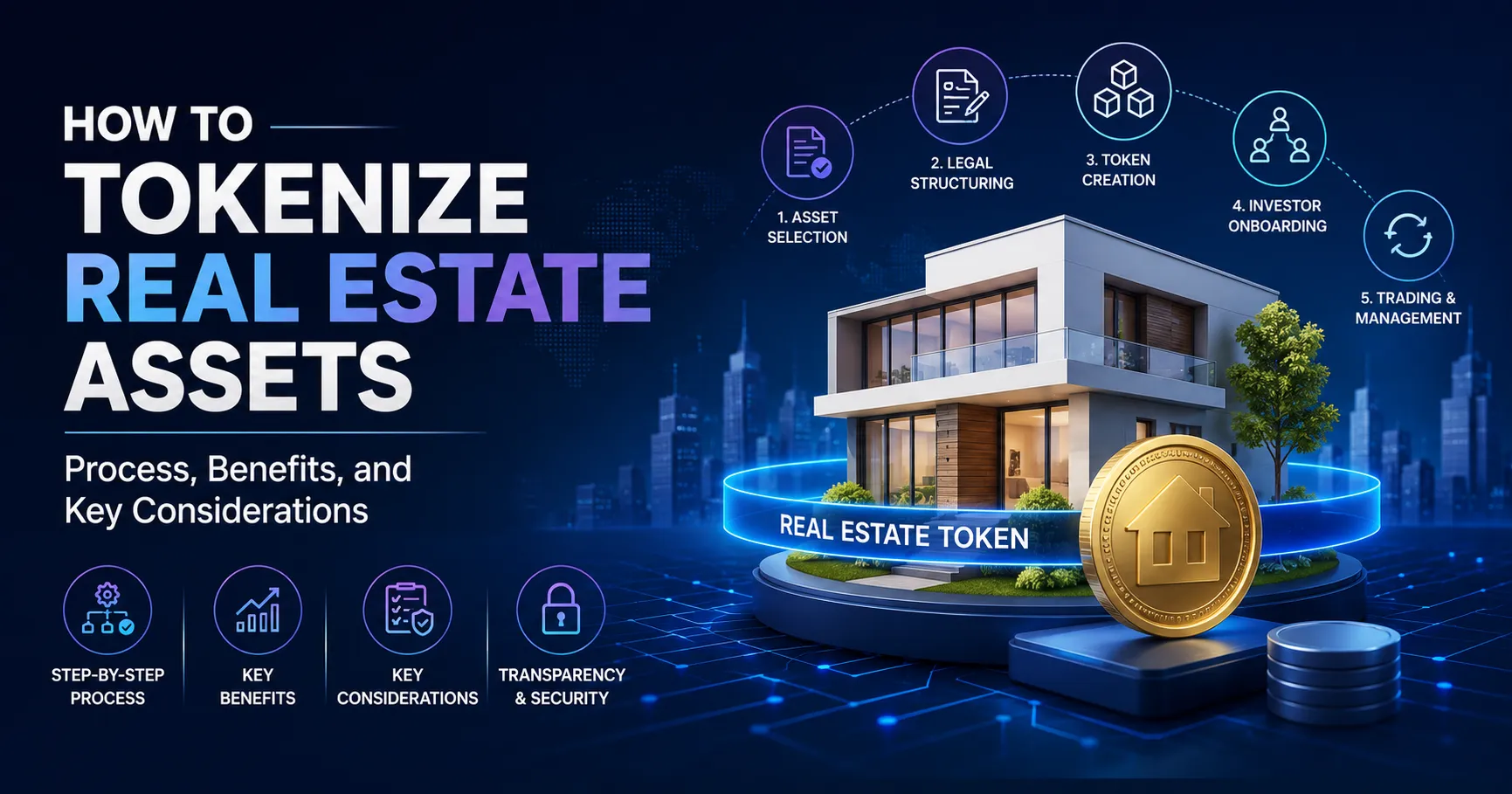
How to Tokenize Real Estate Assets: Step-by-Step Process
1. Select and Evaluate the Real Estate Asset
The process begins with choosing a suitable property. This could include residential developments, commercial buildings, hotels, industrial facilities, warehouses, land, or income-generating properties.
Before tokenization, the asset should undergo comprehensive due diligence. This typically includes reviewing the property's title, valuation, ownership history, leases, mortgages, taxes, zoning requirements, environmental conditions, and existing liabilities.
A professional valuation is particularly important because the token issuance needs to be connected to a credible underlying asset or economic interest. Investors need sufficient information to understand what they are buying and what risks they are assuming.
2. Establish the Legal and Ownership Structure
This is one of the most important stages of the entire process. The project needs to determine exactly what the tokens represent and which legal entity will own or control the property.
A common structure involves creating a special-purpose vehicle (SPV) that owns the real estate. Investors acquire tokens representing shares, membership interests, beneficial interests, or other legally defined rights in the SPV.
The legal structure must also consider the jurisdiction in which the property is located, where investors reside, applicable securities laws, tax rules, investor eligibility requirements, transfer restrictions, and reporting obligations.
This stage should involve qualified legal and financial professionals because tokenization does not remove existing real estate or securities regulations.
3. Define the Token Economics
Once the legal structure is established, the project determines how the token will function economically.
Important decisions include the total token supply, price per token, ownership percentage represented by each token, distribution of rental income, voting rights, redemption mechanisms, transfer restrictions, and potential fees.
For instance, if a property-backed structure is valued at $5 million and 500,000 tokens are issued, each token could initially represent a $10 economic interest. However, the actual rights attached to each token depend entirely on the project's legal and financial documentation.
The token model should be designed around the underlying asset rather than simply maximizing the number of tokens issued. Clear economics can help investors understand how rental income, appreciation, expenses, and potential losses are handled.
4. Conduct Compliance and Investor Verification
Real estate tokenization often involves financial regulations because certain token structures may qualify as securities or other regulated financial instruments.
Consequently, projects may need Know Your Customer (KYC) and Anti-Money Laundering (AML) procedures, investor accreditation or eligibility checks, transaction monitoring, geographic restrictions, and other compliance controls.
This is also where the project determines who can purchase the tokens and under what conditions they can be transferred. A permissioned token system may be appropriate when regulatory requirements demand restrictions on eligible investors.
5. Develop and Audit the Smart Contracts
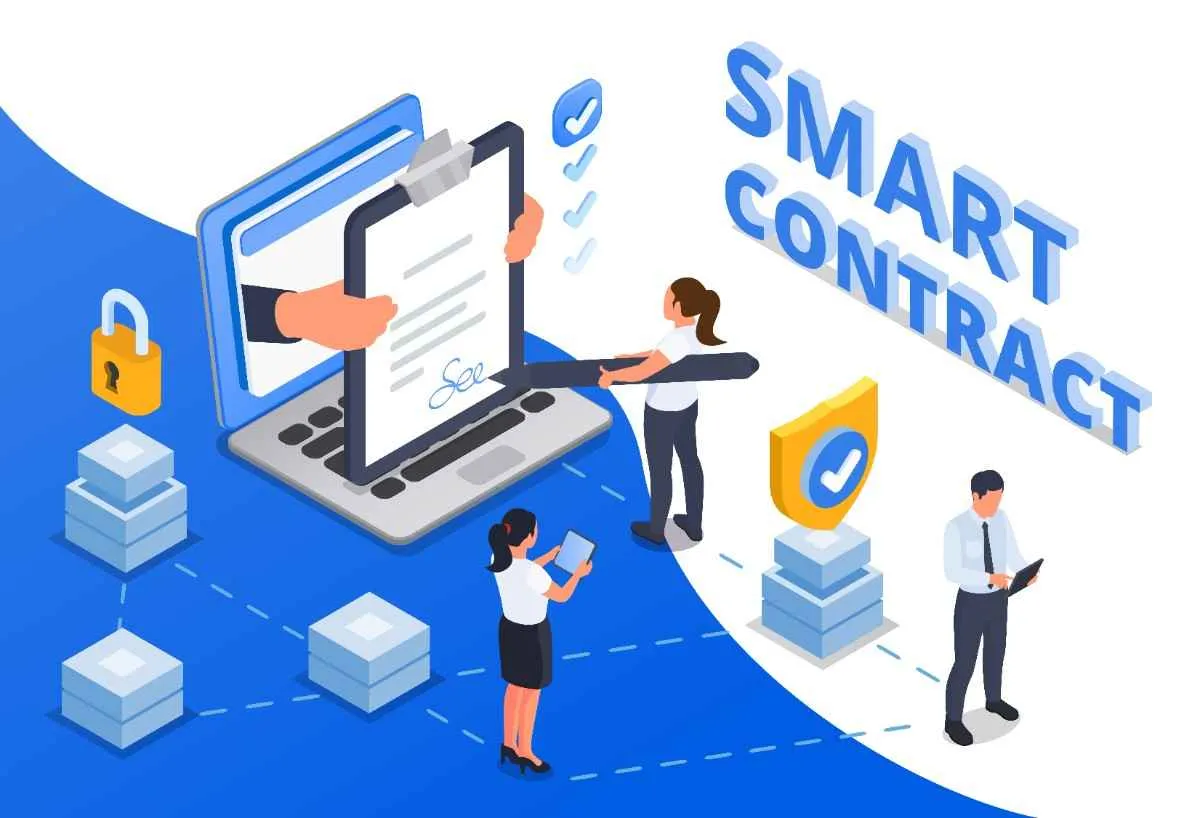
Smart contracts provide the technical foundation for issuing and managing the tokens. They can automate functions such as token issuance, transfers, ownership records, dividend or rental-income distributions, whitelisting, voting, and compliance-related restrictions.
Because smart contracts control valuable assets and investor transactions, security is critical. A coding error can potentially result in unauthorized transfers, incorrect balances, or loss of funds.
For this reason, independent smart-contract auditing and extensive testing should be treated as core parts of development rather than optional additions.
6. Issue and Distribute the Tokens
After legal, compliance, and technical preparations are completed, tokens can be issued according to the project's offering structure.
Distribution may take place through a dedicated platform or regulated marketplace. Investors generally complete onboarding and verification before purchasing tokens, depending on the applicable regulatory framework.
The platform should provide clear information about the underlying property, valuation, ownership structure, expected income, fees, risks, token rights, and transfer restrictions.
7. Manage the Property and Tokenized Ownership
Tokenization does not eliminate the need for traditional property management. The underlying property still needs to be maintained, leased, insured, taxed, and managed.
The tokenization platform can, however, provide a digital layer for tracking investor interests and distributing relevant financial information. If the legal and technical structure supports it, rental income can be distributed to eligible token holders according to predefined rules.
Over time, investors may also be able to transfer their tokens through compliant secondary markets, potentially improving liquidity compared with conventional private real estate investments.
Key Benefits of Real Estate Tokenization
Fractional Ownership
One of the most significant advantages is fractional participation. Tokenization can divide a large real estate investment into smaller units, potentially reducing the capital required to participate.
This does not automatically make every property accessible to every investor, because regulations and minimum investment requirements may still apply. Nevertheless, the underlying technology makes fractional ownership structures considerably easier to administer.
Greater Transparency
Blockchain networks can provide a shared and auditable record of token transactions. Depending on the blockchain and platform design, participants can verify ownership changes and transaction history without relying exclusively on manually maintained databases.
This transparency can reduce certain administrative inefficiencies, although it does not guarantee that information about the underlying physical property is accurate. Off-chain data still requires reliable verification.
Potentially Improved Liquidity
Traditional real estate is relatively illiquid. Tokenization can create infrastructure for transferring fractional interests more efficiently.
The crucial point is that tokenization alone does not create liquidity. A token needs an active and legally compliant marketplace, sufficient buyers and sellers, appropriate transfer rules, and investor demand. Without these elements, a tokenized property can remain difficult to sell.
Operational Efficiency
Smart contracts can automate portions of investor onboarding, ownership tracking, distributions, and transaction processing. This can reduce manual administrative work and potentially lower certain operational costs.
Global Investor Reach
Subject to applicable laws, tokenized real estate platforms can potentially reach investors across multiple markets. Digital infrastructure makes cross-border participation technically easier, although taxation, securities regulations, currency controls, and investor restrictions still need to be addressed.
Real-World Examples of Real Estate Tokenization
Several platforms have demonstrated how blockchain can be applied to property-related investments. RealT, for example, has used tokenization to represent interests connected with individual real estate properties, particularly in the U.S. residential market.
Blocksquare has developed infrastructure focused on tokenizing real estate and enabling property owners to create blockchain-based investment structures. Other major blockchain-finance companies, including Securitize and Centrifuge, have demonstrated broader applications of tokenization for real-world assets, showing how blockchain infrastructure can connect traditional assets with digital investment systems.
These examples illustrate an important trend: tokenization is moving beyond theoretical discussions and toward practical infrastructure for representing and administering real-world assets.
Key Considerations Before Tokenizing Real Estate
The biggest challenge is not the blockchain itself. It is creating a legally enforceable connection between the digital token and the underlying property.
Businesses should therefore pay particular attention to:
- Regulatory compliance: Determine whether the token qualifies as a security or another regulated financial instrument.
- Legal ownership: Clearly establish the entity that owns the property and the rights granted to token holders.
- Asset valuation: Use credible valuation methods and maintain appropriate property documentation.
- Smart-contract security: Conduct professional testing and independent audits before deployment.
- Investor protection: Provide transparent information about risks, fees, income, ownership rights, and exit mechanisms.
- Custody and security: Protect wallets, private keys, investor accounts, and sensitive data.
- Secondary-market strategy: Define how and where tokens can legally be transferred after issuance.
- Ongoing reporting: Maintain accurate records concerning the property, income, expenses, and investor interests.
A project that ignores these factors may have technically sophisticated tokens but still fail to deliver a reliable investment product.
The Future of Real Estate Tokenization
Real estate tokenization is likely to develop alongside the broader adoption of real-world asset infrastructure. As regulatory frameworks become clearer and institutional participants gain more experience with blockchain-based assets, tokenized investment structures could become increasingly integrated with traditional financial systems.
The most promising applications are likely to focus on assets where fractional participation, transparent ownership records, automated distributions, and efficient administration provide genuine economic value. Tokenization should therefore be viewed not merely as a way to put real estate on a blockchain, but as an opportunity to redesign parts of the investment and ownership process.
For businesses considering this approach, choosing experienced RWA tokenization development services can help connect the technical architecture with the legal, compliance, and operational requirements of the project. Professional RWA tokenization services can cover areas such as token architecture, smart-contract development, compliance features, platform development, asset management systems, and security testing.
Conclusion
Real estate tokenization can transform how property interests are structured, distributed, managed, and potentially traded by combining traditional real estate with blockchain infrastructure. Its strongest advantages include fractional ownership, greater transparency, automation, and the possibility of improved liquidity, but these benefits depend on sound legal structures, regulatory compliance, secure technology, reliable asset verification, and genuine market demand. Businesses planning to enter this space should therefore treat tokenization as a multidisciplinary financial and technology project rather than simply a blockchain development exercise. Blockchain App Factory provides best services for real estate and RWA tokenization, helping businesses develop secure and scalable solutions designed around their specific tokenization requirements.
FAQs
1. What is real estate tokenization?
Real estate tokenization is the process of representing ownership interests or economic rights connected to a property through blockchain-based digital tokens.
2. How does real estate tokenization work?
It generally involves selecting and valuing a property, establishing a legal ownership structure, designing token economics, completing compliance procedures, developing smart contracts, issuing tokens, and managing the tokenized asset.
3. Does tokenization make real estate more liquid?
It can potentially improve liquidity by enabling fractional interests to be transferred digitally, but actual liquidity depends on investor demand, marketplace infrastructure, and applicable regulations.
4. Is real estate tokenization legally regulated?
Yes. Depending on the structure and jurisdiction, tokenized real estate interests may be subject to securities, property, tax, AML, KYC, and other financial regulations.
5. Why are smart contracts important in real estate tokenization?
Smart contracts can automate token issuance, transfers, ownership records, distributions, and compliance rules while reducing reliance on manual processes.


























Sign in to leave a comment.