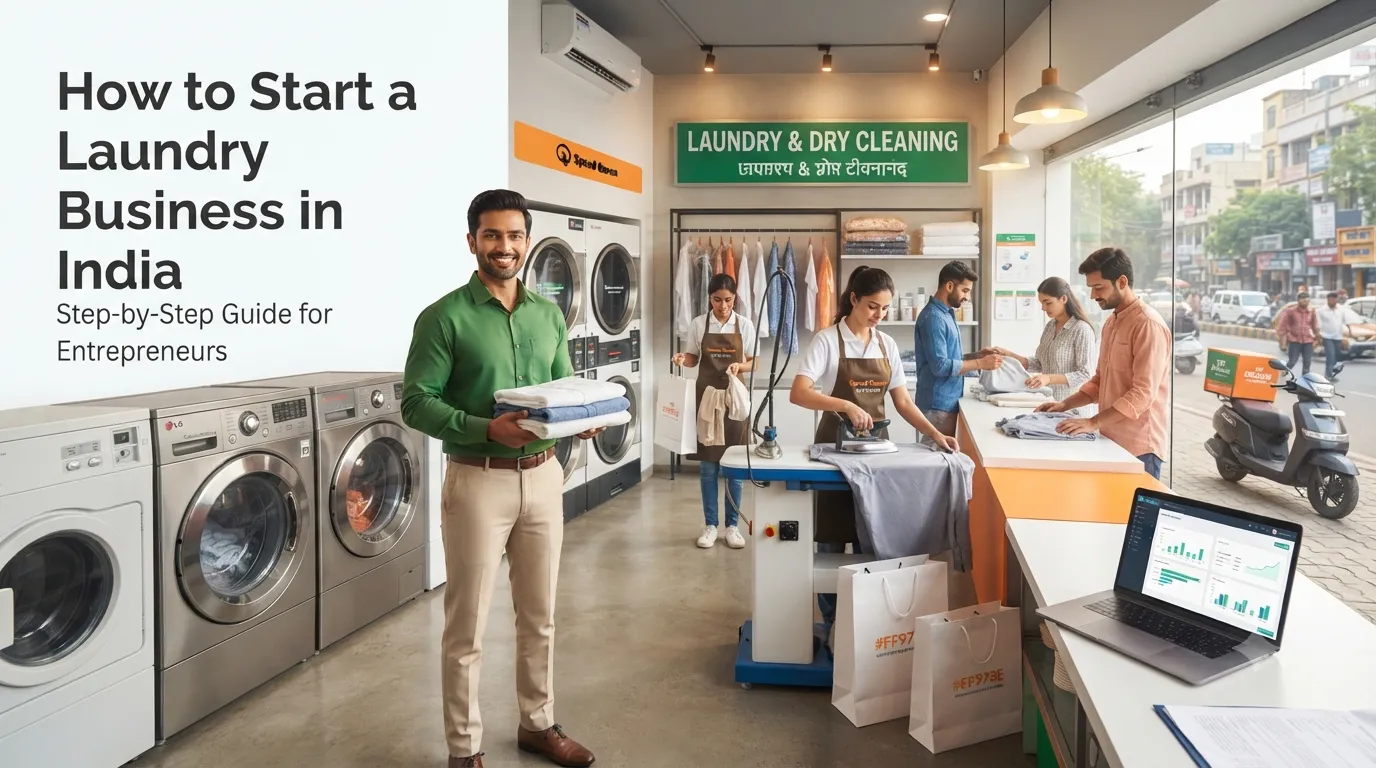

India's laundry industry is growing at a rapid pace, driven by rising urbanisation, busier lifestyles, and a growing demand for professional garment care. If you're wondering how to start a laundry business in India, the timing couldn't be better. An estimated 95–96% of the country's laundry market is still unorganised, which means there's massive room for new, well-run businesses to step in and capture loyal customers. This guide walks you through everything you need to know, from planning to launch.
Why Start a Laundry Business in India?
The laundry business in India is no longer just about neighbourhood dry cleaners. It's become a genuine growth sector, and here's why:
- Rising demand: More working professionals and dual-income families want their clothes washed, ironed, and delivered without the hassle.
- Recurring revenue: Laundry is a repeat-purchase service, meaning happy customers keep coming back month after month.
- Pickup and delivery boom: Doorstep service has become the norm rather than the exception, thanks to changing consumer habits.
- B2B opportunities: Apartments, offices, hotels, hospitals, and hostels all need reliable bulk laundry partners.
- Scalability: A single outlet can expand into multiple locations or a franchise network over time.
Step-by-Step Guide to Start a Laundry Business in India
1. Research Your Local Market
Before anything else, study your neighbourhood. Look at population density, income levels, competitor pricing, and unmet demand. A student-heavy locality has very different needs than a corporate business district.
2. Decide Your Business Model
You broadly have three options:
- Independent laundry business – full control, but you build everything from scratch.
- Laundry franchise – you get a tested system, brand recall, and ongoing support.
- Pickup & delivery model – lower setup costs, ideal for asset-light entrepreneurs targeting busy urban customers.
3. Prepare a Business Plan
A solid laundry business plan should outline your target customers, budget, pricing strategy, revenue goals, and marketing approach. This document becomes your roadmap and is also useful if you plan to approach lenders or investors later.
4. Estimate Your Investment
Laundry business investment typically covers shop setup, machinery, interiors, staff salaries, utilities, branding, and working capital. Costs vary widely depending on whether you're opening a small pickup-point or a full-service commercial laundry business.
5. Choose the Right Location
Look for residential clusters, apartment complexes, student hubs, and busy commercial zones. Footfall and visibility matter, but so does proximity to your target customer base for a laundry business opportunity like this.
6. Buy Quality Equipment
Invest in reliable washing machines, a dry cleaning machine (if you plan to offer that service), a hydro extractor, dryers, a steam iron, and a proper packing table. Cutting corners on equipment often leads to higher long-term costs.
7. Obtain Required Business Registrations
Depending on your state and turnover, you may need GST registration, Shop & Establishment registration, local municipal approvals, and a dedicated business bank account. It's worth consulting a local professional to make sure you're compliant from day one.
8. Hire and Train Staff
Train your team not just on garment handling and machine operation, but also on customer service, since that's often what determines repeat business.
9. Launch Marketing Campaigns
Set up a Google Business Profile, build a social media presence, use WhatsApp for order updates and promotions, distribute local flyers, and consider referral programs to reward loyal customers.
Independent Laundry Business vs Laundry Franchise
| Factor | Independent Business | Laundry Franchise India |
|---|---|---|
| Investment | Flexible, but you bear all setup costs | Structured, often with clearer cost breakdowns |
| Brand Recognition | Built from scratch | Comes with existing brand trust |
| Training | Self-sourced | Usually provided by the franchisor |
| Marketing Support | Fully your responsibility | Often shared or guided by the franchise |
| Technology | You choose and implement | Frequently pre-integrated |
| Risk | Higher, since it's untested | Comparatively lower, backed by a proven model |
| Growth Potential | Depends entirely on your execution | Easier to replicate across locations |
Common Mistakes to Avoid
- Choosing a location without proper footfall or demand research.
- Buying low-quality machines to save on upfront costs.
- Ignoring marketing and relying only on word of mouth.
- Providing inconsistent or poor customer service.
- Underestimating recurring operating costs like utilities and staff wages.
- Not using technology or software for order tracking and management.
Why Many Entrepreneurs Choose Washmart
For entrepreneurs who prefer a structured path rather than building everything independently, established laundry franchise networks can be worth exploring. Washmart, for instance, operates 350+ outlets across 122+ cities in India, with technology-enabled operations, professional training, marketing assistance, and a range of laundry and dry cleaning services. This kind of setup can appeal to first-time business owners who want operational support alongside their laundry business investment.
Conclusion
Starting a laundry business in India requires careful planning — from choosing the right business model and estimating investment accurately, to buying quality equipment and prioritising customer satisfaction. India's laundry services market was valued at approximately USD 2.7 billion in 2025 and is projected to reach around USD 4.1 billion by 2034, with 95–96% of the market still unorganised. That leaves significant room for both independent laundry startups and established franchise opportunities. Whichever path you choose, take the time to evaluate your options carefully before making an investment decision, and explore the models available so you can start your laundry business in India on solid footing.






















Sign in to leave a comment.