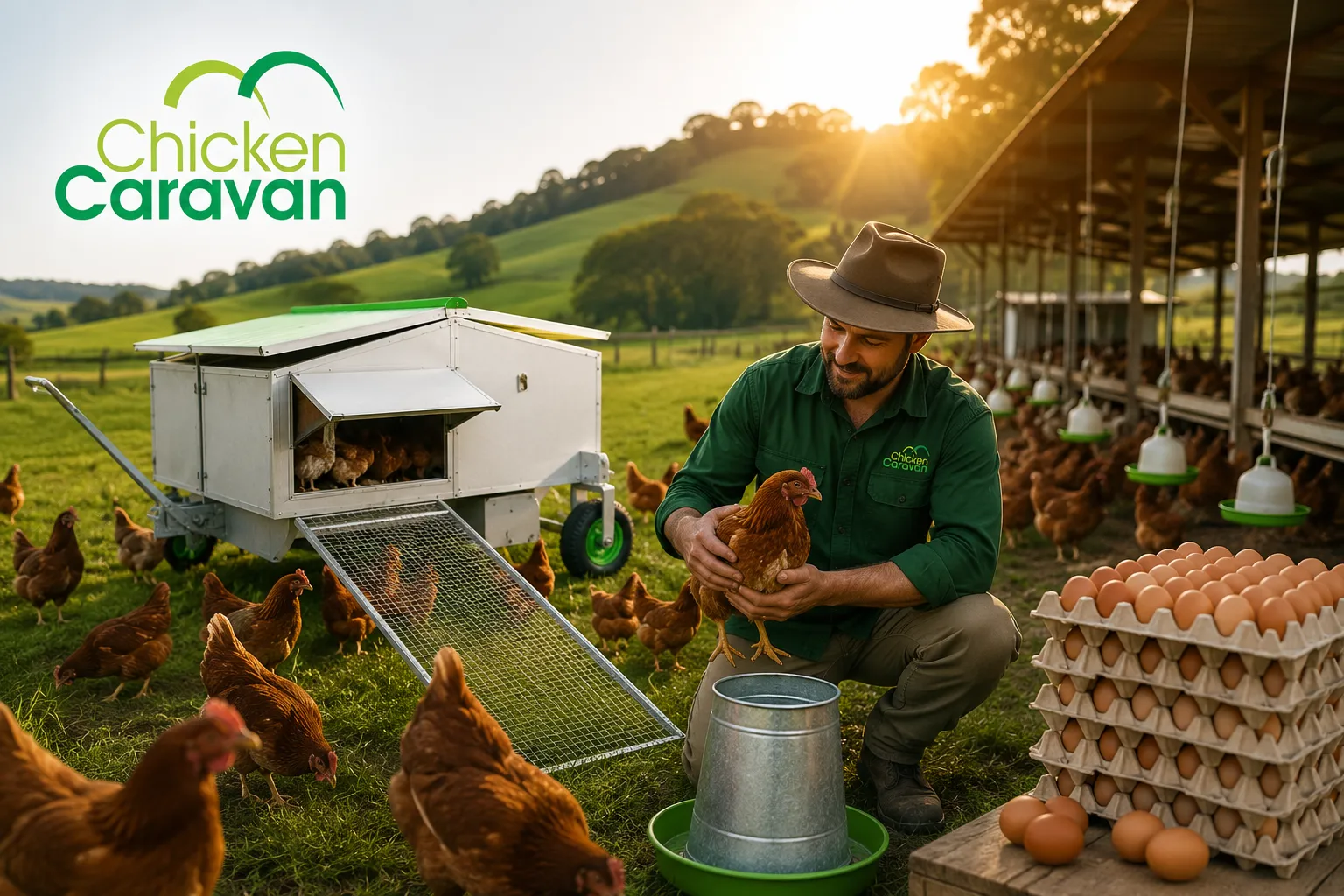

Australians eat more chicken than any other meat, and eggs remain one of the cheapest, most reliable protein sources on supermarket shelves. That steady demand is exactly why so many hobby farmers and rural landowners start looking seriously at commercial chicken farming as a way to turn a backyard flock into a genuine income stream.
But scaling up from a dozen hens to a licensed, profitable operation isn't just "buy more chickens." It involves navigating biosecurity rules, choosing the right production model, investing in the right infrastructure, and understanding your market before a single bird arrives. This guide walks through the practical steps involved in starting a chicken farming business in Australia, based on the regulatory frameworks and industry standards that actually govern the sector today.
Is Commercial Chicken Farming Right for You?
Before diving into logistics, it's worth being honest about what the industry actually looks like. Australian poultry production is dominated by a small number of large integrators (companies like Baiada and Ingham's, which contract growers to raise birds under strict specifications), alongside a growing number of independent free-range and pastured operators who sell directly to local markets, restaurants, and farm-gate customers.
Most newcomers enter through one of two paths:
- Contract growing, where you build sheds to an integrator's specifications and raise their birds for a set fee per bird or per kilogram
- Independent production, where you own the flock, set your own prices, and sell meat or eggs directly under your own brand
Each path has very different capital requirements, risk profiles, and day-to-day involvement, so it's worth researching both before committing to shed designs or finance.
Step 1: Choose Your Farming Model — Meat, Eggs, or Both
Your first real decision is what you're actually farming for.
Meat (broiler) production typically involves fast-growing breeds processed at around 5–7 weeks of age, with continuous batch cycling through sheds. It suits operators wanting frequent turnover and who have access to processing facilities or an abattoir relationship.
Egg farming in Australia is a longer-term commitment. Laying hens are typically productive from around 18 weeks through to 72–80 weeks of age, so the investment horizon and daily labour pattern (daily collection, grading, packing) look quite different from meat production.
Many small-to-medium operators run a hybrid model, particularly if they're supplying farmers markets or local retailers who want both fresh eggs and pasture-raised chicken. Whichever direction you choose, matching your production system to realistic local demand is one of the most important decisions in any poultry farming business, so it pays to talk to local butchers, greengrocers, and farmers market coordinators before finalising numbers.
Step 2: Understand Australia's Legal and Biosecurity Requirements
This is the step most new farmers underestimate, and it differs from state to state, so always confirm current requirements with your local council and state agriculture department before building anything.
Property Identification Code (PIC). In most states, once you keep more than 50–100 birds you're considered a commercial operation and are required to register your property and obtain a PIC, which links your farm to state biosecurity systems.In most states keeping more than 50 chickens is a commercial quantity and will require planning permission and a Property Identification Code In Queensland specifically, once you have 100 or more designated birds, you must register as a biosecurity entity and will be allocated a property identification code.
Food business licensing. If you're producing meat or eggs for sale, you'll generally need to register with your state's food authority. In NSW, for example, poultry producers growing more than 100 birds at any one time need to apply for a Food Authority licence, meet relevant standards, and prepare for periodic inspections or audits, while smaller producers still need to notify the authority of their business details even if a full licence isn't required.
Environmental approvals. Larger sheds can trigger environmental licensing thresholds. In South Australia, for instance, broiler farms with 13,500 square metres or more of shed space must hold an EPA licence, reflecting a risk-based approach where bigger operations face more scrutiny over waste, odour, and water management.
Animal welfare standards. All commercial producers, whether free-range or barn-raised, are expected to operate under the national poultry welfare framework, which applies to everyone responsible for the care and management of poultry, including commercial producers, free-range operators, and backyard poultry owners.
Free-range certification. If you intend to market eggs or meat as free-range, you'll need to meet independently audited standards. In Queensland, farms must comply with standards set by Free Range Egg and Poultry Australia (FREPA) to be certified as free range similar accreditation bodies operate in other states.
A useful first move is contacting your local council's planning department and your state Department of Primary Industries or Agriculture before you buy land or place an order for birds. Zoning rules, setback distances from neighbouring properties, and shed approval processes vary significantly by region.
Step 3: Plan Your Site, Housing, and Equipment
Once the regulatory picture is clear, site and infrastructure planning can begin in earnest.
Location factors to weigh up:
- Distance from residential zones (noise and odour buffers are often mandated)
- Access to reliable water and three-phase power for ventilation and lighting
- Drainage and slope, to manage litter and wastewater
- Proximity to processing facilities or transport routes if you're selling meat
Housing considerations. Shed design depends heavily on your chosen system conventional barn, free-range with outdoor access, or pastured/mobile housing. Whatever the system, ventilation, temperature control, and stocking density all directly affect bird health and welfare compliance, so these aren't areas to cut corners on.
Core equipment for a commercial setup typically includes:
- Housing and shed systems suited to your flock size and climate
- Automatic or semi-automatic feeders and drinkers to reduce daily labour and waste
- Predator-proof fencing, particularly important for free-range and pastured systems where foxes and birds of prey are a real risk
- Nesting boxes and egg collection systems for layer operations
- Egg grading, washing, and packing equipment if you're selling table eggs
- Backup power and climate control for extreme weather events
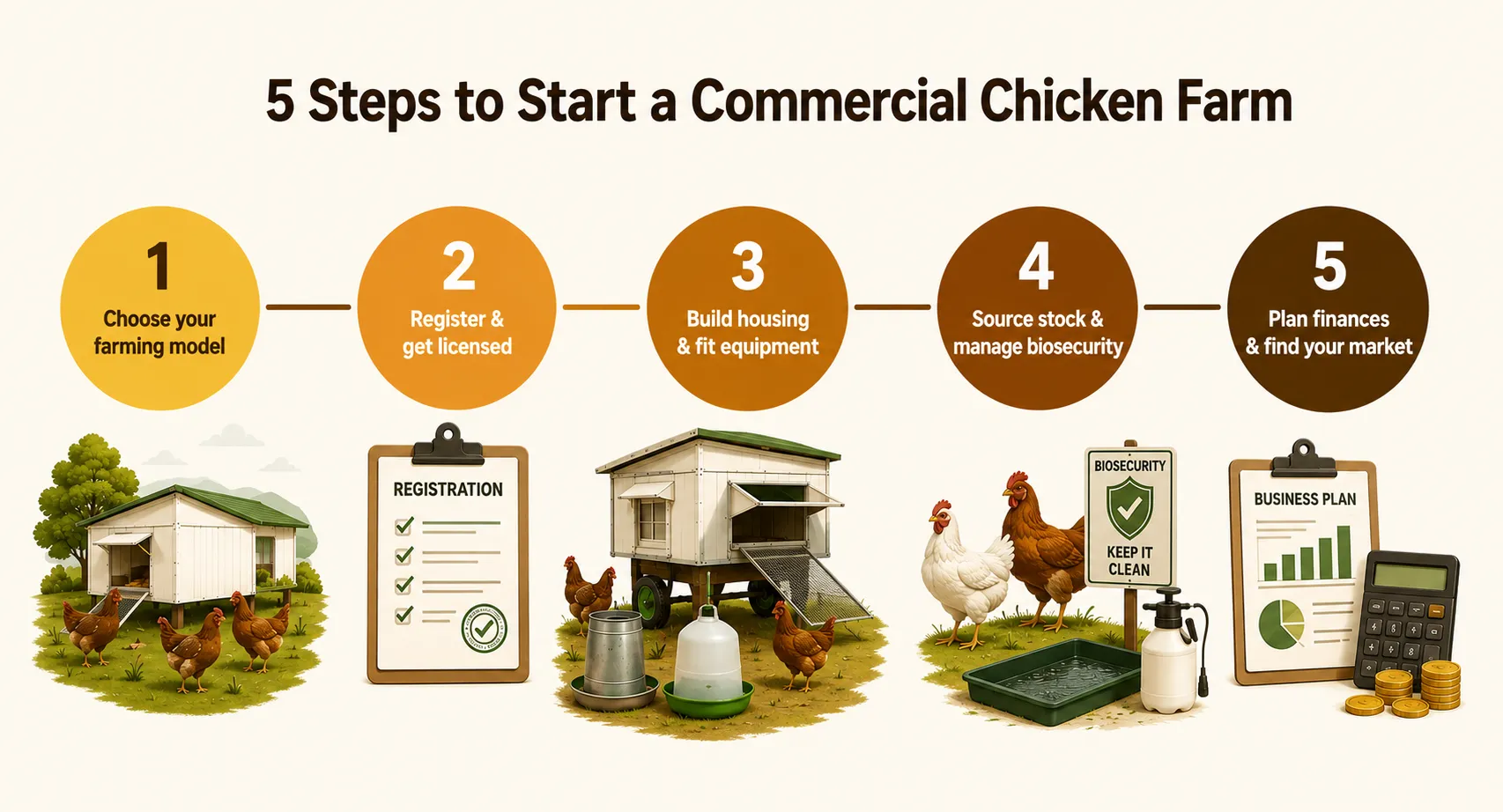
Step 4: Source Healthy Stock and Manage Biosecurity
Once your site is ready, sourcing stock from a reputable hatchery is critical — day-old chicks or point-of-lay pullets should come with health documentation and, ideally, vaccination records.
Ongoing biosecurity is non-negotiable, particularly given the periodic risk of avian influenza outbreaks in Australia. Sensible baseline practices include:
- Restricting visitor access to shed areas and requiring footwear changes or disinfection
- Keeping wild birds and rodents away from feed storage
- Quarantining any new birds before introducing them to an existing flock
- Maintaining clean water lines and rotating litter to reduce disease pressure
- Keeping accurate health, mortality, and treatment records, which most food authorities expect you to produce during inspections
A single disease outbreak can wipe out months of work and income, so this is an area where cutting costs almost always backfires.
Step 5: Plan Your Finances and Find Your Market
Commercial chicken farming requires more upfront capital than most people expect once you account for land, shed construction, equipment, stock, feed, and working capital to cover the first few production cycles before income starts flowing consistently.
Before committing funds, it's worth mapping out:
- Startup costs — land/lease, shed construction, fencing, feeders, drinkers, and initial stock
- Ongoing costs — feed (typically the largest recurring expense), power, water, labour, veterinary care, and licensing/inspection fees
- Revenue channels — contract growing payments, farm-gate sales, farmers markets, wholesale to butchers or grocers, or a mix of these
- Break-even timeline — particularly important for egg operations, where the payback period is longer than for broiler cycles
Talking to an agricultural business advisor or your state's rural finance office before finalising a business plan can help you stress-test assumptions around feed price volatility and seasonal demand, both of which can materially affect cash flow in the first year or two.
Common Mistakes New Poultry Farmers Make
- Underestimating biosecurity risk until an outbreak forces a costly, disruptive response
- Skipping local research on demand, leading to oversupply in areas already served by established producers
- Buying housing and equipment sized for "someday" rather than for current flock numbers, tying up capital unnecessarily
- Delaying licensing conversations with councils and food authorities until after infrastructure is already built, which can force expensive retrofits
- Underinvesting in predator protection, a frequent and preventable cause of stock losses in free-range and pastured systems
Final Thoughts
Starting a commercial chicken farming operation in Australia is a genuinely achievable goal for landowners and hobby farmers willing to do the groundwork but success depends far more on careful planning, compliance, and infrastructure decisions than on flock size alone. Get your licensing sorted early, choose a production model that matches real local demand, and invest properly in the systems that protect your birds and your income.
As your flock grows and your operation moves from hobby to commercial scale, having the right physical infrastructure sturdy housing, reliable feeders and drinkers, effective predator protection, and proper egg handling equipment becomes just as important as the paperwork. Businesses like Chicken Caravan, which supplies commercial poultry equipment across Australia, can be a useful resource when you reach the point of kitting out a farm built to last.


























Sign in to leave a comment.