

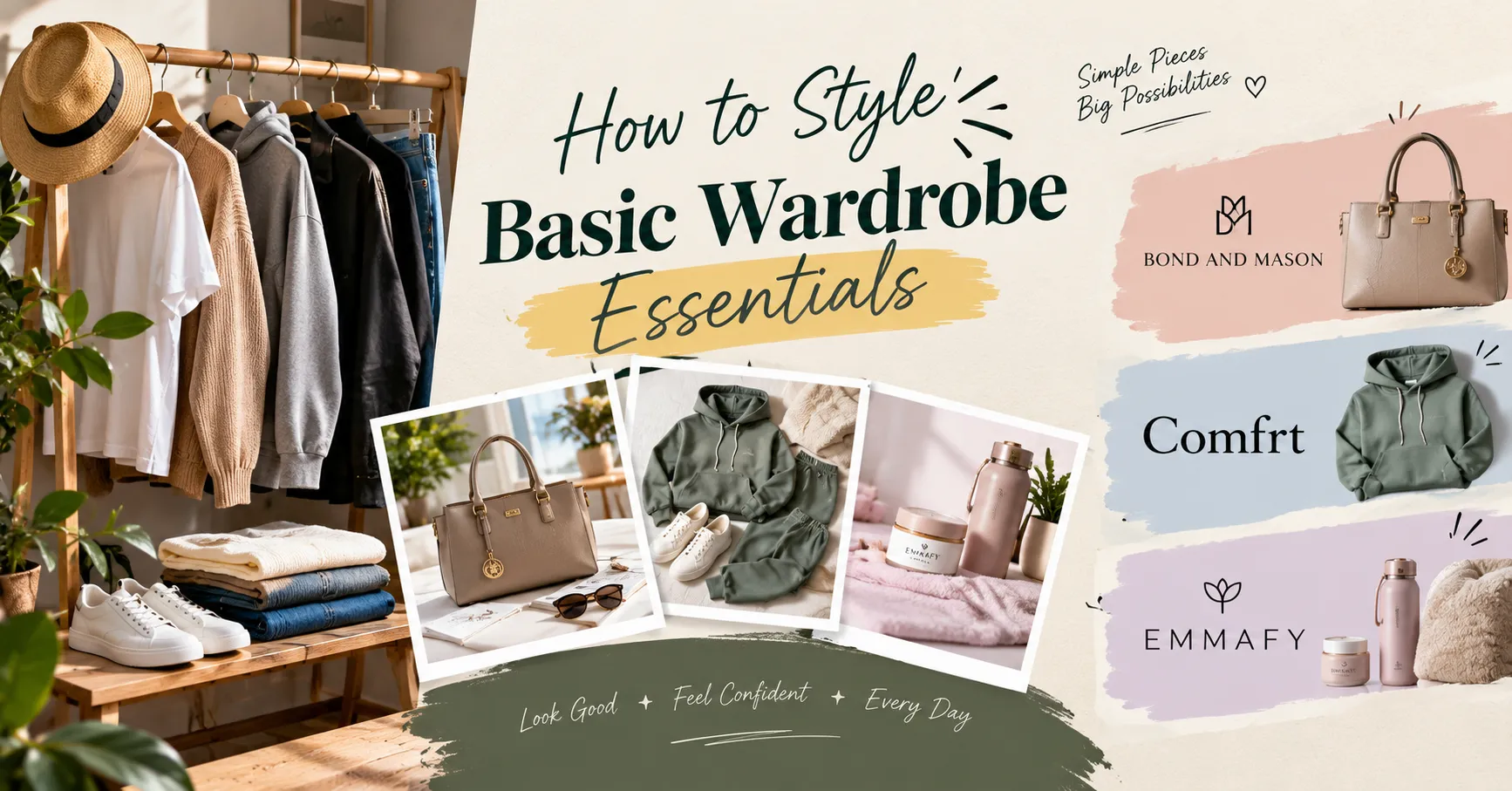
Most closets already hold what’s needed for good outfits: plain tees, jeans that fit, a hoodie, and a neutral jacket. The trouble is that basics don’t tell you how to wear them. Without a plan, they add up to the “grabbed whatever was clean” look.
This guide gives you a simple method for styling basics, outfit formulas you can copy, and a few notes on bags, accessories, and buying choices. Nothing here requires a new wardrobe.
Quick answer: Build every outfit from three decisions: a base that fits well, one point of contrast (texture, color, or shape), and one finishing detail such as a bag, belt, or jewelry. Keep the palette to two or three colors, and change only one element at a time when you want a different look.
Affiliate Disclosure: Some links in this article are affiliate links. If you purchase through these links, Weekend Smash may earn a commission at no additional cost to you.
What Counts as a Basic Wardrobe Essential?
A basic wardrobe essential is a simple, versatile garment with a classic design, usually in a neutral color. It works with many other pieces and suits more than one occasion.
For most people, that list includes:
- Plain tees and long-sleeve tops
- Jeans or trousers that fit well
- A hoodie or crewneck sweatshirt
- Comfortable pants such as sweatpants or joggers
- Knitwear, including a sweater or cardigan
- A structured layer, such as a blazer or overshirt
- A coat that suits your climate
- A bag that works with most outfits
Your list will shift with your life. A student, a remote worker, and someone with a dress-code office will not share the same essentials, and that’s fine. The styling method below works with whichever pieces you start with.
The Three-Part Formula for Styling Any Basic
Basics look flat when an outfit has no decision in it. This three-part formula makes sure each outfit has a few.
Start With Fit and Proportion
Fit does more than color or brand to make a basic look deliberate. The simplest rule is balance: if the top is roomy, pair it with a slimmer or straight-leg bottom. If the top is fitted, a wider bottom can work.
A few quick checks:
- Sleeves should end where you expect them to, not halfway down your hands by accident.
- Hems should hit at a consistent point on your hips or waist, or be tucked on purpose.
- A little structure somewhere, such as a collar, stiffer fabric, or clean hem, keeps relaxed pieces from looking shapeless.
Add One Point of Contrast
Contrast gives the eye something to settle on. Pick one kind, not all three:
- Texture: A ribbed knit over smooth cotton, or denim with a soft fleece layer.
- Color: Neutrals with one accent, such as cream, black, and a rust-colored bag.
- Shape: An oversized sweatshirt with straight, structured trousers.
An all-neutral outfit can look polished, but it needs at least some texture difference to avoid reading as flat.
Finish With One Detail
The finishing detail is what makes an outfit look chosen. It might be a bag, a belt, simple jewelry, a scarf, or clean shoes.
Choose one that stands out a bit, and keep the rest quiet. Three competing statement pieces cancel each other out.
How to Style Seven Everyday Basics
The Plain Tee
Direct answer: Tuck or half-tuck a plain tee into high-waisted jeans or trousers, or layer it under an open overshirt or blazer.
The tee’s fabric matters more than people expect. Thin, clingy fabric can look limp, while heavier cotton holds its shape and drapes more cleanly.
If the tee is cropped or slightly boxy, pair it with higher-waisted bottoms so the proportions stay balanced.
Jeans
Mid-wash and dark-wash jeans are the most flexible. A straight or relaxed leg is easy to dress up or down.
- Casual: Tee, sneakers, and a simple crossbody bag.
- Polished casual: Tucked knit, loafers or ankle boots, and a structured tote.
- Layered: Tee, overshirt, and a coat in a tone-on-tone palette.
For more outfit combinations, explore our guide to the best casual outfit ideas for everyday wear.
The Hoodie
A hoodie is the basic people most often style on autopilot, and also the one that benefits most from a little structure around it.
The easiest fix is to keep everything else clean: straight-leg jeans, simple sneakers, and a tidy bag.
If you’re shopping for hoodies and other comfort-focused basics, browse Comfrt's hoodies, sweatpants, and outerwear.
Comfrt is an online brand focused on soft, relaxed loungewear and casual clothing, including hoodies, sweatpants, tees, and layering pieces. Its designs lean cozy and casual rather than tailored.
That suits weekend and travel outfits well, but if your dress code is stricter, pair a hoodie with more structured pieces.
Sweatpants and Joggers
Sweatpants look put together when the top half carries the structure.
Try a tucked tee with an overshirt, a fitted long-sleeve under a coat, or a crisp collar under a sweater.
Clean sneakers or leather slip-ons keep the outfit from sliding into pajamas.
The common mistake is wearing a baggy top and baggy bottoms together without any shape or contrast. If both are oversized, at least change the color or texture between them.
Knitwear
A sweater or cardigan is the easiest way to add texture.
Wear a thin knit over a collared shirt, or drape a heavier one over a tee for a layered look.
Keep the colors close to your base so the texture does the work.
The Blazer or Structured Overshirt
A structured outer layer is the fastest way to make casual basics look intentional.
Throw a blazer over a plain tee and jeans, or an overshirt over a hoodie, and the outfit changes.
Choose one that fits through the shoulders, since that’s the hardest thing to fix later.
The Coat
Treat the coat as part of the outfit, not a cover for it.
A neutral coat in camel, charcoal, black, or navy works with almost everything.
If your outfits underneath are simple, a coat with some texture or shape adds interest without extra effort.
Accessories That Make Basics Look Intentional
A Bag That Matches the Mood of the Outfit
A structured tote or handbag reads polished; a slouchy or compact crossbody reads casual.
Matching the bag to the mood of the outfit does more than matching its color.
Choose a bag that suits your daily activities. A structured everyday bag works well for work, errands, or travel, while a compact crossbody suits relaxed outings.
Charms, Chains, and Compact Crossbodies
Sometimes the fastest way to change a basic outfit is to change the bag’s personality.
A chain strap or a small charm makes a plain bag feel more individual, and it costs less than buying a new bag.
Choose accessories that complement the outfit instead of competing with its main colors or textures.
Belts, Jewelry, and Shoes
These do the same job as a bag.
A simple belt defines the waist, a single piece of jewelry adds a focal point, and clean shoes make casual outfits look deliberate.
Choose one to be the standout and keep the others simple.
Easy Outfit Formulas You Can Copy
| Occasion | Base | Contrast | Finishing detail |
| Errands | Plain tee + straight jeans | Soft knit layer | Crossbody bag |
| Weekend | Hoodie + relaxed trousers | Structured jacket | Clean sneakers |
| Office casual | Tucked knit + dark jeans | Blazer | Structured tote |
| Travel | Sweatpants + fitted long-sleeve | Packable coat | Compact crossbody |
| Dinner out | Plain tee + tailored trousers | Blazer or overshirt | Simple jewelry |
| Cold day | Knit + straight jeans | Textured coat | Scarf or boots |
Common Mistakes When Styling Basics
Too many focal points: One statement piece is enough.
Ignoring fit: A well-fitted plain tee looks better than an ill-fitting patterned one.
- Matching everything exactly: Same-tone outfits need a texture difference to avoid looking flat.
- Skipping shoes and bags: A good base can be undone by an afterthought finish.
- Buying online without checking sizing: Compare the retailer’s size guide against a piece you already own.
- Buying for a trend instead of repeat wear: A basic earns its place by working with other pieces.
How to Choose Basics That Last
A few checks before buying:
- Fabric: Heavier, denser fabrics generally hold shape better. Thin fabrics may be fine for layering but can show wear sooner.
- Fit: Compare product measurements to your own, and use the retailer’s size or fit guide.
- Care: Read the clothing label before buying and make sure you’re willing to follow its care instructions.
- Returns: Policies vary by store and change over time. Read the current terms before checkout.
- Versatility: If a piece doesn’t work with at least three things you already own, wait.
A Quick Checklist Before You Leave the House
- Does the top and bottom balance in proportion?
- Is there one point of contrast?
- Are there no more than three colors?
- Is there one finishing detail?
- Do the shoes and bag match the mood of the outfit?
- Is anything wrinkled, pilled, or stretched out?
Frequently Asked Questions
What are the basic wardrobe essentials?
Plain tops, well-fitting jeans or trousers, a hoodie or sweater, comfortable pants, a structured layer like a blazer, a coat, and a versatile bag.
The exact list depends on your lifestyle and climate.
How do you make basic outfits look more interesting?
Add one point of contrast, such as texture, color, or shape, and one finishing detail such as a bag, belt, or jewelry.
Changing just one element is usually enough.
Can you wear a hoodie in a polished outfit?
Yes. Choose a clean, fitted hoodie, pair it with straight trousers or dark jeans, and add a structured layer or bag.
The hoodie stays casual, but the outfit looks planned.
How many colors should one outfit have?
Two or three is a reliable range for basics.
Neutrals plus one accent color keeps the look cohesive.
How do I know if clothes will fit when ordering online?
Compare the product’s measurements with a similar piece you own, read the retailer’s size guide, and check the return policy before buying.
What kind of bag goes with most casual outfits?
A medium-sized crossbody or an unstructured tote in a neutral color is the most flexible.
A structured bag in black, brown, or tan can dress up casual outfits.
Final Thoughts
Styling basics is mostly about making a few deliberate choices: balance the proportions, add one point of contrast, and finish with one detail.
Once that becomes a habit, the same few pieces can produce a lot of different outfits.
Start with what you already own, notice what’s missing, and add pieces slowly.
A well-chosen bag or layer often changes more than another top would.


















Sign in to leave a comment.