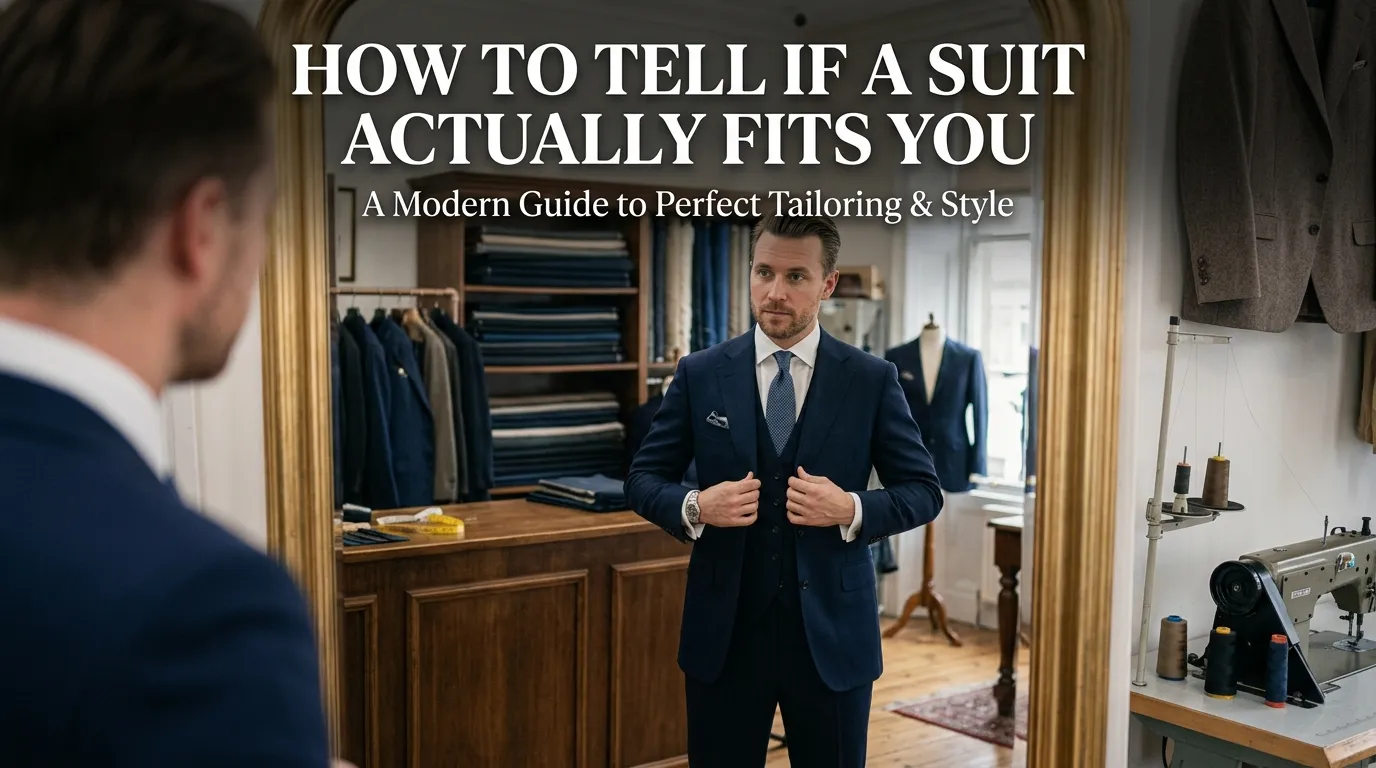

Most men have never been told exactly what a well-fitted suit is supposed to look like.
They know when something feels uncomfortable. They know when a jacket feels tight across the chest or when trousers pool at the ankle. But the specific, checkable signs of good fit the details a tailor or stylist would actually look for rarely get explained in plain terms.
That gap matters, especially with classic fit suits, which sit in a middle zone between slim and relaxed tailoring. A classic fit suit is supposed to have room without looking oversized, and structure without looking stiff. Getting that balance right is harder to judge than a slim fit, where "tight" is usually the obvious goal.
This guide walks through every part of the suit shoulders, chest, waist, sleeves, trousers, and length and explains exactly what correct fit looks like at each point. By the end, you'll be able to look at any suit, on yourself or someone else, and know within seconds whether it actually fits.
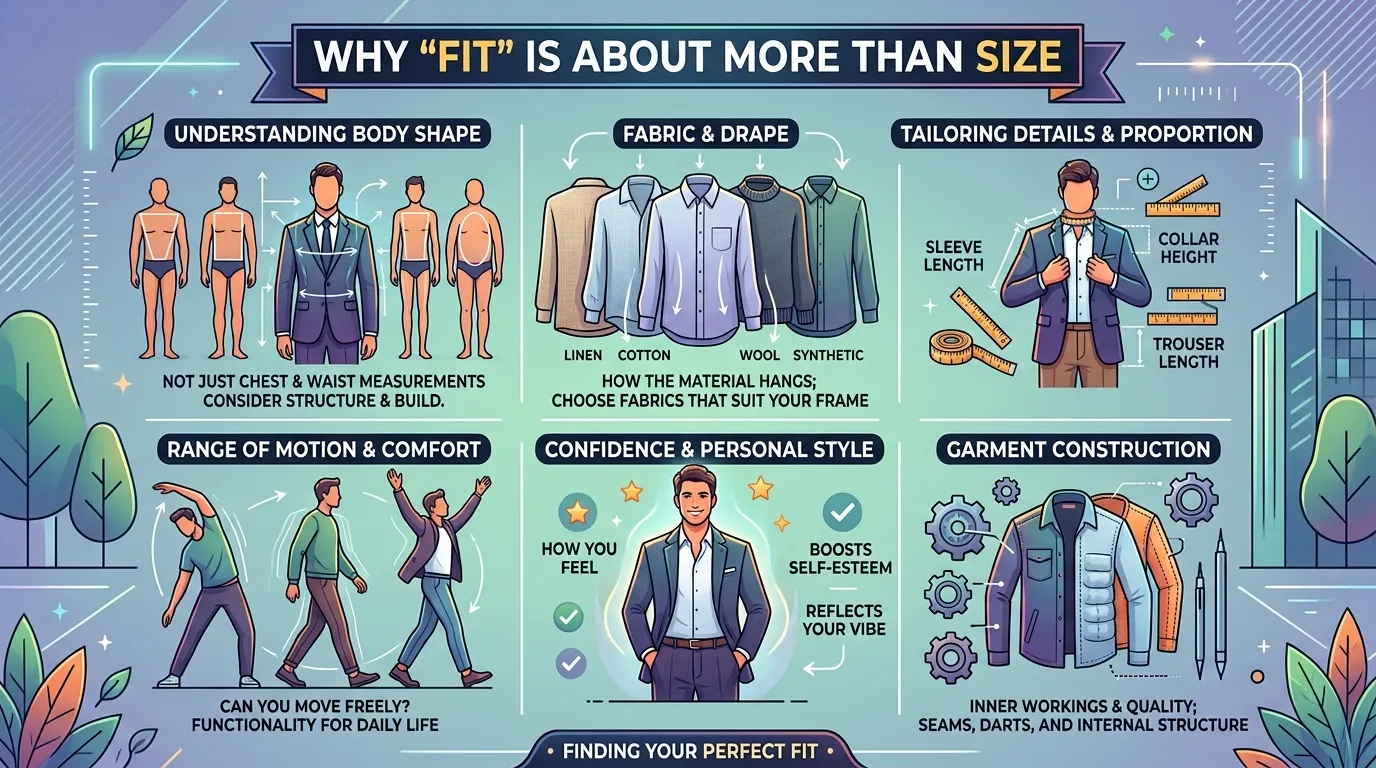
Why "Fit" Is About More Than Size
Buying the right size number doesn't guarantee a suit fits. Size gets you close. Fit is the specific, detailed way that garment interacts with your actual body.
Two men can both wear a "42 Regular" and end up with completely different results, because their shoulder width, arm length, and torso proportions differ even at the same chest measurement. This is why fit needs to be evaluated point by point rather than judged by the label on the tag.
Men's classic fit suits specifically are built with slightly more room through the chest and body than a slim fit, without the boxiness of a traditional relaxed cut. That extra room is intentional but it only reads as "classic" and not "ill-fitting" when the rest of the fit points check out.
The Shoulder Test: Where Everything Starts
If you check nothing else, check this. Shoulder fit is the single most important indicator of whether a suit is right for you and it's the one detail that cannot be fixed by a tailor after purchase.
What correct shoulder fit looks like: The seam where the sleeve meets the jacket body should sit exactly at the edge of your natural shoulder bone. Not before it, not past it.
Signs the shoulders are too big: The seam extends past your shoulder edge onto your upper arm. You'll often see a slight divot or dent in the fabric at the seam, and the shoulder will look like it's drooping rather than sitting structured.
Signs the shoulders are too small: The seam sits inside your natural shoulder line, pulling the fabric tight and creating visible strain lines radiating out from the seam, particularly when you move your arms.
If the shoulders are wrong in either direction, no other adjustment will fix the jacket. This is the one measurement to get right before considering anything else.
Chest and Button Test
With the jacket buttoned top button only for a two-button jacket, or the middle button for a three-button jacket check how the fabric behaves across your chest.
Correct fit: The fabric lies flat and smooth. You should be able to comfortably slide a flat hand between your chest and the jacket, feeling slight resistance, but no bunching or looseness.
Too tight: You'll see an X-shaped pull of fabric radiating from the button. This is one of the clearest and most common signs of a jacket that's undersized through the chest, and it's especially noticeable in regular fit suit styles that are supposed to have room here.
Too loose: Excess fabric bunches or billows across the chest, particularly noticeable when you move or turn. A classic fit suit should have room without looking baggy there's a real difference between comfortable ease and simply oversized.
The Waist Suppression Check
Classic fit suits have gentler waist suppression than slim fit jackets meaning less dramatic tapering from chest to waist but they should still follow your body's natural shape rather than hanging straight down like a box.
Correct fit: There's a subtle, natural taper from the chest to the waist. The jacket follows your body's shape without being fitted tightly against it.
Too straight: If the jacket hangs completely straight from shoulder to hem with no waist definition at all, it will look boxy and dated regardless of how well the shoulders fit. This is a common problem with older, poorly cut suits and lower-quality construction.
A good tailor can adjust waist suppression to some degree, so slight imperfections here are fixable unlike the shoulders.
Sleeve Length: The Half-Inch Rule
This is one of the easiest fit points to check and one of the most commonly overlooked.
Correct fit: About half an inch of your dress shirt cuff should be visible below the jacket sleeve when your arm is relaxed at your side.
Too long: No shirt cuff is visible at all, or the jacket sleeve extends past your wrist bone toward your hand. This is one of the most common fit problems in off-the-rack suits and one of the easiest for a tailor to correct.
Too short: More than an inch of shirt cuff shows, or the sleeve ends well above your wrist bone. This is less common but equally noticeable, and typically means the jacket size itself is wrong rather than something a simple hem adjustment can fix.
Jacket Length: The Knuckle Guide
Jacket length affects your overall proportions more than most men realize.
Correct fit: With your arms relaxed at your sides, the jacket hem should align roughly with the base of your thumb, where your fingers curl into your palm. The jacket should also fully cover your seat.
Too short: The jacket ends above your seat or well above your knuckle line, which throws off your body's proportions and can make the jacket look like it belongs to a smaller size overall, even if the shoulders and chest fit correctly.
Too long: The jacket extends well past your knuckles, adding visual bulk and often making the wearer look shorter and heavier than they actually are.
Trouser Fit: Waist, Seat, and Break
Trousers get less attention than jackets in most fit conversations, but a poorly fitted trouser undermines an otherwise well-fitted jacket just as much.
Waist: Trousers should sit comfortably at your natural waist without requiring a belt cinched to the last hole. If you constantly need to tighten your belt significantly to keep trousers up, the waist size is too large.
Seat: The fabric across your seat should lie smooth without pulling tight or hanging loose. Diagonal wrinkles running from the seat toward the front are usually a sign the trousers are too tight through this area.
Thigh: You should be able to comfortably walk and sit without the fabric straining across your thighs. Classic fit trousers have more room here than slim fit styles that's intentional, not a flaw.
The break: This refers to how the trouser hem falls over your shoe. A clean, minimal break a slight horizontal crease where the fabric just touches the shoe is the modern standard for a classic suit. A full break, where fabric bunches significantly at the ankle, reads as dated. No break at all, where the hem sits above the shoe, is too short for classic fit sensibilities, though it's become more accepted in some slim fit styles.
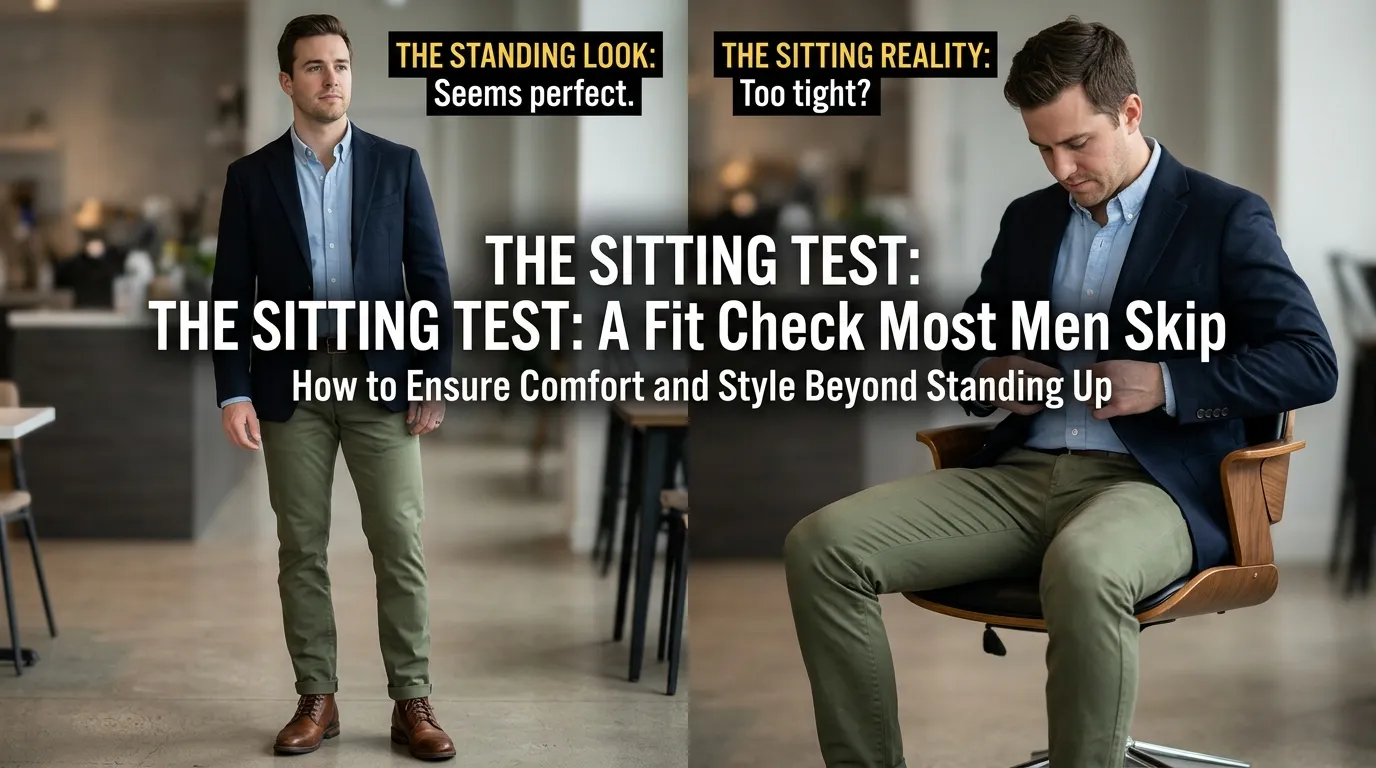
The Sitting Test: A Fit Check Most Men Skip
Standing in front of a mirror only tells part of the story. A suit that looks perfect standing still can reveal real problems the moment you sit down.
Sit in a chair the way you naturally would at a meeting or dinner. Check the following:
Jacket: It should be unbuttoned while sitting always unbutton the jacket before sitting down regardless of fit. Beyond that, the shoulders shouldn't ride up dramatically, and the fabric across your back shouldn't pull tight across your shoulder blades.
Trousers: The waistband shouldn't dig in uncomfortably, and there should be enough room through the seat and thigh to sit without visible strain in the fabric.
This test matters because most of the time you spend in a suit at a wedding, dinner, or long event involves sitting, not standing. A suit that only fits well standing up isn't fully solving the problem.
Movement Test: Reaching, Raising Arms, Turning
The final check is simple: move naturally in the jacket the way you would in real situations reaching for something, shaking hands, turning to talk to someone beside you.
Correct fit allows this movement without the jacket riding up dramatically at the shoulders, without fabric pulling tightly across the back, and without the sleeves restricting your arm's natural range.
If raising your arm to a normal handshake height causes the entire jacket to hike up toward your neck, the fit is too tight through the shoulders and chest, regardless of how it looked standing still in a mirror.
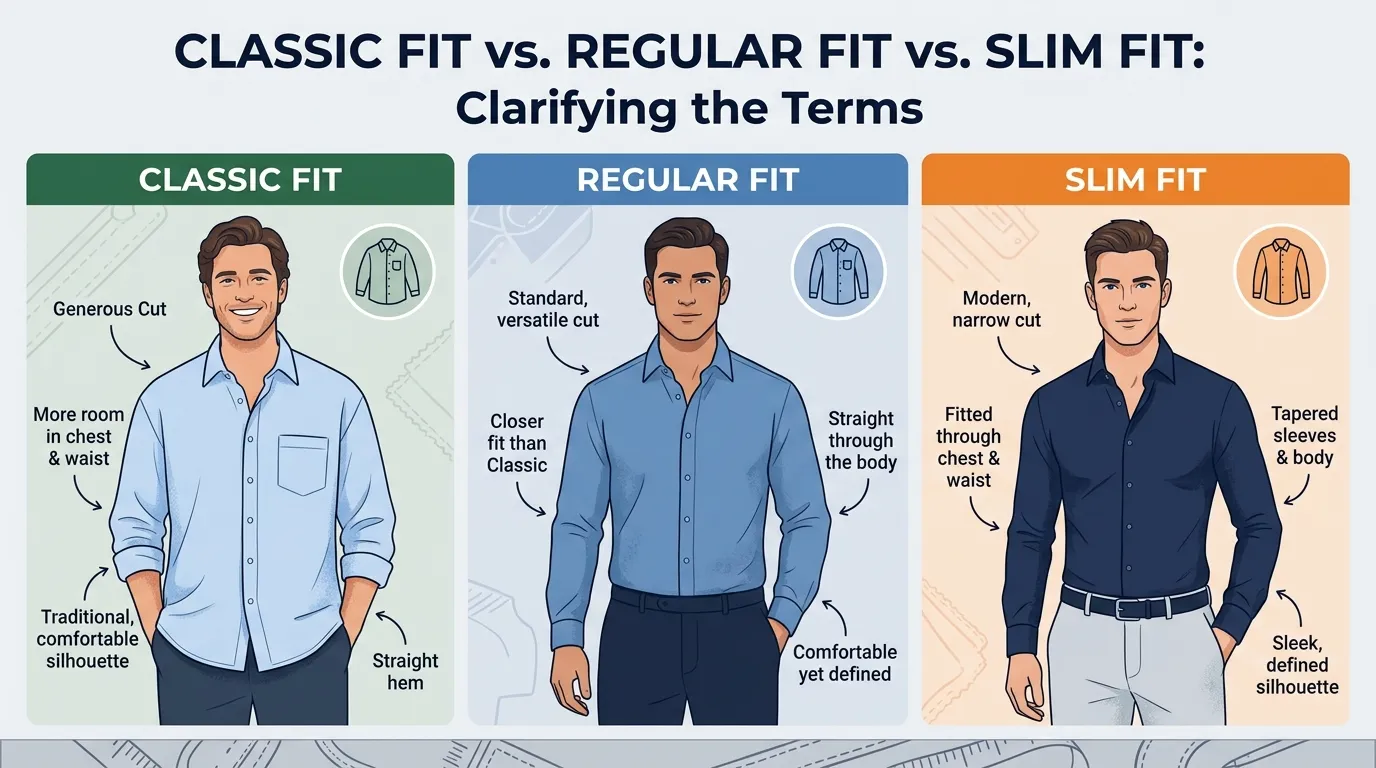
Classic Fit vs. Regular Fit vs. Slim Fit: Clarifying the Terms
These terms get used inconsistently across different brands, which adds confusion to an already detailed process.
Slim fit sits close to the body throughout narrow through the chest, waist, and trouser leg. Best suited to leaner builds.
Classic fit (sometimes labeled regular fit suit) offers noticeably more room through the chest, body, and trouser leg while still maintaining a defined shoulder line and some waist shaping. This is the most versatile option across body types and remains comfortable for both sitting and standing throughout a long day.
Traditional or relaxed fit provides the most room throughout, with minimal waist suppression and a straighter overall silhouette. Increasingly less common as tailoring trends have shifted toward more structured cuts.
If you're unsure which category suits your build, classic fit suits are generally the safest starting point they accommodate a wider range of body types than slim fit while still looking intentional and tailored rather than boxy.
When browsing classic fit suits, check the product description for the brand's specific fit definition, since "classic fit" varies somewhat between manufacturers even though the general principles above remain consistent.
What a Tailor Can and Can't Fix
Understanding this distinction saves time and money before you buy.
A tailor can adjust:
- Sleeve length
- Trouser length (hem)
- Waist suppression (to a degree)
- Trouser waist (within a couple of inches)
- Jacket length (minor adjustments)
A tailor cannot meaningfully adjust:
- Shoulder width
- Overall jacket size if it's significantly wrong
- Sleeve width if it's noticeably too tight or loose
This is why the shoulder check comes first in any fit evaluation. If the shoulders are wrong, no amount of tailoring elsewhere will save the jacket. If the shoulders are right, nearly everything else can be refined into a genuinely excellent fit.
Common Fit Mistakes Men Don't Notice in Themselves
Buying based on chest size alone. Two men with the same chest measurement can need completely different jacket lengths based on torso proportions. Always check length and shoulder fit alongside chest size.
Assuming a suit looks fine because it "feels" fine. Comfort and correct fit aren't always the same thing. A slightly oversized jacket can feel comfortable while still looking noticeably too big.
Not checking fit while sitting. As covered above, this reveals fit problems that standing in front of a mirror won't show.
Ignoring trouser break. Many men focus entirely on the jacket and forget that trouser length affects the overall silhouette just as much.
Wearing the wrong size because "that's what I've always worn." Body proportions shift over time, and sizing varies between brands. Remeasure periodically rather than relying on an old size number.
FAQ: How to Tell If a Suit Fits
Q: What's the single most important fit point to check on a suit?
The shoulders. It's the one measurement that can't be corrected by a tailor, so if the shoulder seam doesn't sit at the edge of your natural shoulder, the jacket isn't right regardless of anything else.
Q: How do I know if my jacket sleeves are the right length?
About half an inch of your dress shirt cuff should show below the jacket sleeve when your arm is relaxed at your side. No visible cuff means the sleeve is too long; more than an inch showing means it's too short.
Q: What's the difference between classic fit and slim fit suits?
Classic fit suits have more room through the chest, body, and trouser leg while still maintaining a defined shoulder line. Slim fit sits closer to the body throughout and suits leaner builds specifically.
Q: Can a tailor fix a jacket that's too big in the shoulders?
No. Shoulder width is the one measurement a tailor cannot meaningfully adjust. If the shoulders are wrong, the jacket needs to be a different size rather than altered.
Q: How should trousers fit at the waist?
Comfortably at your natural waist without needing to cinch a belt to the last hole. If you're constantly tightening your belt significantly, the trouser waist size is too large.
Q: What is the correct trouser break for a classic fit suit?
A clean, minimal break a slight horizontal crease where the fabric just touches the top of the shoe is the modern standard for classic fit trousers.
Q: Why does a suit that looks fine standing up sometimes feel wrong when I sit?
Standing and sitting put different stress on the fabric across the shoulders, back, and seat. A suit needs to be checked in both positions to confirm the fit actually works in real use.
Q: How do I know if a jacket is too tight across the chest?
Look for an X-shaped pull of fabric radiating from the button when the jacket is fastened. This is the clearest visual sign of a jacket that's undersized through the chest.
Conclusion
Knowing whether a suit actually fits comes down to checking specific, visible signs not just how it feels in the moment or what size is printed on the tag.
Start with the shoulders, since that's the one detail that can't be corrected later. Check the chest for smooth, unstrained fabric. Confirm sleeve and jacket length against the guidelines above. Test the fit while sitting and moving, not just standing still in a mirror. Once you know what to look for, evaluating any jacket becomes fast and reliable.
Classic fit suits remain one of the most forgiving and versatile options for most body types, offering room without looking oversized and structure without feeling stiff as long as the core fit points check out.
For a professional selection of classic fit suits built around accurate sizing and quality construction, visit MensUSA.

























Sign in to leave a comment.