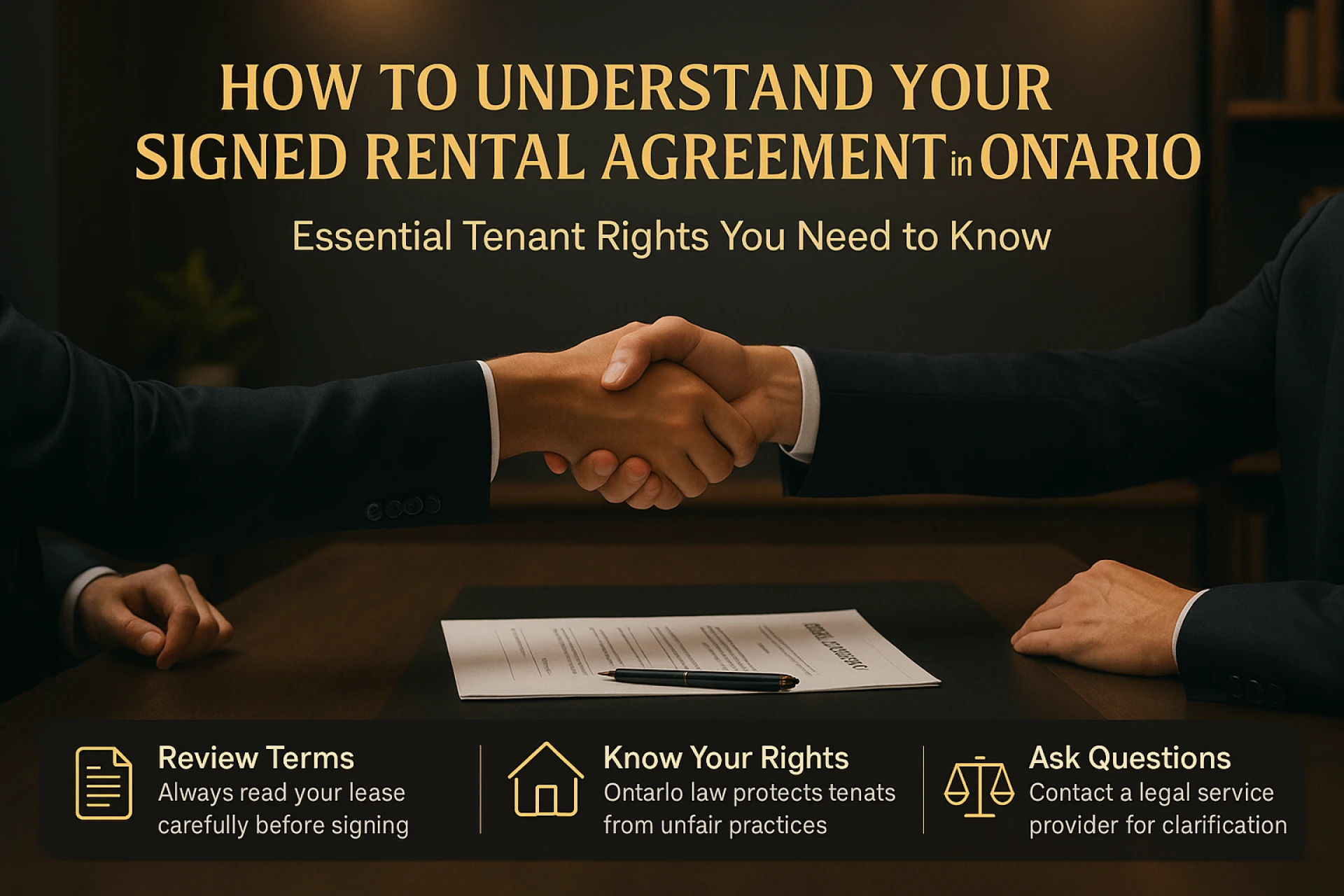

Renting a property in Ontario involves signing a rental agreement or lease, which sets the terms and conditions of your stay. This document is crucial for both landlords and tenants, as it helps protect the rights and responsibilities of both parties. Whether you're a first-time renter or looking to brush up on your knowledge, understanding your signed rental agreement in Ontario is essential.
In this article, we’ll cover everything you need to know about signed rental agreements, landlord-tenant lease rules, and rental document rights, including how to interpret your contract and what to do in case of issues like eviction. By the end, you'll have a clearer understanding of your rights and responsibilities, as well as how to navigate any potential legal challenges.
What is a Signed Rental Agreement in Ontario?
A signed rental agreement in Ontario is a legal document that outlines the terms between a landlord and a tenant. It serves as a contract that binds both parties to the conditions specified within it. Typically, the agreement will include essential details such as the rental price, the length of the lease, and the rules regarding property maintenance and conduct.
In Ontario, landlords are required to provide a written lease for all residential rental agreements. This helps both parties understand their legal obligations and rights. The Ontario Residential Tenancies Act (RTA) governs these agreements, ensuring fairness in terms of eviction, rent increases, and other aspects of the rental process.
Key Components of a Signed Rental Agreement
- Rent Amount and Payment Terms The signed rental agreement will specify how much rent is due each month, when it’s due, and how it should be paid. It’s important for tenants to keep up with these payments to avoid issues like late fees or eviction.
- Lease Duration Whether it’s a fixed-term lease (e.g., one year) or a month-to-month lease, the document will outline how long you’re committed to staying in the rental property. It’s also important to know what happens when the lease ends — do you need to renew, or does it automatically convert to a month-to-month lease?
- Rules and Regulations The signed rental agreement will specify the landlord-tenant lease rules that both parties must follow. These might include regulations on noise, smoking, pets, or renovations. Understanding these rules helps prevent conflicts between tenants and landlords.
- Security Deposit and Fees A security deposit is often required to cover potential damages to the rental unit. The signed rental agreement will state the amount, when it’s due, and how it will be returned at the end of your lease, provided the unit is in good condition.
- Maintenance and Repairs Who is responsible for maintaining the property? Generally, landlords are responsible for major repairs, while tenants should maintain cleanliness and handle minor repairs. These responsibilities should be clearly outlined in the agreement.
What Are Landlord-Tenant Lease Rules?
Landlord-tenant lease rules are the guidelines that govern the relationship between a landlord and a tenant in Ontario. These rules are designed to ensure fairness and prevent disputes. Common rules include:
- Rent Control In Ontario, rent increases are regulated, meaning landlords can only increase rent by a set percentage each year. The Ontario government sets this percentage annually, so it’s important to check for any changes that might apply to your lease.
- Notice of Entry Landlords must provide proper notice before entering a rental unit, typically 24 hours in advance, and only during reasonable hours. This rule helps protect tenants' privacy.
- Eviction If a tenant violates the terms of the signed rental agreement, such as not paying rent or damaging the property, the landlord can issue an eviction notice. However, the eviction notice help process must follow legal procedures outlined in the Ontario Residential Tenancies Act.
Rental Document Rights
When you sign a rental agreement, you’re protected by certain rental document rights. These rights ensure that landlords uphold their responsibilities, and tenants are treated fairly.
- Right to a Written Lease In Ontario, every rental agreement must be in writing. This protects tenants by clearly outlining their rights and obligations, making it easier to resolve disputes.
- Right to Security of Tenure Tenants in Ontario cannot be evicted without proper notice. The landlord must follow the correct procedure, including serving an eviction notice, and tenants have the right to challenge the eviction if they feel it’s unjustified.
- Right to PrivacyTenants have the right to privacy, and landlords cannot enter the rental unit without notice, except in emergency situations.
- Right to Fair Treatment Landlords must treat tenants fairly and cannot discriminate based on race, gender, religion, or other protected characteristics. This ensures that all renters have equal access to housing.
What to Do If You Receive an Eviction Notice
If you receive an eviction notice from your landlord, it’s essential to take action quickly. First, determine the reason for the eviction. Common reasons include non-payment of rent or violation of rental terms.
- Eviction Notice Help The eviction process in Ontario requires the landlord to provide a formal notice of eviction. This notice must specify the reason for eviction, the date of eviction, and provide the tenant with a chance to remedy the issue if possible.
- Landlord Eviction Process If the tenant does not comply or fails to resolve the issue, the landlord may apply to the Landlord and Tenant Board (LTB) for a hearing. At the hearing, both parties can present their case, and the LTB will make a ruling. If the ruling is in the landlord's favor, an order of eviction will be issued.
How to Handle Tenant Eviction
Tenant eviction in Ontario is not immediate. Tenants have the right to defend themselves in court and must be given adequate time to vacate the property.
- Appealing an Eviction Tenants have the option to appeal an eviction order. If you believe the eviction is unfair, you can file an application to the LTB to request a hearing.
- What to Do After Eviction If the eviction goes through, tenants must vacate the premises by the date specified in the order. However, the landlord cannot forcibly remove tenants or lock them out; only law enforcement can do so.
Frequently Asked Questions (FAQs)
1. How can I make sure my signed rental agreement in Ontario is fair?
To ensure your rental agreement is fair, review it thoroughly and make sure it complies with Ontario's landlord-tenant laws. Understand all terms related to rent, maintenance, and eviction. If you’re unsure about any clauses, seek legal advice.
2. What should I do if I have issues with my rental document rights?
If you believe your landlord is violating your rental document rights, you can contact the Ontario Landlord and Tenant Board or seek legal assistance. It's important to act quickly to protect your rights.
3. How does the landlord eviction process work in Ontario?
The landlord eviction process involves issuing a written eviction notice and, if the issue isn’t resolved, applying to the Landlord and Tenant Board for a hearing. Both parties will have the chance to present their case, and the Board will make a decision.
4. What is the difference between a signed rental agreement and a verbal agreement?
A signed rental agreement is legally binding, while a verbal agreement may not be enforceable in court. Always ensure your agreement is in writing to protect your rights as a tenant.
5. Can I dispute an eviction in Ontario?
Yes, tenants can dispute an eviction by appealing to the Landlord and Tenant Board. If you feel the eviction is unjust, it’s important to respond promptly and present your case.
Understanding your signed rental agreement in Ontario is vital for a smooth renting experience. By knowing your rights, including landlord-tenant lease rules and rental document rights, you can prevent common issues like eviction and ensure your relationship with your landlord is fair and legal. Always remember, when in doubt, seek legal advice or assistance from the Landlord and Tenant Board.




























Sign in to leave a comment.