
Building a makeup bag that actually works for your skin does not mean buying every brush on the shelf. It means picking a few tools that do their job well and knowing how to use them. One tool that keeps coming up in conversations with makeup artists and everyday users alike is the complexion brush, a tool built specifically for blending cream and liquid base products into skin without streaks or patchy coverage. If you have ever wondered why your foundation looks cakey no matter how good the product is, the brush you are using is usually the missing piece.
This guide walks through what a complexion brush actually does, how it compares to the sponges and fingers many people default to, and what separates the best makeup brushes from brushes that look nice but fall apart after a few washes. Along the way, you will find practical tips on application, brush care, and how to shop smart so your next brush purchase actually earns its spot in your routine.
What Is a Complexion Brush and Why It Matters
A complexion brush is a face brush designed to pick up and distribute cream or liquid formulas, things like foundation, concealer, and cream contour, evenly across the skin. Unlike a powder brush, which is built with fluffy, loosely packed bristles meant to dust pigment onto the surface, a complexion brush uses denser bristles that grip liquid product and press it into the skin rather than just laying it on top.
This matters because base makeup is the layer that sets the tone for everything else. If it goes on unevenly, every product applied afterward, powder, blush, bronzer, sits on top of an uneven canvas. A well-designed complexion brush solves this at the source by working the product into the skin in thin, controlled layers instead of dragging it across the surface the way a flat brush or a finger might.
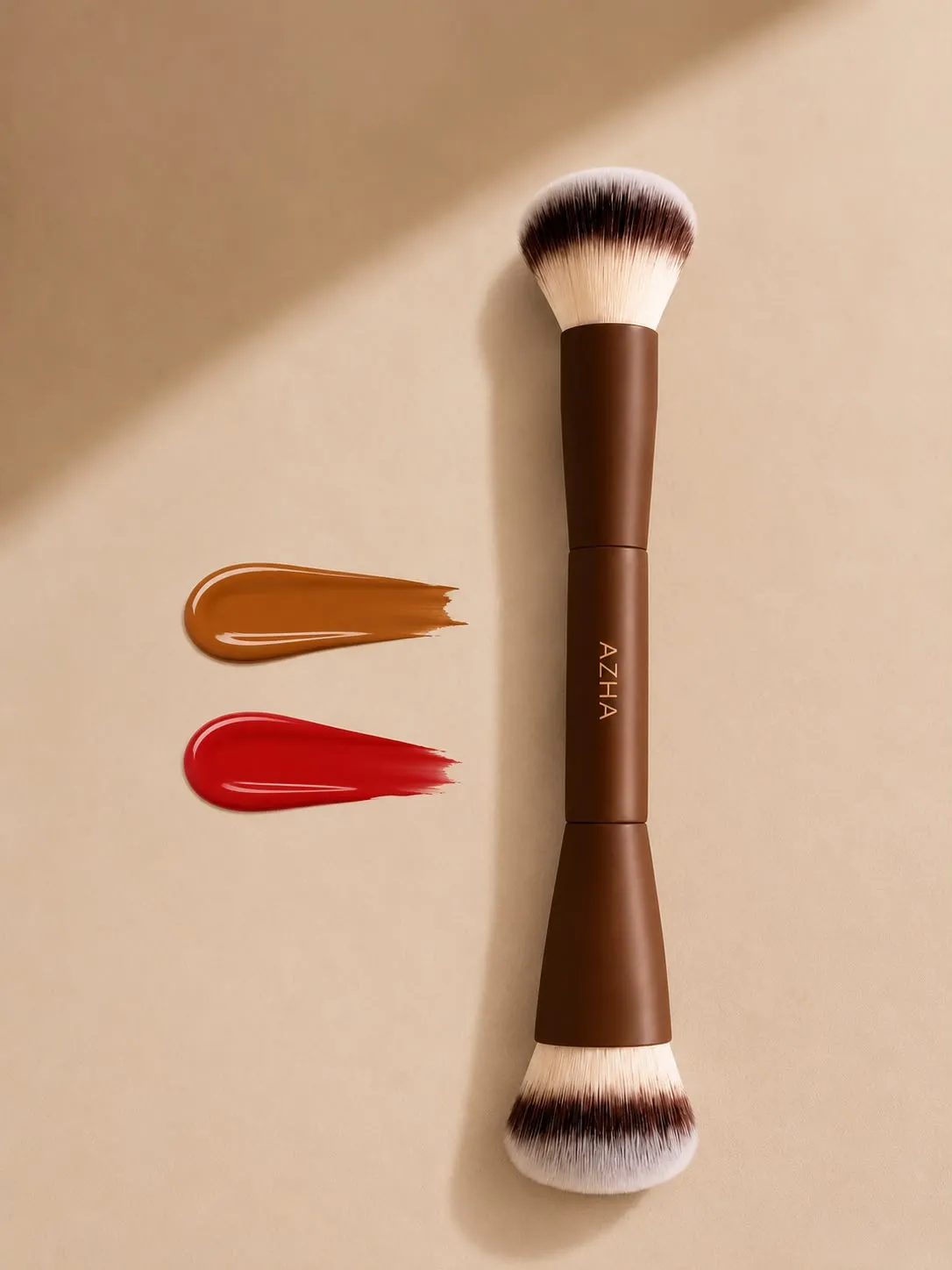
Some versions of this tool come in a dual-ended format, meaning one end handles broad application across the cheeks, forehead, and jaw, while the smaller end tackles detail zones like under the eyes, around the nose, and along the hairline. This two-in-one setup means you are not digging through a brush roll mid-application trying to find the right tool for a small touch-up.
Why Professional Artists Reach for a Dual-Ended Design
Working makeup artists rarely carry a single-purpose brush for every step. Time and kit space are both limited on set or at a client's chair, so tools that combine two functions in one handle are valuable. A dual-ended makeup brush lets an artist blend a full face of foundation with one end, then flip the brush to buff out concealer under the eyes without switching tools.
This is also why the bristle placement on a quality brush is not an afterthought. Precision-engineered bristle density controls exactly how much product the brush picks up and releases, which means less product waste and a more even result whether you are going for a light, everyday base or a fuller-coverage look for photos or evening wear. Brushes made with attention to bristle spacing tend to hold up to repeated washing far better than mass-produced alternatives, which matters if you are using the same brush daily.
How to Use a Complexion Brush for a Smooth, Airbrushed Look
Getting a clean result from a complexion brush comes down to technique as much as the tool itself. Here is a simple routine that works for most skin types and formulas:
- Apply a small amount of foundation, concealer, or cream contour directly to the skin, or dot it on the back of your hand first if you prefer more control before transferring it to your face.
- Use the larger end of the brush in light, circular or stippling motions to spread product across the cheeks, forehead, chin, and jawline. Work in sections rather than trying to cover the whole face at once.
- Switch to the smaller end for detail areas, under the eyes, beside the nose, and along the hairline, where a lighter touch and more precision are needed.
- Buff gently at the edges where the product meets bare skin so there is no visible line where the makeup stops.
- Clean the brush regularly. Product buildup in the bristles is the most common reason a brush that used to blend beautifully starts leaving streaks.
Following these steps with a dense, well-shaped brush is usually enough to get an airbrushed finish without needing a beauty sponge or a second layer of powder to smooth things over.
What Separates the Best Makeup Brushes From the Rest
Not every brush on the market is built the same way, and the difference shows up the first time you wash it. The best makeup brushes hold their shape after repeated cleaning, do not shed bristles into your foundation, and are dense enough to control product without dragging or streaking. Cheaper synthetic brushes often soften and splay after a handful of washes, which changes how they pick up and release product over time.
A good way to judge brush quality before buying is to look at how the bristles are set into the handle. Brushes with tightly packed, evenly trimmed bristle heads tend to perform more consistently, especially for cream and liquid formulas that require more control than powder does. Handle weight and grip also matter more than people expect; a brush that feels balanced in your hand is easier to control during detailed work like blending concealer.
Best Makeup Brushes for Cream, Liquid, and Everyday Base Products
If you are building or upgrading a brush collection, base makeup deserves its own dedicated tools rather than repurposing a powder or blush brush. Among the best makeup brushes for this job are dense, flat-top brushes for foundation, smaller tapered brushes for concealer, and a dual-ended option that covers both jobs in a single handle. This last option is especially useful for anyone who travels often or wants to keep their kit lighter without sacrificing coverage quality.
Shoppers searching for long-tail terms like "brush for liquid foundation blending" or "brush that does not streak cream contour" are usually running into the same problem: they are using a brush meant for powder to apply a product it was never designed for. Matching the brush to the formula solves most streaking and patchiness complaints without needing to switch foundations at all.
Where to Find the Best Makeup Brushes Online
Shopping online for brushes can be tricky since you cannot feel the bristle density before buying, so it helps to look for brands that specialize specifically in brush tools rather than general beauty retailers that carry brushes as an afterthought. Azha Brushes is one such source, offering a lineup built around performance for both everyday users and working makeup artists. Their catalog includes the best makeup brushes with a professional complexion brush among the standout picks, giving shoppers a straightforward way to build a smaller, higher-quality kit instead of a drawer full of brushes that rarely get used.
When comparing options across any retailer, check for details like bristle material, handle length, and whether the brush is dual-ended or single-purpose. These small details tell you more about day-to-day performance than product photos alone.
Top Benefits of Adding a Complexion Brush to Your Everyday Routine
A complexion brush earns its place in a routine for a few practical reasons beyond just a nicer finish:
- Fewer tools needed. A dual-ended design replaces two or three single-purpose brushes, which is useful for travel kits and everyday bags alike.
- More even coverage. Dense bristles press product into skin rather than just laying it on the surface, which reduces patchiness.
- Less product waste. Controlled bristle placement means the brush picks up only what is needed, so less foundation or concealer ends up wasted on the back of your hand.
- Easier cleanup. Fewer brushes in rotation means less time spent washing a full collection every week.
- Better control for detail work. The smaller end handles under-eye concealer and hairline blending without needing a separate detail brush.
These small advantages add up over weeks and months of daily use, which is why this style of brush has become a staple for both beginners and professionals.
Who Should Own a Dual-Ended Complexion Brush
Anyone applying cream or liquid base products regularly benefits from having a dedicated complexion brush on hand, but a few groups get particular value from it. Makeup artists building a professional kit appreciate the space savings of a dual-ended tool that handles both broad application and detail blending. People new to makeup benefit from a brush that is forgiving and makes streak-free application easier without years of practice. And anyone who simply wants fewer, better tools instead of a large collection that mostly sits unused will find that one well-made brush can replace several lower-quality ones.
If your current routine relies on fingers or a sponge alone, adding this one brush is often the single easiest upgrade to make for a smoother finish.
Tips for Maintaining Your Makeup Brushes
Even the best brush will underperform if it is not cared for properly. A few habits go a long way:
- Wash brushes at least once a week if used daily, and always after using them with cream or liquid products that dry inside the bristles.
- Use a gentle cleanser and lukewarm water, then reshape the bristle head while damp and lay the brush flat to dry.
- Avoid soaking the base where bristles meet the handle, since prolonged moisture there can loosen the glue over time.
- Store brushes upright or in a case with the bristles protected, rather than loose in a bag where they can bend or fray.
- Replace brushes only when the bristles start shedding or losing their shape, not on a fixed schedule, since a well-made brush can last for years with proper care.
Final Thoughts
A smoother base does not require a bigger makeup bag. It usually comes down to using the right brush for the formula you are applying and keeping that brush clean. A dual-ended complexion brush covers both broad application and detail blending in one tool, which makes it a practical addition whether you are a professional working through multiple clients a day or someone who just wants their foundation to look better in five minutes each morning. Pairing that brush with a small, well-chosen set of other tools is usually all it takes to get consistent, professional-looking results at home.


























Sign in to leave a comment.