
Fantasy baseball has evolved dramatically over the past decade. The days of drafting based on batting average and RBIs alone are long gone. Today, the most successful fantasy managers are the ones who dig into Statcast data to identify breakout candidates, avoid regression traps, and find hidden value on the waiver wire. If you are not using real-time baseball statistics to inform your fantasy decisions, you are bringing a knife to a gunfight.
Statcast, MLB's tracking technology, measures virtually everything that happens on a baseball field. For hitters, the most important metrics include exit velocity, launch angle, barrel rate, hard-hit rate, sprint speed, and expected statistics like xBA, xSLG, and xwOBA. For pitchers, you get spin rate, movement profiles, extension, and induced vertical break. All of this data is available to anyone willing to look for it, and tools like LiveHomeRuns.com provide real-time Statcast data during live games, giving fantasy managers an edge that was unimaginable just a few years ago.
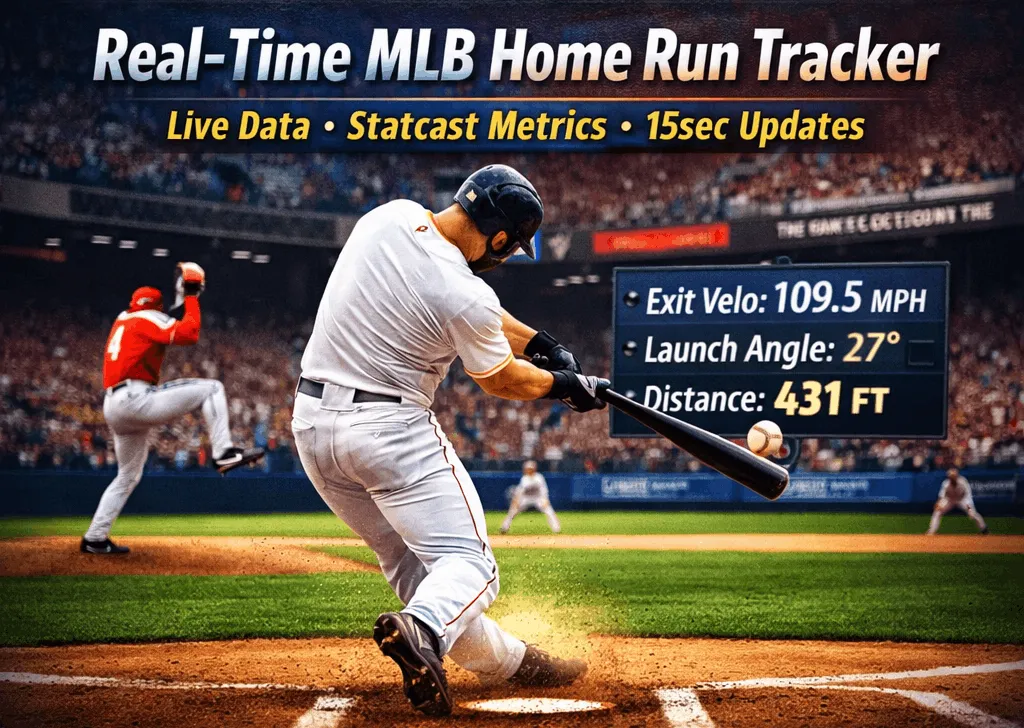
Baseball feels more exciting when you can follow every hit instantly, and that’s where Live Home Run Tracker comes in. It delivers real-time updates with key details. No delays, no clutter. Just pure game action as it unfolds.
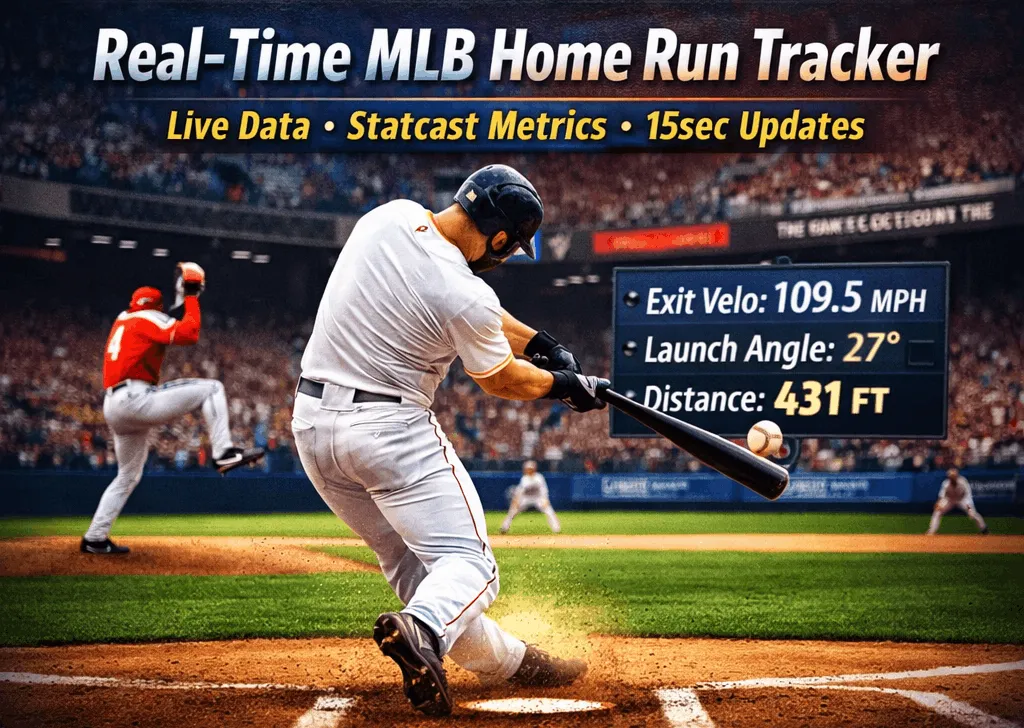
Let us start with the metric that matters most for fantasy power numbers: exit velocity. A player's average exit velocity tells you how hard they are hitting the ball on a consistent basis. An average exit velocity above 90 mph is solid. Above 92 mph is excellent. Above 95 mph puts a hitter in elite company. But average exit velocity alone can be misleading. You also want to look at hard-hit rate, which measures the percentage of batted balls hit at 95 mph or harder. A hard-hit rate above 45 percent is a strong indicator of real power, regardless of what a player's home run total looks like at any given moment.
Here is where it gets actionable for fantasy. Early in the season, you will often find hitters with low home run totals but elite exit velocities and hard-hit rates. These players are getting unlucky. They are hitting the ball hard but directly at fielders, or they are running into slightly unfavorable launch angles. The correction is usually coming. If you can grab these players off the waiver wire before the home runs start falling in, you gain a massive advantage over managers who only look at the box score.
Launch angle is the companion metric to exit velocity. For home runs, the optimal launch angle is between 25 and 30 degrees. Hitters who consistently elevate the ball into that range with high exit velocities are going to hit home runs. Period. If a player has made a mechanical adjustment that raises his average launch angle from 8 degrees to 15 degrees while maintaining his exit velocity, that is a red flag in the best possible way. It means more fly balls, more barrels, and more home runs are coming. This is how savvy fantasy managers identified players like Jose Ramirez and Eugenio Suarez before their breakout power seasons.
Barrel rate ties exit velocity and launch angle together into one neat package. A barrel is defined as a batted ball with the ideal combination of exit velocity and launch angle to produce a batting average of at least .500 and a slugging percentage of at least 1.500. In plain English, barrels are the absolute best contact a hitter can make. Players with barrel rates above 10 percent are genuine power threats. Above 15 percent and you are looking at a potential 35-plus home run hitter. Barrel rate is one of the most predictive statistics in baseball for future home runs, making it essential for fantasy draft prep and in-season management.
Expected statistics are another goldmine. Expected batting average, expected slugging, and expected weighted on-base average are all calculated based on how hard and at what angle a player hits the ball, stripping out the luck of where fielders happen to be standing. If a player has a .230 batting average but a .275 xBA, he is getting unlucky and a correction upward is likely. Conversely, if a player is hitting .310 with a .260 xBA, regression is coming and you might want to sell high in a trade. These expected stats are among the most powerful tools in a fantasy manager's arsenal.
For pitchers, Statcast data is equally valuable. Spin rate and movement profiles tell you whether a pitcher's stuff is genuinely elite or whether he is succeeding on smoke and mirrors. A pitcher with a fastball that spins at 2,400 RPM with strong induced vertical break is going to miss bats. A pitcher with below-average spin who is getting results through sequencing and luck is a riskier fantasy investment. Similarly, extension measures how close to home plate a pitcher releases the ball. Greater extension makes the pitch arrive faster from the batter's perspective, even if the radar gun reading is the same.
Tracking this data in real time gives you an even bigger edge. During live games, platforms like LiveHomeRuns.com display Statcast data for every home run as it happens, including exit velocity, launch angle, and distance. If you are watching your fantasy players rake with elite batted-ball metrics, you have confidence that the production is sustainable. If a rival manager's player is putting up numbers on soft contact and good luck, you know to avoid trading for him.
Sprint speed is an underrated Statcast metric for fantasy. It measures a player's top running speed in feet per second. Players above 28 feet per second are elite runners, and speed translates directly into stolen bases, extra bases on hits, and even infield singles that boost batting average. In leagues that use on-base percentage or on-base plus slugging, speed players have extra hidden value. A fast player who hits the ball on the ground a lot might not help in home run categories, but he can carry your stolen base and runs categories while contributing to average.
Here is a practical workflow for using Statcast in your fantasy league. Before the draft, sort all hitters by barrel rate and expected slugging. Identify players whose expected stats significantly outpaced their actual stats the previous year. These are your breakout candidates. During the season, check Statcast leaderboards weekly for players with elite hard-hit rates and barrel rates who have not yet been picked up in your league. Use a live MLB home run tracker to monitor your hitters during games and confirm that the quality of contact matches the production.
The bottom line is this. Traditional stats tell you what happened. Statcast tells you why it happened and, more importantly, what is likely to happen next. Fantasy baseball is a game of prediction, and real-time baseball statistics give you better predictions. The managers who embrace this data will consistently outperform those who rely on outdated methods. Whether you are preparing for your draft, working the waiver wire, or evaluating a trade offer, Statcast data should be the foundation of every decision you make.






























Sign in to leave a comment.