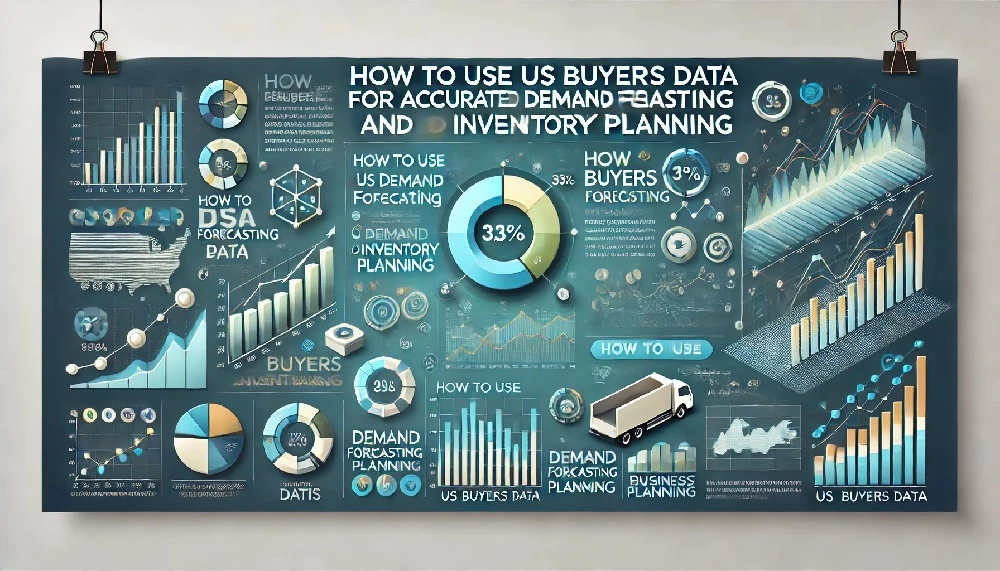

In today's competitive business environment, accurate demand forecasting and planning are critical for ensuring that businesses can meet customer demand without overstocking or understocking products. One powerful tool that can significantly enhance demand forecasting is US Buyers Data. With detailed insights into purchasing trends, buyer behavior, and market dynamics, US buyers data provides a wealth of information that can inform better decision-making and strategic planning. This article will explore how to leverage US buyers data for more accurate demand forecasting and planning.
Understanding US Buyers Data
US Buyers Data refers to the detailed records of U.S. businesses and individuals purchasing products from domestic or international sources. This data typically includes vital information such as the buyer's name, location, industry, product categories, quantities, and purchasing frequency. By analyzing this data, businesses can identify patterns and trends in the buying behaviors of U.S. buyers, allowing them to predict future demand with greater accuracy.
The core value of US buyers data lies in its ability to provide insight into:
- Buyer Profiles: Detailed information about the businesses and consumers who are making purchases.
- Purchasing Patterns: Data about which products are being bought, in what quantities, and at what frequency.
- Geographic Trends: Insight into where purchases are occurring, including regional preferences and demand variations.
- Seasonal Fluctuations: Tracking the times when demand is highest for certain products or services.
With this information, businesses can make data-driven decisions to optimize their inventory, improve sales strategies, and align their production efforts with actual demand.
How to Use US Buyers Data for Demand Forecasting
Accurate demand forecasting is the cornerstone of any successful business operation. It helps companies plan for production, manage inventory, avoid stockouts, and meet customer expectations. Here's how you can use US buyers data to forecast demand more accurately:
a. Identify Trends in Buyer Behavior
US buyers data offers valuable insights into customer behavior. By analyzing past purchasing data, businesses can identify recurring trends and seasonal patterns. For instance, you may notice that certain products experience a surge in demand during specific times of the year or in certain geographical regions. Recognizing these patterns enables businesses to anticipate future demand and plan their supply chain accordingly.
For example, if a company sells outdoor sporting goods, analyzing historical US buyers data might reveal that demand for items like tents, hiking boots, and camping gear spikes during the spring and summer months. By identifying these patterns, the business can stock up on popular items before the peak season, ensuring they meet customer demand without running into inventory shortages.
b. Segment Buyers by Industry or Region
Another way to use US buyers data for demand forecasting is by segmenting buyers based on their industry or region. Certain products may be in high demand within specific industries or areas of the U.S. For example, building materials might experience increased demand from construction companies in rapidly growing regions, while tech products may see greater sales in urban areas with a high concentration of businesses and tech-savvy consumers.
Segmenting US buyers data by industry or region helps businesses focus on the most relevant customers for their products. This approach allows companies to fine-tune their forecasting by aligning inventory with regional or industry-specific demand, leading to more accurate planning and better alignment with market conditions.
c. Track Buyer Purchasing Frequency and Volume
Another key aspect of US buyers data is tracking purchasing frequency and volume. By examining how often buyers make purchases and the volume of their orders, businesses can predict future demand more effectively. For instance, if a particular buyer consistently places large orders at specific intervals, this pattern can help forecast demand for the product in the near future.
Companies can use this data to calculate sales velocity, which is the rate at which a product sells over a specific period. Sales velocity data can be invaluable for determining the optimal inventory levels required to meet forecasted demand, avoiding both understocking and overstocking.
d. Analyze Changes in Buying Patterns Over Time
Demand forecasting isn't a static process; it's essential to track changes in buying patterns over time. US buyers data can help businesses identify shifts in demand due to changing market conditions, consumer preferences, or external factors such as economic fluctuations or global events.
For example, if buyers start purchasing different product categories or if there is a sudden drop in orders from a particular region, businesses can adjust their forecasts and inventory management strategies accordingly. This dynamic approach to demand forecasting ensures that businesses are prepared for changes in the market and can respond quickly to unexpected shifts in demand.
Using US Buyers Data for Inventory Planning
Inventory management is closely tied to demand forecasting. Once businesses have an accurate demand forecast, they can plan their inventory levels to align with expected sales. Here's how US buyers data helps in inventory planning:
a. Optimize Stock Levels
With accurate demand forecasting based on US buyers data, businesses can optimize stock levels and avoid both stockouts and excess inventory. By aligning inventory with forecasted demand, businesses can ensure that they have enough products to meet customer demand without holding excessive stock that ties up valuable capital.
b. Minimize Lead Times
US buyers data can also help businesses minimize lead times by anticipating demand and placing orders with suppliers in advance. By understanding when demand for specific products is likely to increase, businesses can place timely orders with suppliers to ensure they have sufficient stock on hand when the peak demand arrives.
For instance, if a company anticipates high demand for a product during a particular season based on historical trends in US buyers data, they can place larger orders well in advance, reducing lead times and ensuring timely delivery to customers.
c. Manage Seasonal Demand
Seasonal fluctuations are a common challenge in demand forecasting, and US buyers data offers significant insights into how demand changes over time. By tracking purchasing trends, businesses can plan for seasonal peaks and valleys. For example, businesses in the fashion or retail sectors often experience seasonal demand spikes during the holiday season.
With US buyers data, companies can predict when these seasonal shifts will occur and plan their inventory and sales strategies accordingly. This helps businesses avoid overstocking or understocking during critical times and ensures they are prepared to capitalize on peak demand periods.
Leveraging US Buyers Data for Sales and Marketing Strategies
Demand forecasting and inventory planning are not the only areas where US buyers data is valuable. Sales and marketing strategies can also benefit from a data-driven approach. By analyzing US buyers data, businesses can:
- Target the Right Customers: US buyers data helps identify businesses and individuals who are most likely to be interested in your products. This enables companies to target their marketing efforts more effectively, focusing on high-potential buyers who are more likely to convert.
- Personalize Offers and Campaigns: By understanding buyer preferences and purchasing patterns, businesses can create personalized offers and promotions tailored to specific customer segments.
- Improve Product Recommendations: US buyers data allows businesses to track which products are frequently purchased together, enabling them to make more accurate product recommendations and increase average order value.
Conclusion
US buyers data is a goldmine of valuable insights that can significantly enhance demand forecasting and planning efforts. By understanding buyer behavior, segmenting customers, and tracking purchasing patterns, businesses can make data-driven decisions that improve inventory management, optimize sales strategies, and ensure they are meeting customer demand in real-time.
As markets become increasingly complex and consumer expectations continue to rise, leveraging US buyers data for demand forecasting is no longer optional—it's essential for businesses looking to stay competitive, efficient, and responsive to market needs.


























Sign in to leave a comment.