
The modern financial ecosystem thrives on speed and connectivity. Gone are the days when businesses could rely on batch processing or delayed reconciliations. Today, customers expect instant confirmations, businesses demand real-time insights, and developers seek ways to stitch financial processes together without friction.
One technology quietly enabling this real-time revolution is the webhook. Though often overshadowed by APIs, webhooks are the unsung heroes of automation - especially in the world of payments and financial services.
What Exactly Are Webhooks?
At its simplest, a webhook is a push mechanism. Instead of your system constantly asking, “Has anything changed?” (like with traditional APIs), the webhook notifies you the moment something happens.
For example:
● A payment succeeds → Your system receives a webhook instantly and updates the order status.
● A refund is initiated → Your customer service dashboard gets the alert.
● A subscription renews → Your accounting software is informed in real time.
Think of webhooks as the financial world’s version of instant messaging, replacing the outdated practice of checking inboxes manually every few hours.
Why Real-Time Matters in Finance
Real-time is not just a buzzword; it’s the new baseline for trust and efficiency in finance.
- Customer Experience
- Imagine paying on a website and waiting hours for confirmation. In an era of UPI and instant card payments, that delay feels unacceptable. Webhooks ensure that a user receives instant payment success notifications, SMS, or email confirmations.
- Operational Efficiency
- Businesses save hours of manual reconciliation and customer support queries when finance systems talk to each other automatically.
- Compliance & Risk Management
- Fraud detection systems rely on immediate triggers. If suspicious activity is detected, webhooks can freeze or flag transactions instantly.
Common Use Cases for Webhooks in Finance
1. Payment Success and Failure Alerts
When customers pay via a payment gateway on a website, a webhook can instantly update your database, trigger invoices, or even send personalized thank-you messages.
2. Subscription Billing
SaaS and fintech products often depend on recurring payments. Webhooks can notify systems when renewals succeed or fail, helping to manage customer churn proactively.
3. Refunds and Chargebacks
Handling refunds manually is error-prone. Webhooks automatically push refund status updates to ERP or customer service portals.
4. Ledger Updates & Reconciliation
Webhooks can sync transactions with your accounting software in real time, making end-of-day reconciliations nearly effortless.
5. Fraud Alerts & Security Triggers
If a system detects suspicious velocity or geolocation mismatches, a webhook can trigger fraud-detection workflows instantly.
How Webhooks Differ from APIs
While both APIs and webhooks allow communication between systems, the key difference is in direction and timing:
● APIs are pull-based. Your system asks for updates.
● Webhooks are push-based. You’re told about updates automatically.
In finance, the difference is critical. APIs are useful for historical pulls (e.g., “get all transactions for yesterday”), while webhooks are indispensable for instant reaction (e.g., “this payment just failed, retry immediately”).
Challenges in Implementing Webhooks
As powerful as they are, webhooks are not without pitfalls.
Reliability
If the receiving server is down, webhook data may be lost unless retries are configured.
Security
Since webhooks are essentially HTTP requests, they must be validated with signatures, encryption, or token-based verification.
Scalability
A busy fintech product may receive thousands of webhook calls per second. Queuing, logging, and monitoring become essential.
Idempotency
Webhooks can fire multiple times. Your system must handle duplicates gracefully without creating double entries.
Best Practices for Webhook-Driven Finance Flows
● Always Verify Authenticity: Use signatures or hash-based validation to ensure the webhook really comes from your provider.
● Design for Retries: Set up retry mechanisms so missed webhooks are re-sent until acknowledged.
● Use Queues for Stability: Push webhook payloads into a queue before processing to handle spikes.
● Log Everything: Logs are lifesavers when troubleshooting failed webhook deliveries.
● Keep It Lightweight: Don’t process heavy logic inside the webhook receiver; instead, store the event and let downstream services handle it.
Webhooks in Indian Digital Payments
India’s digital finance ecosystem, led by UPI, RuPay, and wallet-based flows, thrives on instant settlement. Webhooks are central here:
● UPI Collect & Intent: Immediate status updates are pushed as webhooks, ensuring merchants know whether money has landed.
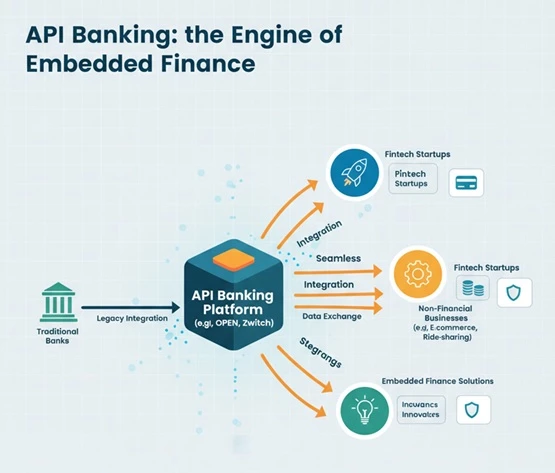
● Banking APIs: Connected banking dashboards rely on webhook triggers to show real-time balances and reconciliations.
● Fintech SaaS: From lending platforms to accounting tools, every financial workflow depends on event-driven updates.
This is why any payment gateway for website targeting Indian businesses must offer robust webhook support. This is no longer optional.
Looking Ahead: Webhooks as the Nervous System of Finance
As finance shifts towards embedded ecosystems where lending, insurance, and payments are woven seamlessly into apps, webhooks will act as the nervous system. They enable financial products to “talk” to each other the moment something happens.
Imagine a future where:
● Your CRM is instantly updated with a customer’s loan approval.
● Your ERP auto-adjusts inventory as soon as payment lands.
● Your analytics dashboard refreshes in real time with revenue numbers.
All of this will be possible because webhooks connect the dots in milliseconds.
Conclusion
Webhooks may not be glamorous, but they’re indispensable for building real-time finance flows. From improving customer experience to powering risk management, their impact is far-reaching.
For businesses exploring the right payment gateway for their website, one of the most critical factors to evaluate is webhook support. Because in today’s finance, speed isn’t a luxury. It’s the default expectation.



























Sign in to leave a comment.