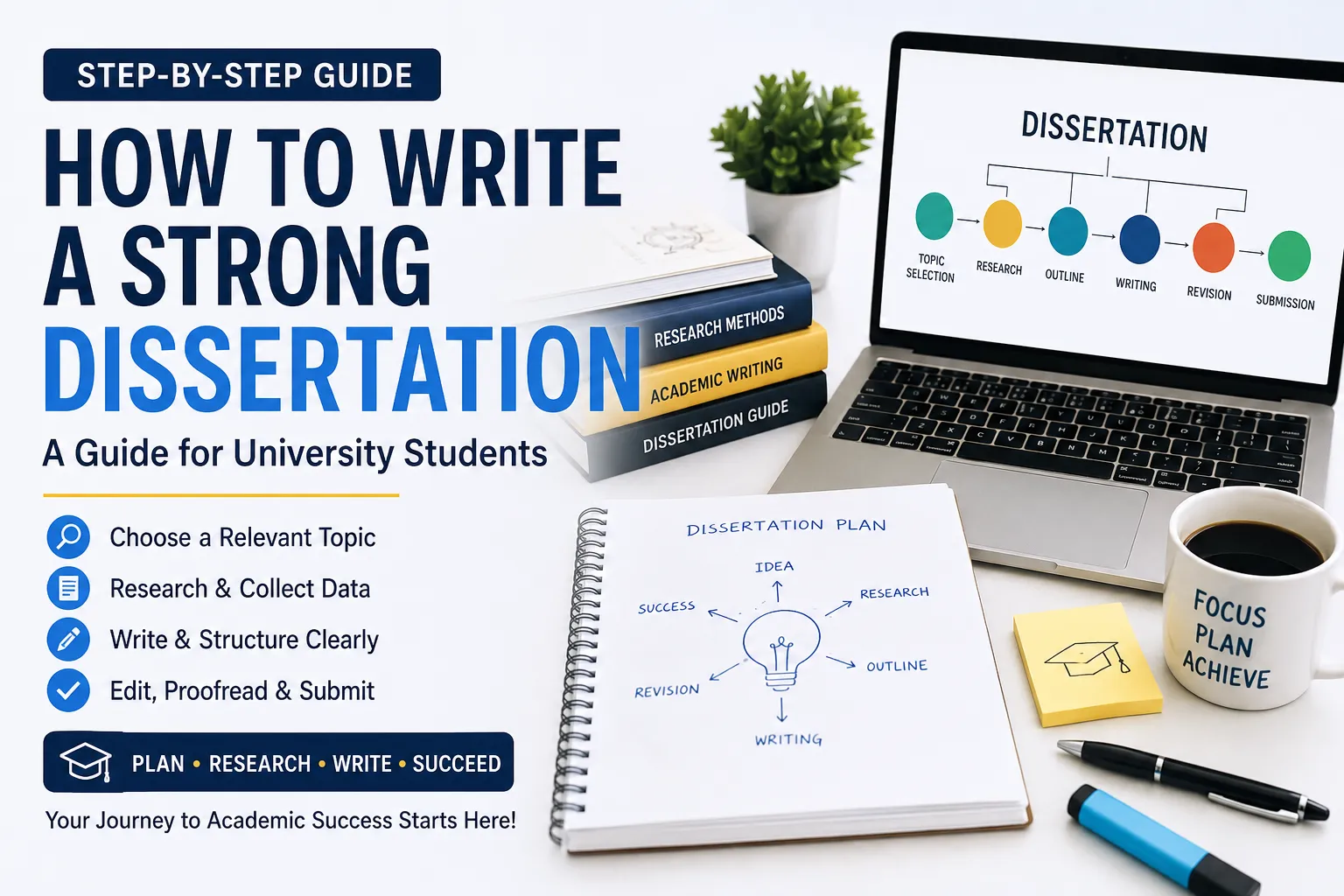

Writing a dissertation proposal is one of the most important milestones in a student's academic journey. Whether you are an undergraduate, postgraduate, or PhD student, a well-prepared proposal forms the foundation of a successful dissertation. It helps your supervisor understand your research idea, objectives, methodology, and the significance of your study.
Many students find proposal writing challenging because it requires careful planning, critical thinking, and extensive research. However, by following a structured approach, you can create a proposal that is clear, convincing, and academically sound.
What Is a Dissertation Proposal?
A dissertation proposal is a document that outlines your intended research before you begin writing your dissertation. It explains what you want to study, why the topic is important, how you will conduct your research, and what outcomes you expect.
Universities usually require a proposal to ensure your research is practical, original, and relevant to your field of study.
Why Is a Dissertation Proposal Important?
A strong dissertation proposal offers several benefits:
- Defines your research direction.
- Demonstrates your understanding of the topic.
- Helps supervisors provide valuable feedback.
- Identifies research gaps.
- Creates a roadmap for the entire dissertation.
Spending time on your proposal can save significant time later during the dissertation writing process.
Step 1: Select the Right Dissertation Topic
Choosing the right topic is the first and most important step. Your topic should:
- Match your academic discipline.
- Be interesting to you.
- Address a real-world problem or research gap.
- Have enough scholarly sources available.
- Be manageable within your deadline.
Avoid choosing topics that are too broad or too narrow.
Step 2: Write a Clear Research Question
Your research question should clearly define the focus of your study.
For example:
- How does artificial intelligence influence customer satisfaction in online retail?
- What factors affect student engagement in online learning?
A focused research question keeps your dissertation organized and relevant.
Step 3: Conduct a Literature Review
A literature review examines previous research related to your topic. This section helps you:
- Understand existing theories.
- Compare different viewpoints.
- Identify research gaps.
- Build a strong academic foundation.
Always use credible academic journals, books, university libraries, and trusted research databases.
Step 4: Define Your Research Methodology
Your methodology explains how you will collect and analyze information.
Common research methods include:
Qualitative Research
Uses interviews, observations, and case studies to understand opinions and experiences.
Quantitative Research
Uses surveys, questionnaires, experiments, and statistical analysis to collect measurable data.
Mixed Methods
Combines qualitative and quantitative approaches for a more comprehensive analysis.
Choose the method that best answers your research question.
Step 5: Create a Dissertation Timeline
Planning your work reduces stress and helps you meet deadlines.
A simple timeline might include:
- Topic Selection
- Proposal Writing
- Literature Review
- Data Collection
- Data Analysis
- Chapter Writing
- Editing and Proofreading
- Final Submission
Breaking large tasks into smaller goals makes the dissertation process much easier.
Common Dissertation Proposal Mistakes
Many students lose marks because of avoidable errors, such as:
- Choosing an unclear topic.
- Weak research objectives.
- Insufficient academic references.
- Poor proposal structure.
- Incorrect citations.
- Lack of proofreading.
- Starting too close to the deadline.
Review your proposal carefully before submitting it.
Tips for Writing a High-Quality Dissertation Proposal
- Start your research early.
- Read recent academic publications.
- Write in a formal academic style.
- Support every claim with reliable evidence.
- Follow your university's referencing guidelines.
- Ask your supervisor for feedback.
- Revise your proposal several times before submission.
How Professional Dissertation Guidance Can Help
Writing a dissertation proposal can feel overwhelming, especially if it is your first major research project. Academic guidance can help students understand proposal structure, improve research skills, organize ideas, and refine their writing. Support with editing, proofreading, and referencing can also improve the overall quality of the final document while ensuring students remain responsible for their own academic work.
Final Thoughts
A well-written dissertation proposal is the first step toward completing a successful dissertation. By selecting a focused topic, defining clear research objectives, conducting a thorough literature review, and choosing an appropriate research methodology, you can build a solid foundation for your research.

If you're looking for additional resources and guidance on dissertation planning, research, editing, and academic writing, visit AssignProSolution:
https://assignprosolution.com/dissertation-help/
With proper planning, consistent effort, and the right academic support, you can complete a dissertation that reflects your knowledge, research abilities, and dedication to academic excellence.
























Sign in to leave a comment.