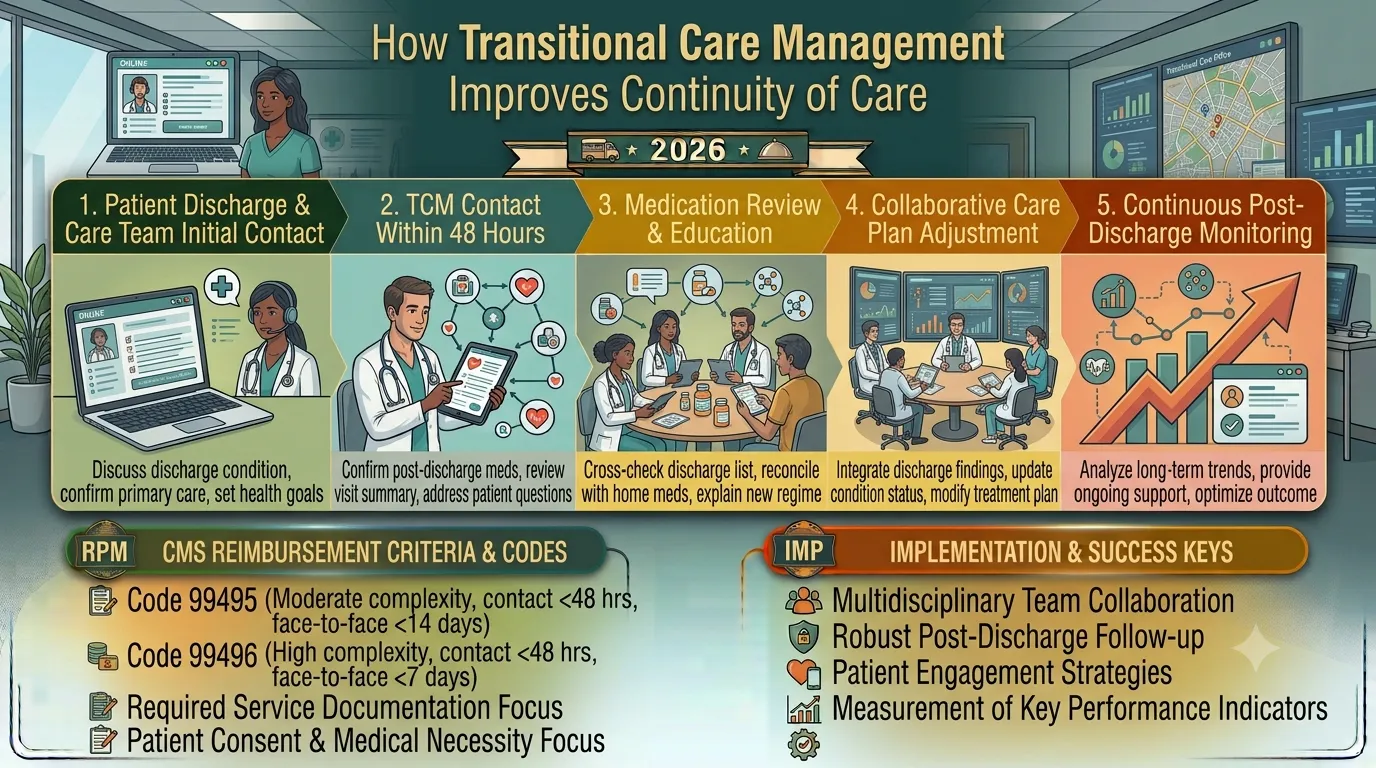

In today's fast-paced healthcare environment, ensuring patients experience seamless, continuous care is more important than ever. One of the most effective strategies to achieve this is through transitional care management. By focusing on the critical periods when patients move from one care setting to another,
transitional care management bridges the gaps that often lead to complications, readmissions, and poor health outcomes.
In this article, we will explore how transitional care management improves continuity of care, why it matters, and how healthcare organizations can implement it effectively.
Understanding Transitional Care Management
Transitional care management refers to a set of services designed to help patients transition smoothly from one healthcare setting to another, such as from the hospital to their home or a skilled nursing facility.
These transitions are often vulnerable moments for patients, especially those with complex or chronic conditions. Without proper support, patients may experience medication errors, missed follow-up appointments, or confusion about their care plans.
Transitional care management addresses these concerns by providing coordinated, patient-centered services that help patients and their families understand and manage their care during these critical periods.
Why Continuity of Care Matters
Continuity of care is essential for achieving the best possible health outcomes. When patients experience smooth transitions between providers and settings, they are less likely to face gaps in care, misunderstandings, or avoidable complications.
Key benefits of strong continuity of care include:
- Reduced hospital readmissions
- Improved medication adherence
- Better management of chronic conditions
- Increased patient satisfaction
- Lower healthcare costs
Transitional care management is a proven approach to improving continuity of care, particularly for patients who are at high risk for adverse events following discharge.
Key Components of Transitional Care Management
Effective transitional care management involves several important steps and components.
Patient Assessment
Before a patient is discharged, healthcare providers conduct a thorough assessment to identify the patient’s medical, social, and psychological needs. This may include reviewing medications, evaluating support systems at home, and identifying potential barriers to recovery.
Care Plan Development
Based on the assessment, a personalized care plan is developed. This plan outlines follow-up appointments, medication regimens, dietary needs, and other instructions to ensure a smooth transition.
Communication and Education
Clear communication is vital during care transitions. Patients and their families need to understand the care plan, warning signs to watch for, and whom to contact with questions or concerns. Transitional care management includes educating patients and caregivers to empower them in managing the patient’s health.
Follow-Up and Monitoring
After discharge, healthcare providers follow up with the patient, often via phone calls or home visits, to monitor progress and address any issues that arise. This ongoing support is crucial for catching problems early and preventing readmissions.
Coordination Among Care Providers
Transitional care management requires collaboration between hospitals, primary care physicians, specialists, and other healthcare professionals. Sharing information and working together ensures that everyone involved in the patient’s care is on the same page.
How Transitional Care Management Improves Continuity of Care
Reduces Readmission Rates
One of the most significant benefits of transitional care management is its ability to reduce hospital readmissions. By closely monitoring patients after discharge and addressing issues as they arise, healthcare providers can prevent complications that might otherwise result in a return to the hospital.
Enhances Patient Engagement
Transitional care management actively involves patients and their families in the care process. This engagement helps patients feel more confident and informed about their care, leading to better adherence to treatment plans and improved health outcomes.
Improves Communication
Miscommunication during care transitions is a leading cause of medical errors. Transitional care management emphasizes clear, consistent communication between all parties, reducing the risk of misunderstandings and ensuring that everyone is working toward the same goals.
Supports Medication Management
Medication errors are common during transitions of care. Transitional care management includes careful review of medications, reconciliation of prescriptions, and education on proper usage, minimizing the risk of errors and adverse drug interactions.
Promotes Holistic Care
Transitional care management takes into account not just the patient’s medical needs, but also their social and emotional well-being. By addressing the whole person, healthcare providers can deliver more comprehensive, effective care.
The Role of Technology in Transitional Care Management
Modern technology plays a vital role in enhancing transitional care management. Electronic health records, telemedicine, and secure messaging platforms allow for better information sharing and real-time communication between providers and patients.
Automated reminders, digital care plans, and remote monitoring tools further support patients as they move between care settings.
For example, healthArc’s digital health solutions streamline the transitional care management process, making it easier for providers to coordinate care and for patients to stay on track with their recovery plans.
Best Practices for Implementing Transitional Care Management
To maximize the benefits of transitional care management, healthcare organizations should consider the following best practices:
- Start planning for transitions early, ideally at the time of admission.
- Involve patients and families in care planning discussions.
- Use standardized protocols and checklists to ensure consistency.
- Leverage technology to facilitate communication and monitor progress.
- Provide ongoing education and support to patients and caregivers.
- Measure outcomes and continuously improve processes.
Transitional Care Management: A Win-Win for Patients and Providers
When done right, transitional care management delivers significant advantages for both patients and healthcare organizations. Patients enjoy safer, more coordinated care, while providers see reductions in readmissions, improved satisfaction scores, and better overall outcomes.
In today’s value-based care environment, transitional care management is not just a regulatory requirement—it’s a smart strategy for improving continuity of care and building stronger patient relationships.
Conclusion
Transitional care management is a key driver of continuity of care in the modern healthcare landscape. By focusing on patient-centered, coordinated approaches during care transitions, healthcare providers can reduce readmissions, enhance patient engagement, and improve health outcomes.
Whether through traditional methods or leveraging digital health solutions like healthArc, implementing transitional care management is a crucial step toward delivering high-quality, seamless care.
For healthcare organizations looking to stand out and provide exceptional value, embracing transitional care management is a must. Start investing in transitional care management today to ensure your patients experience the best possible journey across the entire continuum of care.



























Sign in to leave a comment.